Akari Therapeutics Showcases New ADC Payload Approach at Global XDC Conference
Akari is highlighting its PH1 RNA-splicing payload as it advances Trop2-targeted AKTX-101 through IND-enabling work toward a mid-2027 Phase 1 trial.
Our editorial standards
MarketReview publishes clear, independently produced financial information using reliable sources and transparent editorial standards.
Read our Editorial Policy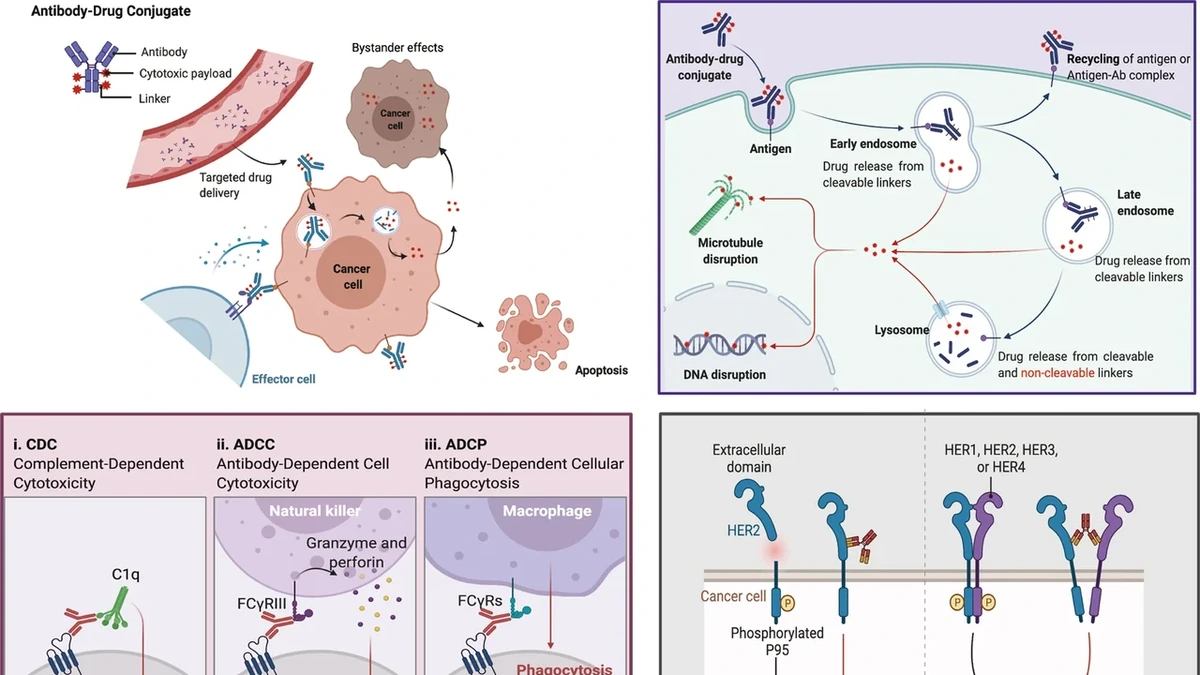
Akari Therapeutics is using the 2026 Global XDC Innovation Conference in Wuxi, China, to put its PH1 payload strategy in front of an audience focused on next-generation antibody-drug conjugates. The company scheduled President and CEO Abizer Gaslightwala to present Saturday, September 19, on ADC payloads designed to alter RNA splicing and on how that mechanism could affect efficacy, safety and treatment sequencing.
The presentation sits within a conference session devoted to emerging XDC modalities, including bispecific ADCs and dual-payload ADCs. For Akari, the emphasis is not on introducing a new clinical-stage drug. PH1 remains a preclinical payload platform, and the company’s lead candidate, AKTX-101, is still going through IND-enabling development. The significance of the conference appearance is that Akari is trying to establish RNA-splicing modulation as a differentiated payload approach in an ADC field where many programs rely on more familiar cytotoxic mechanisms.
Akari said in its September 8 conference announcement that Gaslightwala’s Global XDC presentation would focus on payloads targeting RNA splicing and the possible implications for efficacy, safety and sequencing. The company listed the presentation under the title “Novel ADC Payloads Designed to Target RNA Splicing to Drive Differentiated Efficacy and Safety and New Options for ADC Therapy Sequencing.” The conference runs from September 17 through September 19.
PH1 targets RNA splicing rather than a conventional ADC payload pathway
Antibody-drug conjugates are designed to use an antibody to recognize a tumor-associated target and carry a linked payload into or near cancer cells. The payload is the component intended to produce the cell-killing effect once it is released. Akari’s pitch is that changing that payload mechanism may create another way to attack tumors that have developed resistance to established ADC approaches or that respond poorly to them.
PH1 is a spliceosome-modulating payload. In simple terms, Akari is designing it to interfere with RNA splicing, a process cells use to turn precursor RNA into mature messenger RNA. Disrupting that process can alter the production of proteins needed for cancer-cell survival. Akari also says its preclinical work indicates that PH1 can trigger both direct tumor-cell killing and immune activity, although those findings have not yet been established in human trials.
AKTX-101 pairs PH1 with a proprietary linker and an antibody directed at Trop2, a cell-surface protein expressed across multiple solid tumors. Akari has positioned the candidate against a backdrop of Trop2-directed ADCs that commonly use topoisomerase I inhibitor payloads. The company’s April AACR data release reported sub-nanomolar potency in all bladder cancer cell lines tested and activity across selected lung and breast cancer models. Those comparisons were preclinical, so they cannot establish that AKTX-101 will prove safer or more effective than approved ADCs in patients.
Akari reported another set of preclinical findings around the 2026 ASCO meeting, this time evaluating AKTX-101 alongside KRAS inhibition in KRAS-mutated pancreatic cancer models. The company said the pairing produced synergistic cytotoxic activity in the models. That work broadens the scientific question around PH1 from whether it can function as a stand-alone ADC payload to whether RNA-splicing modulation could also have value alongside other targeted cancer therapies.
Akari is also testing PH1 in broader ADC architectures
The Global XDC session is relevant to a second part of Akari’s strategy: using PH1 beyond a single Trop2-directed program. In July, Akari entered a research collaboration with Whitehawk Therapeutics to evaluate PH1 alongside Whitehawk’s topoisomerase I inhibitor payload technology. The planned preclinical work is intended to test whether two payload mechanisms can be used together in a dual-payload ADC approach and whether the pairing produces useful synergy.
Akari is leading the design, execution and evaluation of those studies. The companies said they would review the resulting data before deciding whether a broader development effort is justified. No clinical evidence from that work has been reported, which makes the collaboration an exploratory extension of the PH1 platform rather than validation of a dual-payload product.
The company also has a second internal ADC program, AKTX-102, directed at CEACAM5. Akari has described CEACAM5 as a tumor antigen expressed across several solid tumors and is designing AKTX-102 to use PH1 with a different antibody construct. That program remains earlier than AKTX-101, but it illustrates why Akari is presenting PH1 as a reusable payload technology rather than as a component tied only to one antibody or one tumor target.
Akari’s relationship with WuXi XDC adds another layer to the conference context. In April, the companies announced a development partnership covering PH1 and AKTX-101, including work intended to support manufacturing and development activities needed before clinical testing. The partnership does not answer whether PH1 will work in patients, but it gives Akari access to an ADC-focused development and manufacturing platform as it moves the lead program toward an investigational filing and first-in-human work.
Clinical testing remains the key step for AKTX-101
Akari’s most recent development timeline places AKTX-101 in IND-enabling work with a planned first-in-human Phase 1 trial in mid-2027. The company’s latest quarterly filing with the SEC also describes AKTX-101 as a preclinical Trop2-targeting ADC and says the program is advancing through IND-enabling studies toward that mid-2027 goal. That newer guidance is more relevant than earlier 2026 statements that contemplated a faster clinical start.
Getting into Phase 1 would change the evidence base materially. To date, the main claims around PH1 come from laboratory and animal-model work, including comparisons with other ADC payload classes and studies of activity alongside checkpoint or targeted therapies. A human study would begin to test dose, safety, tolerability, pharmacokinetics and early signs of antitumor activity. Until then, claims that PH1 may improve efficacy, reduce off-target effects or help address resistance remain hypotheses supported by preclinical data rather than demonstrated clinical advantages.
Financing is another practical part of that transition. Akari reported $7.7 million in cash at June 30, 2026, compared with $5.2 million at the end of 2025. Second-quarter research and development expense rose to $2.1 million from $0.7 million a year earlier as manufacturing and development work increased, while the company posted a $4.8 million quarterly net loss. Akari also said financing during the quarter brought in about $8.6 million in gross proceeds. Those figures show why progress toward the clinic and access to capital remain closely linked for a development-stage biotechnology company.
The Global XDC appearance therefore serves mainly as a platform showcase and partnering opportunity. Akari is presenting RNA-splicing modulation as a possible next step in ADC payload design, while its own lead program is still approaching the point where that idea can be tested in people. The next concrete milestone is continued IND-enabling work for AKTX-101, followed by the company’s planned mid-2027 Phase 1 start if development and regulatory preparations remain on track.
More News



Latest News
View all news- UK FCA Closes Consultation on Further Simplification of Insurance Rules
- Sequoia ETF Registration Amendment Takes Effect Ahead of $3.6 Billion Fund’s October Conversion
- Berkshire Names Howard Buffett Chairman as Warren Buffett Becomes Chairman Emeritus
- CoreWeave Prices Upsized $3.7 Billion Convertible Notes Offering
- MISTRAS Agrees to $866 Million H.I.G. Capital Takeover at $20.35 a Share