Energy Department Closes $5.1 Billion Loan Package for Alliant Energy Projects
The 30-year financing supports natural gas and battery projects in Iowa and Wisconsin, with Alliant projecting up to $1.2 billion in customer savings.
Our editorial standards
MarketReview publishes clear, independently produced financial information using reliable sources and transparent editorial standards.
Read our Editorial Policy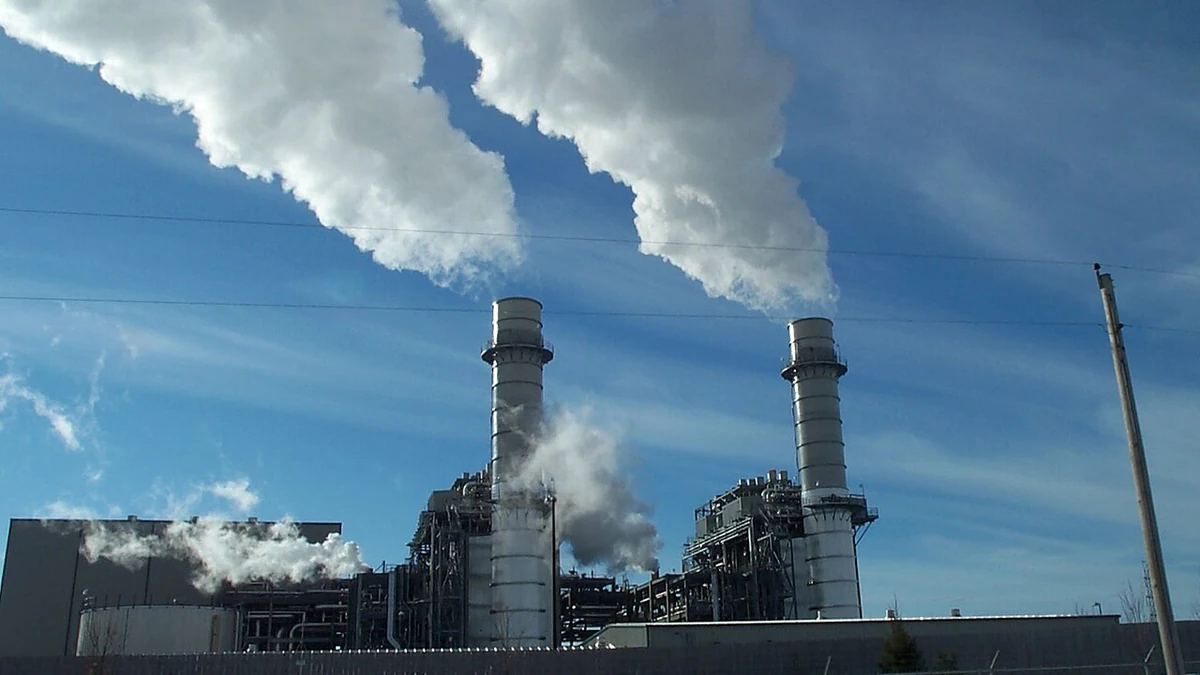
The U.S. Department of Energy has closed a $5.1 billion loan package for Alliant Energy’s electric utilities in Iowa and Wisconsin, giving the companies access to long-term federal financing for new natural gas generation, energy storage and upgrades to existing plants. The agreement is intended to reduce borrowing costs as the regional utility group expands its electricity supply.
Alliant said the lower-interest loans could produce up to $1.2 billion in cumulative customer savings over 30 years. The figure is a projection, not an immediate reduction in electricity bills. The package also does not mean that $5.1 billion has been paid out: the utilities must meet project-specific requirements before drawing funds.
In its October 28 announcement, the Energy Department said the planned investments would provide more than 2.6 gigawatts of new or upgraded generating capacity. It described that amount as enough electricity to serve the equivalent of nearly 2 million homes, an estimate of scale rather than a promise of direct service to that number of households.
Two utilities gain access to separate federal loan facilities
The financing is being arranged at Alliant’s operating subsidiaries, rather than through a single loan taken out by the publicly traded parent. Interstate Power and Light Company, which serves Iowa, can borrow up to $3.5 billion. Wisconsin Power and Light Company can borrow up to $1.626 billion. Together, the limits total approximately $5.13 billion, rounded to $5.1 billion in the public announcements.
The companies signed their agreements on October 26, two days before the federal announcement. An October 28 filing with the Securities and Exchange Commission identifies the Federal Financing Bank as the lender and the Energy Department as guarantor and loan servicer. Alliant Energy Corporation itself is not a direct borrower under the agreements and has no direct obligation under those loan documents.
Each utility has a facility that permits multiple advances, allowing borrowing to follow eligible construction spending instead of arriving in one lump sum. An advance may reimburse up to 80% of qualifying project costs already incurred. The borrowers generally can request money no more than once in a calendar quarter, with a maximum of four requests annually.
That design makes the $5.1 billion a financing ceiling, not an approved expenditure for every project Alliant has discussed. Before advancing money, the Energy Department must complete the applicable environmental review, and the utility must satisfy conditions including relevant state approvals, required fees and investment-grade credit ratings. The SEC filing says the period for requesting advances runs no later than September 15, 2033, and may end sooner under specified circumstances.
Borrowing rates will be set separately when each advance is made. Under the agreements, the Federal Financing Bank rate is the applicable U.S. Treasury rate plus 37.5 basis points, equivalent to 0.375 percentage points, with provisions allowing certain rate resets. The scheduled final maturity is May 15, 2056, with principal repayments concentrated in the final years. These are repayable loans backed by federal guarantees, not grants to Alliant or its customers.
Natural gas capacity and batteries feature in the expansion plans
The Energy Department’s description emphasizes natural gas-fired power plants, storage systems and improvements to existing generation. Alliant’s own announcement sets out a more detailed, preliminary list of investments it may pursue, including 1.6 gigawatts of new natural gas generation, 240 megawatts of added capacity at existing gas facilities and 1 gigawatt of energy storage. The company also identified storage for 2 billion cubic feet of liquefied natural gas.
Those figures should not be read as final allocations of the federal loan package to named sites. Alliant characterized the projects as possibilities rather than a closed list, and said proposed investments would proceed through regulatory review. The LNG figure measures fuel-storage volume, not electricity-generating capacity, so it cannot be added to the megawatt totals.
The mix serves different operating purposes. Gas-fired units can produce electricity when demand is high or other sources are unavailable, while batteries can store power and deliver it later. Upgrading existing generating equipment may also add capacity without requiring an entirely new plant. Whether a particular investment offers the best value for customers remains subject to construction costs, operating assumptions and state oversight.
Alliant already has multiple projects in its broader infrastructure pipeline across the two states. In Beloit, Wisconsin, for example, it plans to modernize turbines at the Riverside Energy Center and currently expects that work to be completed in May 2028. The company has not identified the Riverside work as having received an advance under the newly closed federal facilities, and the financing agreements do not establish that every publicly listed project will qualify.
Construction would also have a local employment impact. Alliant estimates that the projects supported by the loans could create more than 1,600 jobs during construction, although that is a projection dependent on which projects proceed. The Energy Department has described the plan more broadly as supporting hundreds of construction-related positions.
Projected bill savings depend on project costs and regulatory decisions
For customers, the principal financial claim is that federal borrowing can lower the financing cost of new infrastructure. Alliant estimates savings of up to $1.2 billion over the life of the 30-year loans; the Energy Department uses the broader description of more than $1 billion in expected savings. Neither figure represents a cash payment to households, and the company has not announced a corresponding near-term reduction in monthly rates.
Lower interest expenses can make a large capital program less costly to finance, but the eventual effect on bills will also depend on the projects built and how regulators allow their costs to be recovered. Alliant serves more than 1 million electricity customers and approximately 435,000 natural gas customers across Iowa and Wisconsin, meaning the financing concerns utilities with a broad base of residential and business accounts.
The loan terms reinforce the importance of those regulatory decisions. The agreements include a provision that can require early repayment if eligible costs approved for recovery by regulators fail to meet a specified 95% threshold. The borrowers remain responsible for repaying their debt even though the federal government guarantees the Federal Financing Bank. Federal support therefore reduces a financing hurdle without removing the utilities’ project or repayment obligations.
The closing gives Alliant a committed borrowing framework, but the measurable results will emerge as individual plants and storage projects clear approvals, begin construction and request advances. Future disclosures can show which investments use the federal facilities, how much borrowing is actually drawn and whether the expected cost advantage is being passed through to customers.
Alliant is scheduled to report its third-quarter 2026 financial results after the market closes on October 29, followed by a conference call on October 30 at 9 a.m. Central Time. That provides the next scheduled opportunity for management to discuss its investment program and the new financing arrangements.
More from Investing

Latest News
View all news- New BLS Data Show U.S. Private Businesses Added Just 88,000 Net Jobs in First Quarter
- U.S. Mortgage Applications Rise 3.4% as 30-Year Rates Ease to 7.37%
- Unemployment Rates Fall in 226 U.S. Metropolitan Areas, New BLS Data Show
- U.S. Goods Trade Deficit Widens to $134.9 Billion in September
- U.S. Crude Inventories Fall 1.9 Million Barrels as Gasoline Stockpiles Rise