Santander Reports 16% Rise in Underlying Profit to €11.18 Billion Over Nine Months
Revenue increased 8% and underlying third-quarter profit rose 19% as the purchases of TSB and Webster expanded Santander’s customer base to 189 million.
Our editorial standards
MarketReview publishes clear, independently produced financial information using reliable sources and transparent editorial standards.
Read our Editorial Policy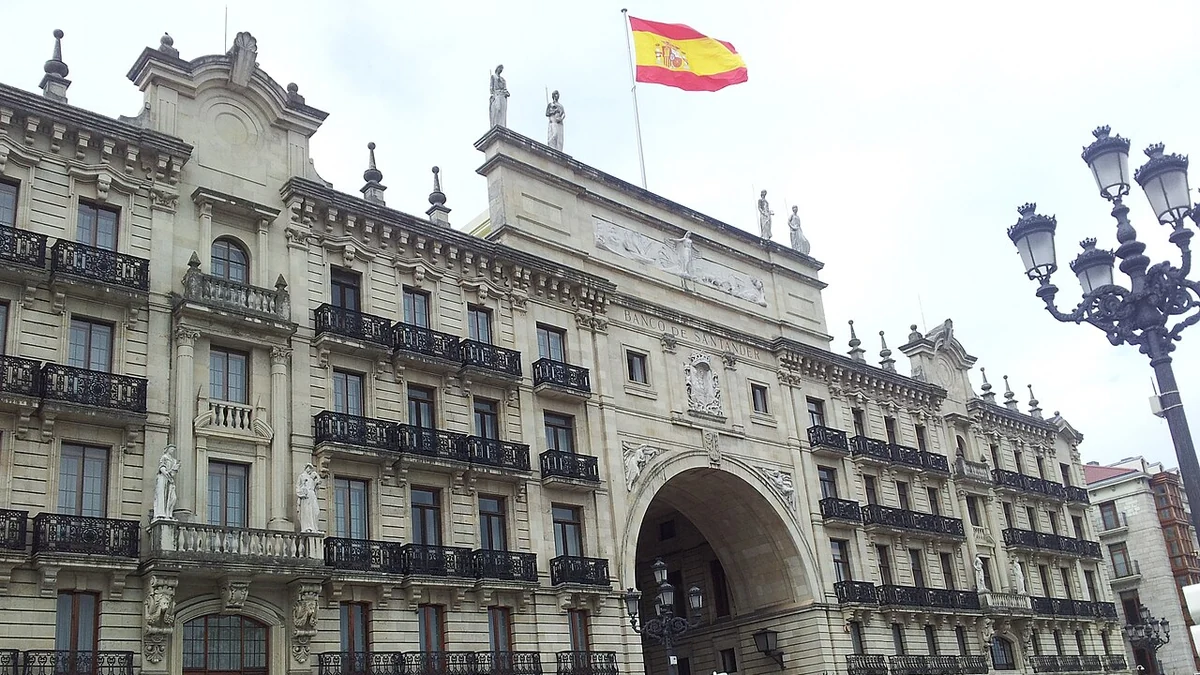
Banco Santander reported €11.176 billion in underlying attributable profit for the first nine months of 2026, a 16% increase from a year earlier, as revenue growth and improved operating efficiency lifted earnings. The Spanish banking group said Wednesday that revenue rose 8% to €46.807 billion, while its customer base reached 189 million after acquisitions in Britain and the United States.
Underlying profit for the third quarter alone reached €3.848 billion, up 19% from the same period of 2025. The latest figures include contributions from TSB and Webster Financial, which Santander acquired earlier this year. Their addition has increased the scale of the group’s banking operations, but it also means headline growth in customers and business volumes cannot be read as entirely organic.
Underlying and statutory profit give different accounts of the period’s performance. Santander’s October 28 results announcement puts statutory attributable profit at €12.405 billion for the nine months, up 20%. That figure includes a €1.895 billion net gain from the January sale of Santander Bank Polska, partly offset by €666 million of charges that include costs related to the TSB and Webster acquisitions. The bank excludes these nonrecurring effects from its underlying profit measure.
During the third quarter, the two profit measures moved in different directions. Statutory attributable profit was €3.432 billion, down 2% year over year, despite the 19% gain in underlying profit. The underlying measure is useful for assessing recurring performance, while statutory earnings capture the accounting effects of acquisitions and disposals during the period.
Interest and Fee Income Support Higher Operating Profit
Net interest income rose 10% to €34.614 billion in the first nine months, supported by increased lending and customer activity. Excluding TSB and Webster, the increase was 7%, illustrating that the existing businesses contributed to growth as well. Net fee income advanced 9% to €10.349 billion, with the bank reporting the same growth rate before and after excluding the acquisitions.
Underlying operating costs rose 2% to €19.925 billion as the newly acquired banks added expenses. On a like-for-like basis excluding the two acquisitions, however, Santander said costs declined 1%, or 2% measured in constant euros. Its efficiency ratio, which compares costs with revenue, improved by 2.8 percentage points to 42.6%. The bank attributes part of that progress to its ONE Transformation program, which is moving operations toward shared platforms and more common processes.
With income rising faster than expenses, net operating income increased 14% to €26.882 billion. The result helps explain why underlying profit grew more quickly than total revenue. It also separates the improvement in day-to-day banking performance from the one-off gain on the Polish disposal, which lifted statutory profit but was not included in the underlying figure.
Growth was spread across several businesses. Retail and Commercial Banking reported €6.445 billion in underlying profit, up 12% in constant euros. Corporate and Investment Banking earned €2.433 billion, an increase of 15%, while Wealth Management and Insurance posted €1.651 billion, up 19%. These segment changes are reported in constant euros, which removes the effect of currency translation from the year-over-year comparison.
Not all costs moved favorably. Provisions for loan losses rose 13% to €10.060 billion, mainly reflecting developments in Argentina, according to Santander. Excluding Argentina, provisions increased 6% in constant euros. The group’s cost of risk stood at 1.16%, while its nonperforming loan ratio improved to 2.90% from 2.93% at the end of the previous quarter. These figures show that higher credit provisions accompanied the improvement in income and efficiency.
Santander reported an underlying return on tangible equity of 16.0%, up 1.1 percentage points from a year earlier. Statutory earnings per share increased 25%. The improvement in per-share earnings exceeded the rise in statutory profit, a distinction worth keeping in view alongside the group’s ongoing share repurchases.
TSB and Webster Lift Customer Numbers as Capital Absorbs Deals
Over the past twelve months, Santander added 17 million customers, taking its total to 189 million. About eight million of those customers came through the acquisitions of TSB, completed on April 30, and Webster, completed on August 20. The purchases broaden Santander’s presence in the United Kingdom and United States, but the acquired customers should not be confused with customers won by its existing operations.
Loans and customer funds each grew 16% from a year earlier in constant euros. Without TSB and Webster, loan growth was 6% and customer funds increased 8%, including a 6% increase in deposits. The contrast shows both the underlying expansion of the bank’s existing activities and how much the acquisitions contributed to the larger reported balance sheet.
Webster strengthened Santander’s U.S. retail and commercial banking footprint and added about 4.2 million customers, the group said. Its results filed with Spain’s CNMV also show the acquisition’s effect on capital. Santander ended September with a common equity tier 1, or CET1, ratio of 12.7%. The bank attributed a 147-basis-point reduction to the Webster acquisition, even as it generated capital organically during the quarter.
CET1 measures a bank’s highest-quality regulatory capital relative to risk-weighted assets. A lower ratio after an acquisition does not by itself establish weaker operating earnings, but it leaves a narrower cushion against the group’s stated capital target. Santander said its CET1 ratio rose by 14 basis points during the quarter when the Webster effect is excluded, including 19 basis points of net organic capital generation.
Dividend Payment and 2026 Capital Target Come Next
Santander is maintaining its shareholder distribution plans. An interim cash dividend of 12.70 euro cents per share, 10% above the comparable payment last year, is scheduled for November 2. The bank also launched a repurchase program of approximately €1.8 billion in August, financed against first-half 2026 earnings. Total shareholder remuneration associated with those first-half results is expected to reach about €3.66 billion, approximately half of underlying first-half profit.
Once the current repurchase is completed, Santander expects to have carried out about €9 billion of its plan to distribute at least €10 billion through share buybacks tied to 2025 and 2026 earnings and excess capital. That is a statement about its planned repurchase program rather than an additional earnings figure. The eventual pace and amount of further distributions remain subject to the bank’s decisions and applicable approvals.
For the full year, Santander reiterated goals that exclude the operating effects of the Poland sale and the TSB and Webster acquisitions. These include mid-single-digit revenue growth, lower costs in constant euros and profit above the €14.101 billion earned in 2025. Its year-end CET1 target remains between 12.8% and 13%, with the bank specifying that this capital target incorporates the effects of its acquisitions.
At September 30, the CET1 ratio of 12.7% was still below the bottom of the year-end target range. Beyond 2026, Santander aims for a return on tangible equity above 20%, annual profit above €20 billion and more than 210 million customers by 2028. Those figures are management targets, not achieved results, and depend on the economic and credit conditions assumed by the bank.
More from Investing


Latest News
View all news- New BLS Data Show U.S. Private Businesses Added Just 88,000 Net Jobs in First Quarter
- U.S. Mortgage Applications Rise 3.4% as 30-Year Rates Ease to 7.37%
- Unemployment Rates Fall in 226 U.S. Metropolitan Areas, New BLS Data Show
- U.S. Goods Trade Deficit Widens to $134.9 Billion in September
- U.S. Crude Inventories Fall 1.9 Million Barrels as Gasoline Stockpiles Rise