
Archer Aviation to Acquire Boeing’s Wisk, Insitu and SkyGrid as Boeing Takes Nearly 20% Stake
Archer is expanding beyond eVTOL aircraft with a Boeing deal that adds autonomous flight, drones and airspace-management technology.
Our editorial standards
MarketReview publishes clear, independently produced financial information using reliable sources and transparent editorial standards.
Read our Editorial Policy
Archer Aviation plans to acquire Boeing-owned Wisk Aero, Insitu and SkyGrid in a deal that would give the eVTOL developer a much broader mix of autonomous passenger aircraft, military drones and airspace-management technology. Boeing will receive Archer shares equal to 19.75% of Archer’s pre-closing Class A share count and the right to appoint a director to Archer’s board. The two companies will also enter a technology-sharing arrangement that preserves Boeing’s access to Wisk’s autonomous-flight technology for use in future commercial and defense aircraft. The acquisition is expected to close by the end of 2026, subject to customary conditions.
Archer shares rose more than 7% in Monday afternoon trading after climbing as much as roughly 14% earlier in the session. Investors were reacting not only to the addition of another eVTOL program, but to a collection of businesses that would substantially change Archer’s operating profile.
Until now, Archer has been identified primarily with Midnight, its piloted electric air taxi. Wisk, Insitu and SkyGrid would add an autonomous passenger-aircraft program, an established defense-drone business and digital infrastructure intended to support increasingly autonomous aircraft in shared airspace. That acquisition is very different from a straightforward merger between two competing air-taxi developers.
Insitu is particularly important because it already has customers, operating history and meaningful revenue. Reuters reported that the Boeing subsidiary generates more than $200 million in annual revenue and operates profitably, while Archer reported just $1.6 million of revenue in the first quarter of 2026. Adding Insitu would not eliminate the heavy spending required to certify and manufacture Archer’s aircraft, but it would introduce a mature business into a company whose financial results are still dominated by development costs.
Insitu gives Archer an established defense business
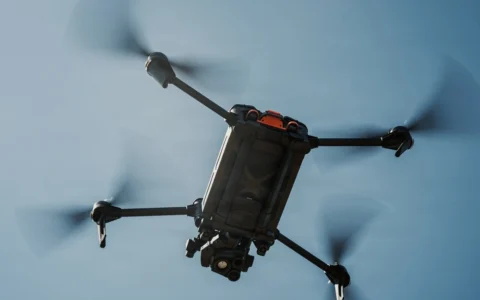
Insitu develops and operates uncrewed aircraft systems primarily for defense and government customers. Its aircraft have accumulated more than 1.5 million operational flight hours across land and sea and have been used by customers in more than 35 countries.
Its best-known platforms include ScanEagle and Integrator. ScanEagle is a long-endurance intelligence, surveillance and reconnaissance aircraft with more than 1.6 million combat flight hours, according to Insitu. Integrator can remain airborne for as long as 27.5 hours, carry as much as 50 pounds of payload and operate with electro-optical, radar and AI-assisted sensors.
The business is still winning new work. In May, Insitu was selected to compete for U.S. Navy, Marine Corps and other government intelligence, surveillance and reconnaissance assignments using ScanEagle and Integrator. In June, the company said an Integrator VTOL aircraft completed a 22.4-hour sortie during the Balikatan 2026 military exercise while operating in demanding heat and high-altitude conditions.
For Archer, that brings an immediate foothold in a market it has been trying to enter more aggressively. In July, Archer and defense technology company Anduril unveiled an autonomous hybrid-electric VTOL platform intended for military and commercial use. Anduril’s defense version, Thunder, is designed as a large autonomous attack rotorcraft, while Archer later introduced Halo as the commercial version of the platform.
Insitu adds something those newer programs do not yet have: an existing fleet, operational experience, government relationships and recurring revenue. Archer CEO Adam Goldstein told Reuters that the acquisition would allow the company to begin generating significant revenue in a market where demand for intelligence, surveillance and reconnaissance drones is high.
The financial contrast is significant. Archer ended the first quarter with about $1.78 billion in cash, cash equivalents and short-term investments, but recorded a $217.7 million net loss and used $149.1 million of cash in operating activities. Bringing in a profitable defense operation would diversify that profile, although Archer would still need to fund aircraft certification, manufacturing expansion and several development programs at the same time.
The Insitu purchase also broadens Archer’s defense ambitions beyond one new aircraft platform. It would give the company exposure to long-endurance surveillance, military operations and customers that already procure unmanned systems, potentially creating a route for Archer’s newer autonomous technologies to reach defense buyers faster than if it were building those relationships from scratch.
Wisk and SkyGrid deepen Archer’s autonomy strategy
Wisk brings a different kind of capability. Archer’s Midnight is designed around a pilot carrying up to four passengers, while Wisk has spent years developing an all-electric aircraft intended to fly without a pilot on board. Its Generation 6 model is designed as an autonomous, four-passenger eVTOL with human oversight provided from the ground.
The program has already entered active flight testing. Wisk’s first Generation 6 aircraft began flight tests in December 2025, and a second aircraft completed its first flight in May, allowing the company to gather data from multiple vehicles as it works through aircraft performance, control laws and system validation.
Wisk is also pursuing FAA type certification and has been selected with the Texas Department of Transportation for the federal government’s eVTOL Integration Pilot Program. The company plans to use its autonomous systems and Generation 6 aircraft in real-world operations under that initiative.
Its development work extends beyond the aircraft itself. In July, Wisk said a simulation conducted with NASA demonstrated a setup in which one ground-based supervisor could oversee three autonomous aircraft simultaneously while they operated alongside conventional traffic using existing air-traffic-control procedures. The test addresses an important economic question for autonomous air taxis: whether removing the onboard pilot can eventually reduce operating costs without requiring one dedicated ground supervisor for every aircraft.
Archer and Wisk also have a complicated history. Wisk sued Archer in 2021 over alleged theft of trade secrets and aircraft technology. Archer denied the allegations and filed counterclaims. The litigation ended in August 2023 when Archer, Wisk and Boeing settled on undisclosed terms and agreed to collaborate on autonomous flight. Archer also agreed to use Wisk as the exclusive provider of autonomy technology for future variants of its aircraft, while Boeing invested in Archer.
Wisk became a wholly owned Boeing subsidiary in 2023 after years of investment and technical cooperation. Under the new ownership structure, control would shift to Archer, but Boeing would retain access to Wisk’s autonomous-flight technology while also becoming a major Archer shareholder and gaining representation on its board. That allows Boeing to preserve a strategic interest in the technology without continuing to own and fund the business directly.
SkyGrid adds the airspace-management layer. The Austin-based company develops digital services intended to help autonomous and advanced aircraft operate safely within shared airspace. It became a Wisk subsidiary in 2025 as the companies combined work on autonomous aircraft with the systems needed to integrate those aircraft into existing aviation infrastructure.
Its projects include automated flight rules, digital airspace services and tools designed to coordinate increasingly autonomous aircraft with conventional aviation. In February, SkyGrid was selected for an FAA-sponsored project studying cooperative separation capabilities for advanced air mobility operations, with work scheduled to continue through February 2027. Wisk and SkyGrid have also been developing a framework for Automated Flight Rules, an envisioned set of procedures intended to support denser autonomous operations than today’s largely human-coordinated airspace system was designed to handle.
Those capabilities overlap with Archer’s recent move into aviation-focused artificial intelligence. In July, the company introduced Zee, an AI foundation model trained using information that includes air-traffic-control communications, aircraft state data, weather, maps and ADS-B flight information. Archer says Zee is intended for applications ranging from aircraft and airline operations to airspace management.
Bringing Wisk and SkyGrid into the company could give Archer access to a larger pool of autonomous-flight, aircraft and airspace data for developing those tools. Insitu would add another source of operational experience, particularly in defense environments. The resulting portfolio would span piloted electric air taxis through Midnight, autonomous passenger aircraft through Wisk, military drones through Insitu, airspace-management software through SkyGrid, hybrid autonomous aircraft developed with Anduril and aviation AI through Zee.
That breadth creates opportunity, but it also raises the execution burden. Commercial eVTOL operators are still working through aircraft certification, manufacturing scale and the economics of running entirely new transportation networks. Large-scale passenger service has yet to become an established business despite billions of dollars of investment across the sector.
Archer is still pursuing FAA certification of Midnight. In May, the company said it had completed Phase 3 of the FAA’s four-phase type-certification process and expected initial U.S. operations to begin in 2026 through the federal eVTOL pilot program. Those are meaningful milestones, but certification and broad commercial deployment remain separate challenges.
Wisk has its own certification task because it is pursuing an autonomous passenger aircraft, while SkyGrid is developing infrastructure for operating such aircraft at greater scale. Insitu is much more mature commercially, but integrating an established defense business alongside multiple development-stage aircraft and software programs introduces a different set of management and operational risks.
The acquisition would therefore make Archer less dependent on Midnight as its only major path to commercial relevance, but it would also require the company to coordinate businesses with very different customers, regulatory demands and timelines. Defense drones, passenger eVTOLs, autonomy software and airspace systems do not mature on the same schedule, and success in one area would not automatically solve the challenges in another.
For Boeing, the arrangement reduces direct ownership of Wisk, Insitu and SkyGrid while preserving access to Wisk’s autonomy technology and giving it a substantial economic interest in Archer. For Archer, the appeal is the chance to acquire operating experience, established defense revenue and autonomous-flight capabilities that would take years to build internally.
The deal is expected to close by the end of 2026. Until then, Wisk, Insitu and SkyGrid remain Boeing businesses, and the central question for Archer is whether it can turn a much wider collection of aerospace assets into a coherent operating company rather than simply a larger set of development programs.
Sources
Reuters – Archer-Boeing acquisition announcement and premarket share reaction.
Archer / Wisk / Boeing – 2023 autonomous-flight collaboration and Boeing investment announcement.
Archer Aviation Investor Relations – Q2 2026 earnings schedule.
More from Investing


Latest News
View all news- FTC, USDA Launch Joint Inquiry Into Agricultural Equipment Market Practices
- VAALCO Completes Gabon Phase 3 Drilling as ETSEM-3H Starts at About 2,000 BOPD
- U.S. Crude Inventories Fall 3.2 Million Barrels in Latest EIA Report
- UK Trade Remedies Authority Proposes Five-Year Anti-Dumping Duty on Chinese Rutile Titanium Dioxide
- OCC Launches Direct Payments-Fraud Reporting Tool for Community Banks
