AstraZeneca Completes $2 Billion Equity Investment in Summit Therapeutics
AstraZeneca's $2 billion purchase of Summit convertible preferred stock has closed, giving it rights equivalent to about 12% of outstanding common shares as the companies expand ivonescimab clinical work.
Our editorial standards
MarketReview publishes clear, independently produced financial information using reliable sources and transparent editorial standards.
Read our Editorial Policy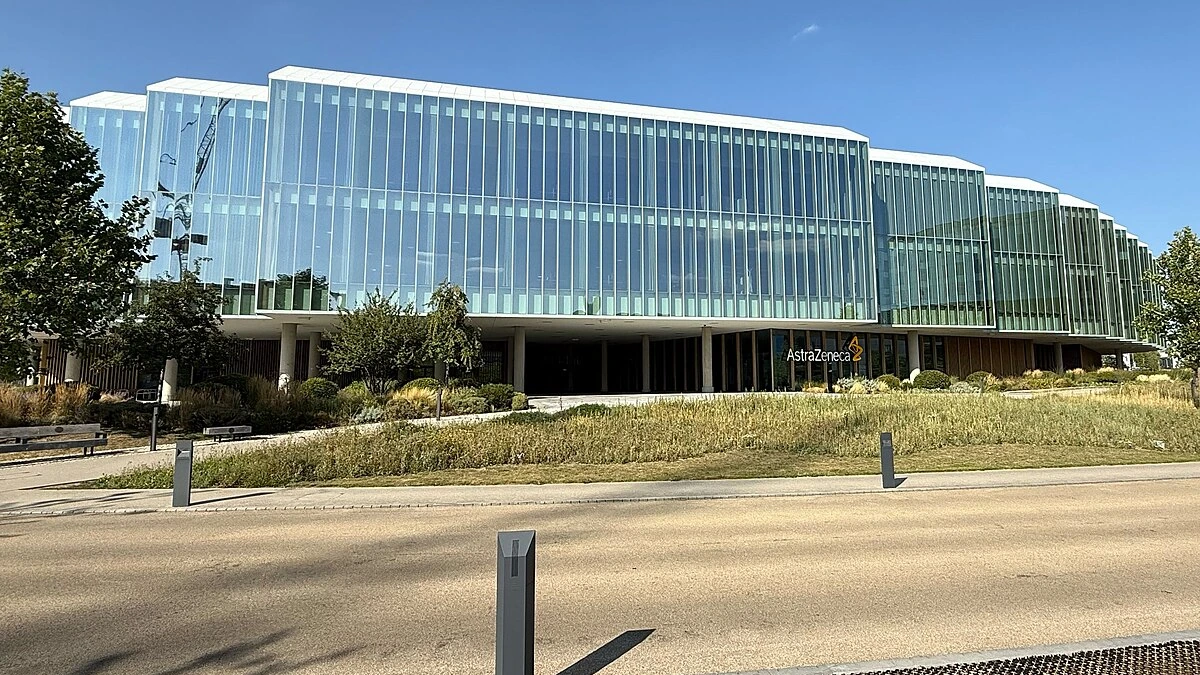
AstraZeneca has completed its $2 billion equity investment in Summit Therapeutics, closing a financing announced a week earlier that gives the drugmaker a sizable economic interest in Summit while the two companies expand clinical work around the experimental cancer therapy ivonescimab.
The company said on October 5 that the investment had successfully closed. The capital is intended to help accelerate development of ivonescimab in combination with AstraZeneca antibody-drug conjugates, or ADCs, across multiple tumor types. The financing sits alongside a clinical collaboration between the companies and a separate collaboration involving AstraZeneca, Daiichi Sankyo and Summit.
Closing came after the companies’ September 28 agreement, under which AstraZeneca agreed to buy newly issued convertible preferred stock rather than acquire Summit outright. AstraZeneca’s completion announcement did not change the financial terms disclosed when the investment was first signed.
AstraZeneca’s $2 billion stake is convertible preferred stock
Summit’s SEC filing on the investment agreement shows that AstraZeneca Holdings B.V., a subsidiary of AstraZeneca, agreed to purchase 108,955.3686 shares of newly designated Class A convertible preferred stock for $18,356.14 per preferred share. Each preferred share is convertible into 1,000 Summit common shares, subject to the terms of the security.
On that basis, the purchase price corresponds to $18.3561 per common share. Summit said when the financing was announced that the common-share equivalent represented a 10% premium to the volume-weighted average price over the five trading days of the prior week. AstraZeneca said the preferred shares carry rights equivalent to about 12.0% of Summit’s outstanding common stock, or about 10.6% on a fully diluted basis.
Those percentages describe the economic position associated with the preferred shares, not a completed conversion into common stock. AstraZeneca previously said any future conversion would be subject to customary regulatory clearances.
The structure matters because AstraZeneca is becoming a major strategic investor without taking control of Summit. Summit remains an independent public company, and the companies retain ownership and commercial rights to their respective medicines under the separate clinical collaboration. The $2 billion proceeds therefore strengthen Summit’s balance sheet while preserving its direct economic exposure to ivonescimab.
The investment supports a broader ivonescimab development push
Ivonescimab is a bispecific antibody designed to block both PD-1 and VEGF, combining an immunotherapy mechanism with inhibition of tumor-associated angiogenesis in a single molecule. The drug was engineered by Akeso. Summit holds development and commercialization rights in major territories outside China, while Akeso retains rights in China and certain other markets.
AstraZeneca and Summit have already agreed to evaluate ivonescimab with sonesitatug vedotin, AstraZeneca’s CLDN18.2-targeted ADC, in gastrointestinal cancers. Under that clinical collaboration, each company will supply its own medicine and the parties will jointly contribute to trial costs. AstraZeneca is intended to sponsor the planned studies, and each company keeps development and commercial rights to its own drug.
The companies have also signed a memorandum of understanding covering a potential broader global development program that would pair ivonescimab with other AstraZeneca cancer medicines, including additional ADCs. That planned program is not yet the same as a fully executed clinical collaboration agreement, so its eventual scope will depend on a definitive agreement.
A separate agreement announced October 2 adds another route for testing ivonescimab with AstraZeneca’s oncology portfolio. AstraZeneca, Daiichi Sankyo and Summit plan to evaluate Datroway, or datopotamab deruxtecan, together with ivonescimab across multiple tumor types, including lung and breast cancers. Each company will contribute its medicine, share trial costs and retain rights to its respective product.
For AstraZeneca, the arrangements fit a strategy of testing ADCs alongside next-generation immunotherapies rather than relying only on single-agent development. For Summit, the equity financing provides substantial capital at the same time that ivonescimab is moving through an increasingly broad global clinical program.
Ivonescimab is approaching a U.S. regulatory milestone
The investment closes as ivonescimab approaches an important regulatory decision in the United States. Summit said the Food and Drug Administration accepted its Biologics License Application for ivonescimab in combination with chemotherapy for certain patients with EGFR-mutated, locally advanced or metastatic non-squamous non-small cell lung cancer whose disease progressed after treatment with a third-generation EGFR tyrosine kinase inhibitor.
The FDA assigned a November 14, 2026, target action date to that application. The filing is based on the global Phase III HARMONi study, which compared ivonescimab plus chemotherapy with chemotherapy alone in that setting. Summit has also been running or supporting Phase III studies of ivonescimab in other lung-cancer populations and additional tumor types.
Ivonescimab is already approved for several uses in China through Akeso’s development program, but it remains investigational in the United States. That distinction is important for the economics of AstraZeneca’s investment: the $2 billion financing gives Summit significant resources now, while the commercial value of the stake will still depend heavily on regulatory outcomes, clinical results and the extent to which ivonescimab can succeed across additional cancer settings.
AstraZeneca’s completion notice did not announce any change to the ownership percentages, conversion terms or clinical-collaboration framework disclosed in September. The next concrete U.S. milestone is the FDA’s November 14 target date for the pending ivonescimab application, followed by the readouts and launches of the combination studies that the new capital is intended to help support.
More from Investing

Latest News
View all news- Zscaler Reaffirms Q1 and FY2027 Financial Guidance at Investor Day
- U.S. Trade Deficit Widens 13.7% to $105.6 Billion in August as Imports Surge
- MIAX Hits Record 17.1% YTD U.S. Options Share as ADV Rises 22%
- Lamb Weston Raises FY2027 Outlook After First-Quarter Results
- Japan’s 10-Year Government Bond Auction Clears Near 3.10% With a 3.1% Coupon