
AtomVie Opens More Than $160 Million Radiopharmaceutical Plant in Hamilton
The 72,300-square-foot site is designed to lift AtomVie’s manufacturing capacity by more than tenfold as the company scales toward full operations and a workforce of more than 200 by year-end.
Our editorial standards
MarketReview publishes clear, independently produced financial information using reliable sources and transparent editorial standards.
Read our Editorial Policy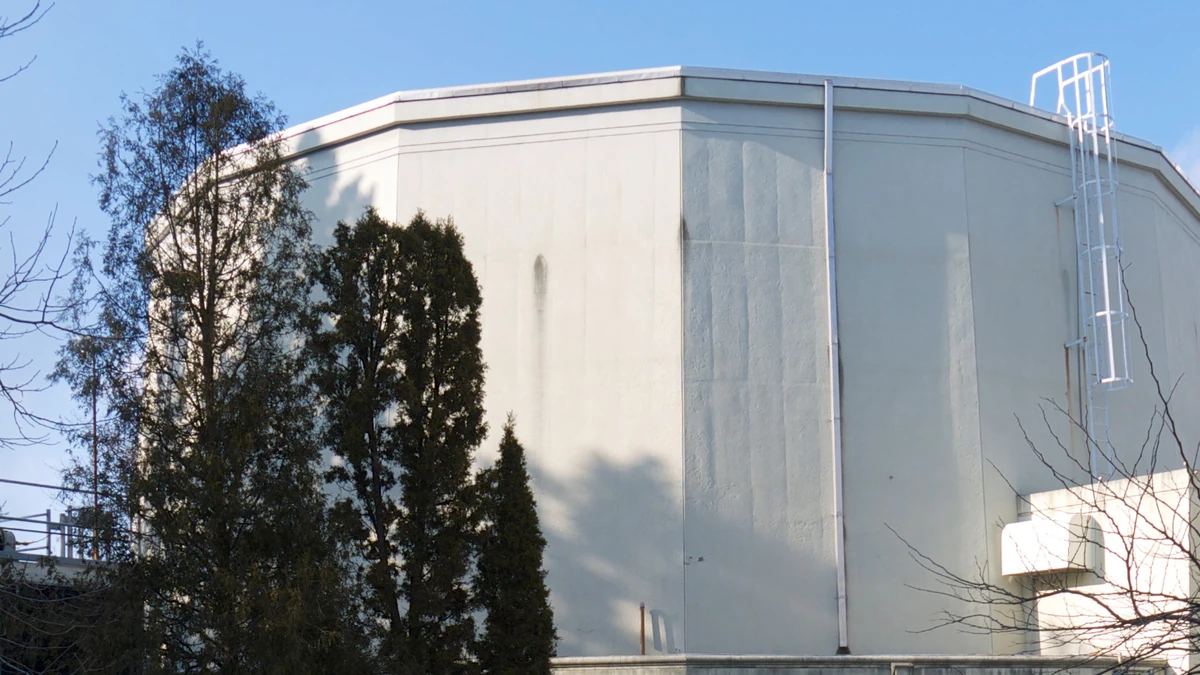
AtomVie Global Radiopharma has opened a new radiopharmaceutical manufacturing plant in Hamilton, Ontario, representing an investment of more than $160 million and giving the company more than ten times its previous manufacturing capacity. The 72,300-square-foot facility at 10 Aeropark Boulevard is designed to support drug programs from early clinical development through commercial manufacturing.
AtomVie announced the opening on Sept. 4 following a grand-opening event in Hamilton. The company said the site is the largest single-site contract development and manufacturing organization, or CDMO, facility in North America dedicated to radiopharmaceutical development, a market-position claim that MarketReview has not independently ranked.
Hamilton’s economic development office said the grand-opening event took place on Sept. 3 and that AtomVie is targeting a workforce of more than 200 employees by the end of 2026 as the site moves toward full operations. The opening turns a multi-year buildout into a manufacturing expansion that can serve both clinical-stage programs and products moving toward commercial supply.
A larger commercial manufacturing footprint
The new site materially changes the scale of AtomVie’s operations. According to the company’s facility materials, it has more than 18 production lines, a development suite, quality-control and microbiology laboratories, and space that can be configured for different client needs. AtomVie has also said the plant is intended to handle low-to-high throughput work and a range of radioisotopes used in radiopharmaceutical development.
That flexibility matters because radiopharmaceutical programs do not all arrive at the same stage or require the same production volumes. A CDMO may be asked to help with process and analytical-method development for an early clinical candidate, then support larger validated manufacturing runs if the drug advances. AtomVie says the Hamilton site was built so those programs can remain under one manufacturing platform as they progress from Phase I through later-stage studies and eventual commercialization.
The company has not presented the grand opening as the end of every commissioning and regulatory step. Its facility page says the plant is intended to be qualified by Health Canada, the U.S. Food and Drug Administration, the European Medicines Agency and other health authorities, while the Sept. 4 announcement said the site is still scaling toward full operations. That distinction is important: opening the building and establishing commercial-scale capacity are milestones, but regulated drug manufacturing still depends on the applicable qualification, validation and product-specific requirements.
AtomVie enters that scale-up with an operating history inherited from and expanded beyond the Centre for Probe Development and Commercialization, or CPDC. The company says it has supported more than 70 clinical-development and technology-transfer programs, manufactured more than 1,000 current good manufacturing practice batches, and delivered more than 4,400 cGMP doses across 28 countries and six continents. It reports a delivery success rate above 99%, a company-reported operating metric that is particularly relevant in a field where manufacturing and shipment schedules are closely tied to radioactive materials.
The investment has grown from the earlier Hamilton plan
The latest investment figure is numerically higher than the amount disclosed when the Ontario government backed the expansion in late 2025. In December, Invest Ontario said AtomVie planned to invest more than C$138 million in the Hamilton facility, with a proposed grant of up to C$5 million from the Invest Ontario Fund. That announcement said the project was expected to sustain 131 existing jobs and create 70 new positions.
AtomVie’s Sept. 4 opening release now puts the facility investment at more than $160 million, but it does not attach a currency qualifier to that figure. The earlier Invest Ontario announcement explicitly said its figures were in Canadian dollars. Without a currency designation or an explanation for the change in the newer release, MarketReview is not treating the gap between the two figures as a measured increase in Canadian-dollar project cost or characterizing it as a cost overrun.
The employment numbers line up closely across the two stages of the project. Ontario’s earlier plan pointed to 201 supported positions when retained and newly created jobs are added together, while the current Hamilton announcement says AtomVie is targeting more than 200 employees by the end of 2026. The newer target therefore appears consistent with the workforce scale contemplated when public support for the project was announced, rather than signaling a separate hiring program.
For Ontario, the public-policy case rests on adding domestic capacity in a specialized part of the pharmaceutical supply chain. Invest Ontario described the plant as a way to support both clinical trials and commercial radiopharmaceutical programs for global pharmaceutical companies, while the province highlighted its existing medical-isotope production, processing and research infrastructure. The proposed grant is small relative to the total project value, but it ties provincial support to a facility expected to create skilled manufacturing and scientific jobs in Hamilton.
Hamilton’s isotope ecosystem gives the plant a built-in base
AtomVie’s roots are unusually local for a manufacturing expansion of this scale. The company was spun out of CPDC, a McMaster University-based centre established to commercialize radiopharmaceutical technologies and manufacturing expertise. McMaster has its own nuclear-research and medical-isotope infrastructure, and the university has identified AtomVie as one of the companies that emerged from that ecosystem.
The Hamilton location also reflects the logistics of the business. AtomVie has cited proximity to U.S. border crossings, Toronto Pearson International Airport and John C. Munro Hamilton International Airport as reasons for locating the plant there. Many radiopharmaceutical supply chains are time-sensitive because the radioactive component decays, so reliable production, release testing and transport are commercial constraints rather than back-office details.
AtomVie says the plant can work with multiple isotopes and is designed to accommodate partner programs as they move from development to larger production runs. The expansion is therefore not simply additional floor space. It is an attempt to convert the company’s clinical-manufacturing track record into a larger commercial platform at a time when drug developers are investing more heavily in targeted radiopharmaceutical therapies, especially in oncology.
The next operating test is how quickly the new capacity moves from grand opening to routine production. AtomVie is still scaling the site toward full operations and has set the end of 2026 as the point by which it expects its workforce to exceed 200 employees. Progress on commissioning, regulatory qualification and the transfer of client programs into the Aeropark facility will determine how much of the more than tenfold capacity increase becomes usable commercial supply.
More News


Latest News
View all news- Five Tradr Leveraged ETFs Reach October 20 Trading Suspension Date on Cboe
- SEC and French Regulator Sign Oversight Agreement for Cross-Border Investment Advisers
- NCUA Proposes Easing Three Credit Union Rules, Including Investment Reserve Requirements
- Instacart Agrees to $5 Million Settlement Over U.S. Hiring Discrimination Allegations
- GM Authorizes $20 Billion Share Buyback After Reporting $3.3 Billion Quarterly Profit
