Australia Introduces Flexible Electricity Trading Rules for EVs and Home Energy Assets
The November 1 rules enable separate metering and settlement of EV chargers, batteries and other flexible energy assets, but do not give households an automatic right to multiple electricity retailers.
Our editorial standards
MarketReview publishes clear, independently produced financial information using reliable sources and transparent editorial standards.
Read our Editorial Policy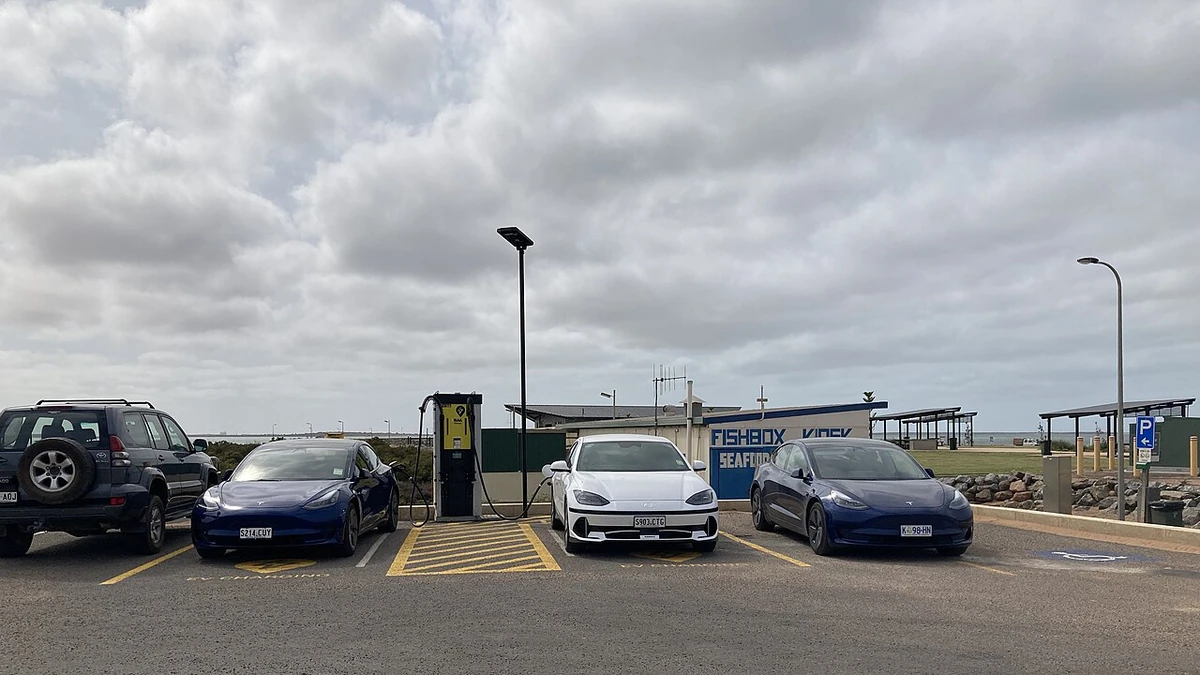
Australia’s National Electricity Market is entering the main phase of new flexible electricity trading rules on November 1, 2026, opening a way for electric vehicle chargers, household batteries and other controllable equipment to be measured separately from ordinary electricity use. The change is intended to support more tailored energy services, rather than replace the billing arrangements of every home or business.
Known as Flexible Trading Arrangements, the framework was approved by the Australian Energy Market Commission (AEMC) in August 2024 and is being implemented by the Australian Energy Market Operator (AEMO). Its underlying purpose is to make energy generated, stored or used by particular equipment easier to identify within the electricity market, instead of treating all activity behind a property’s main meter as a single total.
The AEMO implementation timetable sets November 1 for the second and main release. The National Electricity Market covers Queensland, New South Wales, the Australian Capital Territory, Victoria, South Australia and Tasmania. Western Australia and the Northern Territory are outside that market, so these arrangements should not be described as an immediate change to electricity trading across every part of Australia.
How a second settlement point changes electricity accounting
Most residential electricity accounts have historically been organised around a main connection point, where a meter records the net flow of electricity into and out of the premises. A household might charge a car, run appliances and use electricity from rooftop solar, but the market-facing record does not necessarily identify how much of that activity belongs to each controllable device. That makes it harder to design offers linked specifically to EV charging or battery use.
The new framework permits a secondary settlement point, or SSP, within a property. An SSP gives a qualifying energy resource a separate metering and market identification arrangement without requiring a second physical connection to the distribution network. Settlement calculations then account for electricity measured at the secondary point when determining the amount attributed to the main connection point. This prevents the same energy flow from being counted twice.
The AEMC’s final flexible trading rules draw a distinction between residential and larger commercial electricity users. Large customers can more readily use different financially responsible market participants for different resources at one premises. The rules also enable small customers to establish secondary settlement points and have flexible equipment managed separately, but the Commission did not extend the multiple-retailer model to small customers.
That distinction matters for an ordinary household with a home charger. Separate measurement could allow its electricity retailer to offer a dedicated EV tariff or an arrangement built around battery use. It does not mean the customer can automatically appoint one electricity retailer for the refrigerator and a competing retailer for the car charger while keeping both as separate market-facing suppliers at the same address.
For a factory, hospital or other large electricity customer, the potential change is broader. Such a site may be able to contract with another energy service provider to manage a controllable load without using an embedded-network structure or seeking another connection to the street network merely to create a separate market identity. Whether that is commercially worthwhile still depends on the site, its equipment and the services available.
Participation is voluntary. The rules create an option for properly equipped customers and participating energy businesses; they do not require households to install another meter, buy a battery or switch electricity plans. Nor does the start date itself establish that any particular retailer has launched a qualifying product.
What it could mean for EV charging and home batteries
An electric vehicle charger offers a practical illustration. If its energy use can be measured separately, a retailer could design a plan around charging at specified times or provide distinct charging data and charges on the bill. The aim is to make it easier to price the flexible activity according to how and when electricity is used, rather than applying the same structure to everything operating inside the home.
Home batteries raise a related possibility. A battery can absorb electricity from rooftop solar or the grid and release it later. Better measurement of that equipment can help service providers understand and manage its contribution separately from conventional household demand. It may also support arrangements in which eligible devices are coordinated to respond to electricity-market needs, including virtual power plant services. Such participation still requires a suitable provider offer and the necessary technical arrangements.
The reform includes new metering categories designed for these uses. Type 8 arrangements support secondary settlement points, while Type 9 metering covers certain minor electricity flows, including eligible public EV charging and street-lighting installations. Devices with suitable built-in measurement capability may be used in place of a separate conventional meter where applicable technical and approval requirements are met.
Lower-cost measurement is a central part of the policy, but built-in technology is not automatically acceptable simply because a device can display energy use on an app. Metering, market registration and data processes remain subject to the relevant rules and technical standards. AEMO also requires accreditation for participants taking on certain new metering and settlement service roles.
The immediate practical question for an EV owner is therefore not just whether the rule has started. It is whether the household’s retailer or service provider supports a relevant arrangement, whether the charger or battery is compatible, and how the proposed tariff compares with the existing plan once equipment and service costs are considered. The regulations do not guarantee an individual customer a lower power bill.
For consumers who have not invested in an EV, rooftop solar or a battery, the change is less direct. Regulators expect better use of flexible resources to help electricity suppliers and networks manage demand over time, but those wider benefits depend on participation and the design of future services. They should not be confused with an immediate reduction in standard household electricity rates.
Why the November rollout follows an earlier metering change
Although the main flexible trading arrangements commence in November, the reform did not arrive in a single step. The AEMC made the final rule determination on August 15, 2024. AEMO delivered the first implementation release on May 31, 2026, covering Type 9 metering for smaller energy flows such as public EV charging and smart street lighting. The November stage introduces Type 8 metering, secondary settlement points and the broader market arrangements needed to use them.
This sequence allowed some simpler applications to begin before the market systems for secondary settlement points were ready. Metering and settlement are not merely matters of installing hardware; retailers, service providers and AEMO need records that identify which participant is responsible for each measured flow, along with procedures for exchanging and reconciling that information.
The AEMC’s original assessment pointed to potential savings from reduced metering installation and maintenance costs. Analysis cited in its 2024 determination estimated up to A$100 million in benefits over 20 years from the metering changes associated with smart streetlights and public EV chargers, including operating and other system benefits. That was an estimate of possible long-term outcomes for those applications, not a forecast of savings for each EV owner or a measure of benefits already realised.
Retailers and energy service providers still have choices to make about pricing, customer enrolment and whether to support separate measurement of flexible equipment. The new market structure also leaves consumer-protection questions relevant when a household considers a product involving more sophisticated metering, automated charging or battery control. A product’s commercial terms will matter alongside the technical ability to settle electricity separately.
From November 1, qualifying participants can begin using the new settlement-point arrangements under the applicable market procedures. The change establishes the framework for future EV charging and home-energy offers, but the number of services actually available will be determined by providers adopting the rules and customers choosing to use them.
More News


Latest News
View all news- BILL Agrees to $6 Billion Take-Private Acquisition Led by TPG, With Corpay Taking Minority Stake
- South Korea Readies Stock Market Stabilization Fund After Emergency Meeting
- Nintendo’s $50 Switch 2 Bundle Discount Begins at U.S. Retailers
- U.S. Rail Exemption Takes Effect for Nearly 60 Miles of Pennsylvania Rail Lines
- Qatar’s Inward Foreign Investment Stock Rises 5.2% to QAR 180.6 Billion