
Bank of Canada Raises Interest Rates to 2.50% as Inflation Pressures Persist
The quarter-point increase is the first since July 2023, with the Bank now projecting inflation of 3.1% in 2027 as energy-related costs persist.
Our editorial standards
MarketReview publishes clear, independently produced financial information using reliable sources and transparent editorial standards.
Read our Editorial Policy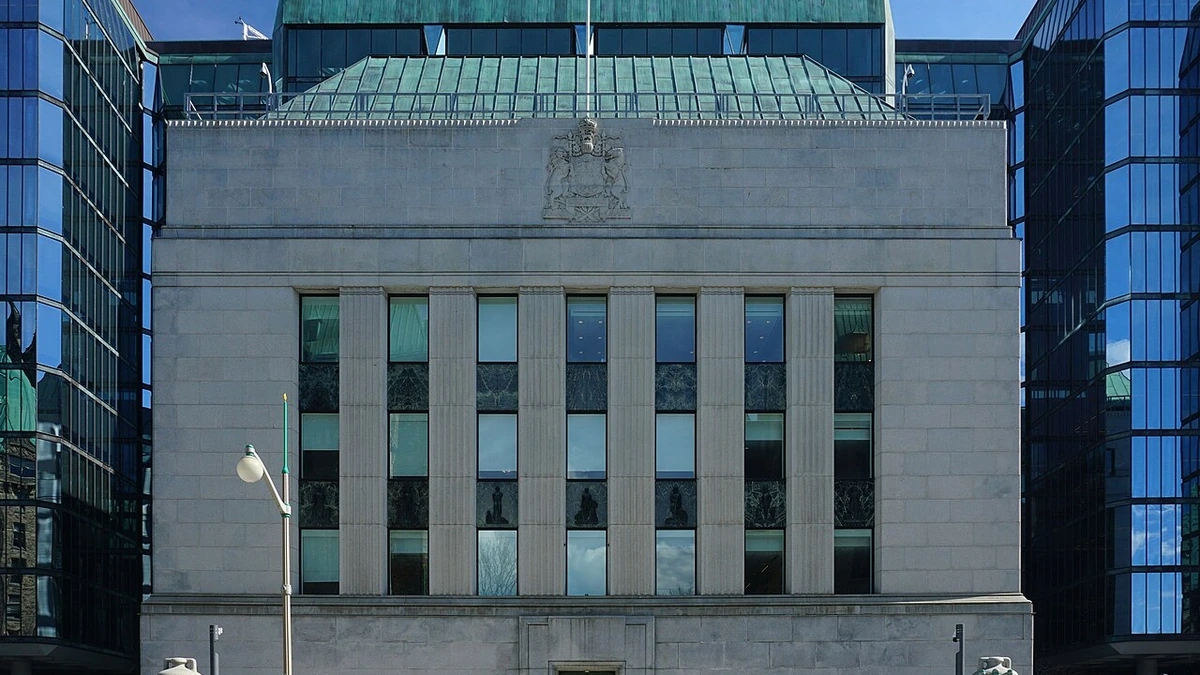
The Bank of Canada raised its benchmark overnight interest rate by 25 basis points to 2.50% on Wednesday, October 28, marking its first increase since July 2023. The central bank said it was acting against the risk that persistently high energy costs would spread into a wider range of consumer prices.
The decision takes the policy rate up from 2.25%, where it had remained throughout 2026 until this meeting. It also reflects a change in the economic picture: Canadian growth has been stronger than the central bank anticipated in July, even as the inflation outlook has deteriorated.
In its October 28 rate announcement, the Bank of Canada set the Bank Rate at 2.75% and its deposit rate at 2.45%. Officials said further increases could prove necessary, but stopped short of committing to another move, citing uncertainty around energy prices and Canada-U.S. trade relations.
Energy costs put the inflation outlook on a higher path
Canada’s Consumer Price Index increased 3.1% from a year earlier in September, up from 3.0% in August, according to Statistics Canada’s inflation report. Gasoline prices were 27.8% higher than a year earlier and accounted for much of the acceleration. With gasoline excluded, overall inflation was 2.2%, down from 2.4% in August.
That difference matters to the policy decision. The latest inflation readings do not show a uniform surge across household spending categories. The Bank of Canada reported that its preferred measures of underlying inflation remained close to 2%, while the unemployment rate was still around 6.5%. Its concern is that concentrated cost increases may become more persistent as businesses adjust their prices.
Fuel has become more expensive not just because of crude oil prices, but also because refinery margins have stayed elevated. Higher transportation and production expenses are filtering through supply chains, and the central bank expects imported industrial materials and electronics components to add to business costs. Canadian counter-tariffs are another potential source of pressure.
Businesses have absorbed much of the increase in their input costs so far, according to central bank surveys. They expect to pass a larger share to customers over the next year. Short-term inflation expectations have also risen, although the Bank said longer-term expectations remain anchored, an important distinction for judging whether the current shock could become entrenched.
The October Monetary Policy Report now projects average consumer price inflation of 2.9% in 2026, compared with 2.5% in July. The change is sharper for 2027: the forecast jumped to 3.1% from 2.0%. The Bank expects inflation to stay above 3% through much of next year before easing toward its 2% target by the middle of 2028.
Those are forecasts rather than measured outcomes, and they depend heavily on how long energy disruptions persist. If oil and transport costs retreat sooner than expected, one source of pressure would diminish. If companies pass through more of those costs, the resulting increases in prices outside the energy sector could be harder to reverse.
Stronger growth gives the Bank room to act, but trade risks remain
Canada’s economy expanded at a 3.3% annualized rate in the second quarter, a better result than the Bank of Canada had anticipated. Officials estimated that growth was running near a 2% annualized pace in the third quarter. Household spending proved resilient, while business investment benefited from equipment purchases and activity in the energy sector.
The stronger performance helped shift the balance of risks toward inflation. In July, weaker demand had offered the central bank more reason to hold rates steady. By October, firmer activity alongside a less favorable price outlook strengthened the case for a quarter-point increase, even though the economy still had unused capacity.
The Bank raised its forecast for full-year 2026 economic growth to 1.0% from 0.7% in July. It expects growth of 2.0% in both 2027 and 2028, supported in part by investment and government spending. These forecasts still describe a modest recovery rather than a return to rapid expansion.
There are important limits to that improvement. Employment has been roughly unchanged since the beginning of the year, and people looking for work continue to face a difficult labour market. Central bank estimates point to excess capacity, meaning the economy is not operating at a pace that would normally signal broad overheating.
Trade tensions could also weaken activity before the benefits of stronger investment become widespread. New U.S. tariffs and uncertainty over future trade policy are expected to restrain Canadian exports and spending. The Bank estimates growth will slow to below a 1% annualized pace in the fourth quarter, with housing activity remaining weak.
That creates an unusually difficult setting for monetary policy. Higher borrowing costs can limit domestic demand and help contain price increases, but they cannot directly restore disrupted energy supplies or remove import tariffs. The Bank is trying to prevent a temporary external cost shock from turning into lasting domestic inflation without unnecessarily deepening the slowdown in trade-sensitive industries.
Borrowing costs and the next policy decision
The overnight rate is the Bank of Canada’s policy target, not the interest rate that households pay on a mortgage or credit card. A quarter-point increase can feed through to lenders’ prime rates and products tied to them, including some variable-rate mortgages and lines of credit. The timing and size of any change for an individual borrower depend on the lender and loan terms.
Fixed-rate mortgages respond more closely to longer-term bond yields than to the overnight target alone. Savings and deposit rates can also move differently as financial institutions make their own pricing decisions. The policy change therefore signals a shift in the cost-of-money environment without producing an identical 0.25-percentage-point change in every consumer rate.
The increase is also a reversal of the direction of policy after a lengthy period of easing. The Bank last raised its key rate in July 2023, when the target reached 5%. Subsequent cuts eventually brought it to 2.25% in October 2025, and the rate stayed there until this week’s decision.
Governing Council left another hike on the table, but the October announcement did not set a timetable for further tightening. Future decisions will depend on whether energy and import costs move into a wider range of prices, how inflation expectations evolve and whether consumers and businesses continue to support growth despite higher financing costs.
The next major price update is Statistics Canada’s October inflation report, scheduled for November 16. The Bank of Canada’s next interest rate decision is set for December 9, followed by a new Monetary Policy Report on January 27, 2027.
More from Banking

Latest News
View all news- Vertiv Reports 61% Sales Growth and Raises Full-Year Guidance as AI Infrastructure Demand Surges
- New BLS Data Show U.S. Private Businesses Added Just 88,000 Net Jobs in First Quarter
- U.S. Mortgage Applications Rise 3.4% as 30-Year Rates Ease to 7.37%
- Unemployment Rates Fall in 226 U.S. Metropolitan Areas, New BLS Data Show
- U.S. Goods Trade Deficit Widens to $134.9 Billion in September
