
Charter and Cox Complete Merger, Creating a 45-State Broadband Giant
Charter has completed its merger with Cox Communications, expanding Spectrum to 45 states as the companies begin integrating broadband, mobile and customer-service operations.
Our editorial standards
MarketReview publishes clear, independently produced financial information using reliable sources and transparent editorial standards.
Read our Editorial Policy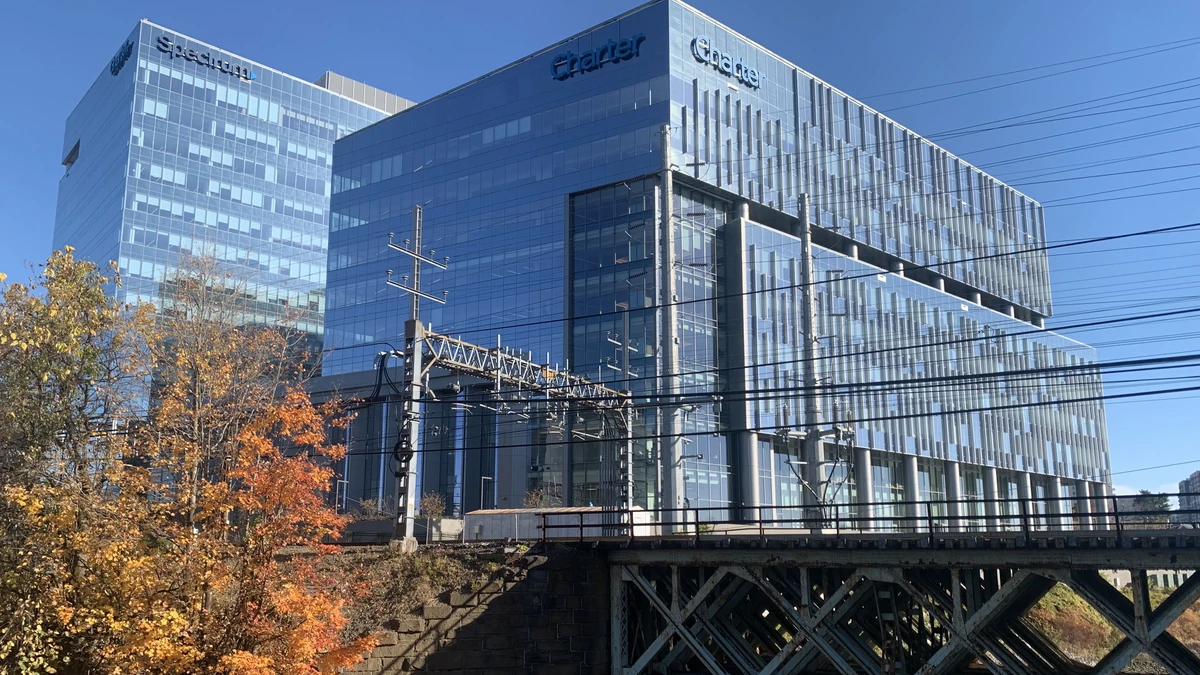
Charter Communications has completed its merger with Cox Communications, creating a broadband provider with a Spectrum footprint spanning 45 states and services available to more than 70 million homes and businesses. The closing turns one of the cable industry’s biggest announced deals into an operating business that will reshape Charter’s customer base, ownership and network reach.
The merger also begins a visible change for Cox customers. Charter plans to introduce the Spectrum brand, pricing and product packages across former Cox markets in mid-September, while allowing existing customers to keep their current plans if they prefer. A free year of mobile service is being offered immediately to eligible Cox Internet customers who do not already subscribe to Cox Mobile.
Charter said on August 20 that it had completed the Cox merger and its separate acquisition of Liberty Broadband. When Charter and Cox announced the merger in May 2025, they valued the Cox deal at approximately $34.5 billion in enterprise value. The Federal Communications Commission approved the deal in February 2026.
Cox Enterprises emerges with a roughly 26% stake
The closing leaves Cox Enterprises as a major owner of the enlarged Charter. A Cox Enterprises subsidiary received about 33.6 million common units in Charter Holdings with an implied value of roughly $5 billion, $6 billion of convertible preferred units carrying a 6.875% coupon, and approximately $4 billion in cash.
The preferred units can convert into 12.6 million Charter Holdings common units, and the common units can in turn be exchanged for Charter common shares. Charter said the securities issued to Cox represented the equivalent of just over 46 million Charter shares. After also giving effect to the Liberty Broadband acquisition, Cox Enterprises and its subsidiaries own about 26% of the combined company’s fully diluted shares on an as-converted, as-exchanged basis.
About $12 billion of Cox debt and finance leases also remain outstanding at Charter subsidiaries following the merger. That debt component helps explain why the deal’s enterprise value is much larger than the cash paid at closing. When the agreement was announced, Charter described the approximately $34.5 billion Cox valuation as consisting of $21.9 billion of equity value and $12.6 billion of net debt and other obligations.
The ownership outcome shifted from the estimate disclosed when the agreement was first signed. In May 2025, Charter expected Cox Enterprises to own about 23% of the combined entity on a fully diluted basis. By closing, Charter put the stake at about 26%, reflecting the actual share count and the effect of the Liberty Broadband acquisition.
Liberty Broadband closed at the same time as Cox. Charter retired about 38.6 million shares that had been owned by Liberty Broadband and issued about 33.9 million shares to Liberty Broadband common shareholders, producing a net reduction of approximately 4.7 million Charter shares outstanding. Charter also assumed about $840 million of Liberty Broadband net debt, which it said would be repaid shortly after closing, and $180 million of preferred equity that became Charter preferred equity.
The board structure changes as well. Alex Taylor, chairman and chief executive of Cox Enterprises, has become chairman of Charter’s board. Chris Winfrey remains Charter’s president and chief executive, while Eric Zinterhofer moves from chairman to lead independent director. Cox Enterprises also appointed Dallas Clement and Mark Greatrex to Charter’s 13-member board.
The corporate name will eventually move in Cox’s direction even though the customer-facing brand moves the other way. Charter said the parent company will change its name to Cox Communications within one year of closing, but Spectrum will remain the operating brand across all markets. The headquarters will stay in Stamford, Connecticut, with a significant presence retained in Atlanta.
Spectrum rollout begins in former Cox markets
The near-term integration will be most visible in product branding and customer offers. Charter plans to launch its full Spectrum product suite, pricing and packaging in Cox markets in mid-September. Existing Cox customers are not being forced into new packages immediately, and Charter says current plans, pricing and products can remain in place unless a customer chooses to change them.
The first promotional step begins at closing. Eligible Cox Internet customers who are not already Cox Mobile subscribers can receive one free mobile line for a year. Charter is using the offer to introduce its broadband-and-mobile strategy to a larger footprint, where fixed broadband connections are paired with mobile service that relies on both cellular networks and the company’s WiFi infrastructure.
The enlarged Spectrum footprint covers 45 states and more than 70 million homes and businesses, according to Charter. When the Cox agreement was announced, the companies said Cox’s wireline network reached roughly 12 million homes and businesses and served about 6 million existing customers. Cox also brought commercial operations including Cox Business, Segra and RapidScale into the merger.
Customer-service integration will take longer than the brand change. Charter plans to apply its sales and service workforce model to Cox markets over the next 18 months and bring Cox’s offshore customer-service functions back to the United States. The company says all employees will have a starting wage of at least $20 an hour, along with access to Charter’s benefit programs.
Within the next year, Charter also plans to extend its customer-service commitments to former Cox markets. Those commitments include 24-hour U.S.-based customer support, same-day technician dispatch for qualifying issues reported before 5 p.m., and bill credits for outages lasting more than two hours.
FCC approval tied the scale-up to rural investment and U.S. jobs
The regulatory approval was not simply a transfer of licenses. In February, the FCC’s Wireline Competition Bureau approved the $34.5 billion acquisition after highlighting commitments tied to network investment, rural broadband construction and employment. The agency said the combined company would become the largest residential internet service provider in the market.
Among the commitments cited by the FCC, Charter agreed to invest billions of dollars to upgrade its network and expand high-speed service, continue rural construction, bring all Cox job functions then handled offshore back to the United States within 18 months, and extend a minimum starting wage of $20 an hour to Cox workers. The approval also referenced equal-opportunity and nondiscrimination safeguards in hiring and promotion.
Scale is central to Charter’s strategy because its legacy broadband business has been under pressure even as mobile continues to grow. In the second quarter of 2026, before the Cox closing, Charter lost 172,000 internet customers and ended June with 29.4 million internet subscribers. Over the same quarter it added 406,000 mobile lines, taking the mobile total to 12.5 million. Revenue fell 1.7% from a year earlier to $13.5 billion, and adjusted EBITDA declined 4.3%.
The Cox footprint gives Charter more households and businesses over which to spread network, product and operating investments, but it also increases financial and integration demands. When the merger was announced, Charter projected about $500 million of annualized cost synergies within three years, mainly from procurement and overhead savings. That remains a forecast rather than a guaranteed outcome, and Charter’s closing release specifically cautions that integration costs, higher interest expense, business disruption and possible shortfalls in expected synergies could affect results.
The next operational milestone is now close rather than theoretical. Spectrum pricing and products are scheduled to reach former Cox markets in mid-September, followed by a longer integration of customer service, systems and workforce practices. The parent-company name change to Cox Communications is expected within a year, leaving Spectrum as the national consumer brand of a much larger broadband group.
More from Investing

Latest News
View all news- FTC, USDA Launch Joint Inquiry Into Agricultural Equipment Market Practices
- VAALCO Completes Gabon Phase 3 Drilling as ETSEM-3H Starts at About 2,000 BOPD
- U.S. Crude Inventories Fall 3.2 Million Barrels in Latest EIA Report
- UK Trade Remedies Authority Proposes Five-Year Anti-Dumping Duty on Chinese Rutile Titanium Dioxide
- OCC Launches Direct Payments-Fraud Reporting Tool for Community Banks
