
Chiltern Railways Transfers Into Public Ownership as UK Rail Restructuring Advances
Chiltern Railways passenger services are now managed by DfT Operator Ltd, with a December timetable set to add 25 weekday services as the government moves toward Great British Railways.
Our editorial standards
MarketReview publishes clear, independently produced financial information using reliable sources and transparent editorial standards.
Read our Editorial Policy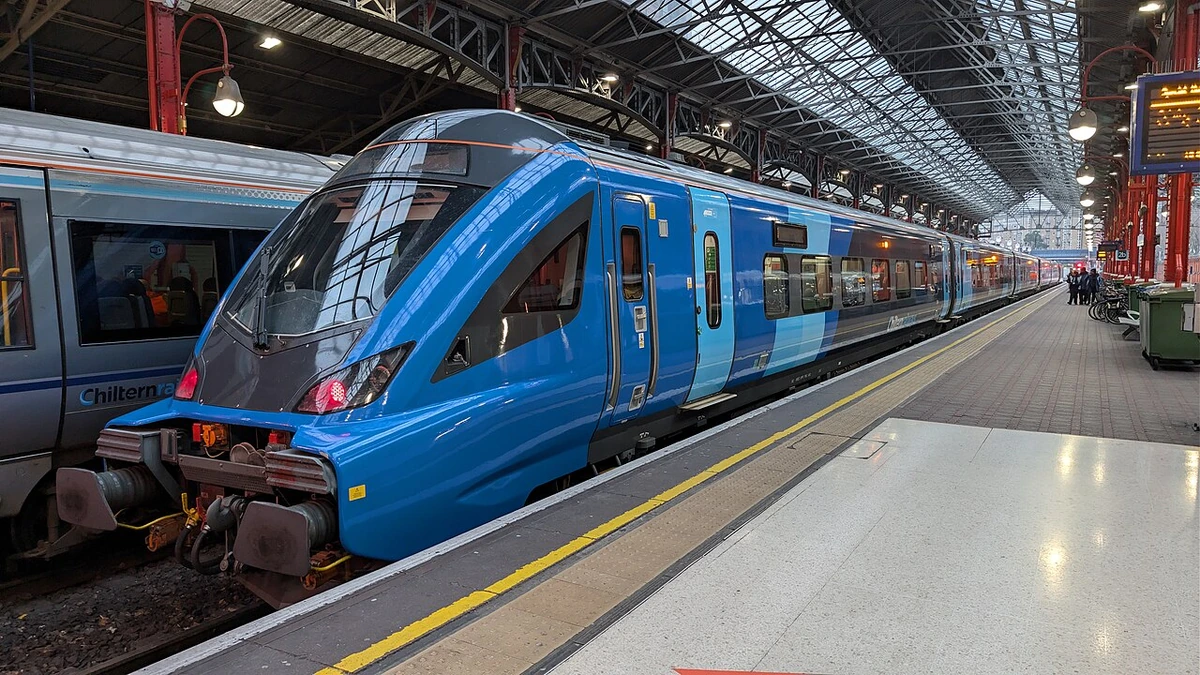
Chiltern Railways passenger services transferred into public ownership on 20 September 2026, placing the operator under the management of DfT Operator Ltd as the government continues moving contracted passenger rail services into the public sector. The change affects a network linking London Marylebone with communities across Buckinghamshire, Oxfordshire, Warwickshire and the West Midlands.
The transfer is the latest step in a programme that is running ahead of the planned creation of Great British Railways, or GBR. Chiltern continues to operate its existing routes and brand, but responsibility now sits within the government-owned rail operating group rather than with Arriva. The immediate passenger test will be operational rather than symbolic: service frequency, capacity, reliability and station conditions.
In its 20 September announcement, Chiltern confirmed that it is now managed by DfT Operator Ltd, known as DFTO. The group already oversees a collection of publicly owned train operators and is intended to provide continuity while the wider rail structure is being changed.
December timetable brings more services and newer trains
The Department for Transport has tied the ownership change to a package of service improvements, although several of the projects were already being planned before the transfer. From the December 2026 timetable, Chiltern is due to add 25 services each weekday, including a half-hourly service through the day on the Chiltern Main Line between London and Birmingham. The department says the timetable will provide almost 10,000 additional seats on weekdays, nearly 5,000 more on Saturdays and more than 3,000 on Sundays.
Capacity has become a central issue on parts of the network, particularly during busy periods. The government says six more Chiltern Explorer trains are due to enter service with the December timetable, completing a 13-train fleet. Those trains are expected to add capacity and provide improved accessibility, air conditioning and upgraded onboard Wi-Fi on services between London and the West Midlands.
Work is also continuing on Chiltern’s existing Class 168 fleet. A £12 million refurbishment programme is scheduled to add upgraded Wi-Fi, power and USB charging at every seat and refreshed interiors by 2028. Station work announced by the government includes refurbished toilets, painting, deep cleaning and graffiti removal. At Haddenham and Thame Parkway, 200 previously closed car parking spaces are expected to reopen.
The Department for Transport’s transfer announcement also says new signage is planned at five of Chiltern’s busiest stations, alongside upgraded customer information screens, help points and accessible ramps. The department says the network is used by almost 20 million passengers a year. It has also presented public ownership as an opportunity to support future East West Rail services, although the ownership change itself does not determine the timetable or scope of that separate project.
Another practical change applies during disruption. The government says passengers whose Chiltern train is cancelled will be able to use another operator’s service at no extra cost. That measure is intended to reduce the friction passengers face when disruption crosses operator boundaries, one of the issues ministers have cited in arguing for a more unified rail structure.
DFTO is the interim home before Great British Railways
Chiltern is the sixth operator to transfer under the current public ownership programme, following South Western Railway, c2c, Greater Anglia, West Midlands Trains and Govia Thameslink Railway. Some other operators, including LNER, Northern, Southeastern and TransPennine Express, were already in public ownership before this sequence of transfers. That distinction matters because the current programme is not creating a single operating company in one step. Services are first being moved into publicly owned operating companies managed by DFTO.
The legal basis for these transfers is the Passenger Railway Services (Public Ownership) Act 2024, which allows passenger services previously provided under Department for Transport contracts to move to public sector operators as those contracts end or are brought to a close. The government expects the remaining DfT-contracted passenger services covered by the programme to transfer by the end of 2027.
Great Western Railway is scheduled to be the next operator to move into public ownership, on 13 December 2026. Further operators are expected to follow later. The sequence means passengers will see ownership changes before GBR itself is formally established.
DFTO therefore serves as a bridge between the existing fragmented structure and the model proposed for GBR. Government guidance describes GBR as the future body that would take responsibility for most passenger services and railway infrastructure, bringing decisions on trains, timetables, track and stations under a single public organisation. That is broader than the Chiltern transfer, which changes who manages the passenger operator but does not by itself merge Chiltern with Network Rail or create GBR.
The government has argued that the future structure should make accountability clearer and reduce duplicated decision-making. Those are policy objectives rather than outcomes that can be assumed from the ownership change alone. For Chiltern passengers, the measurable effects will come through the promised timetable, fleet and station changes, along with how reliably the operator performs once it is under DFTO management.
Railways Bill remains under parliamentary scrutiny
The wider restructuring still depends on legislation that has not completed its passage through Parliament. The Railways Bill, which would establish Great British Railways and set out its functions and accountability framework, is currently at committee stage in the House of Lords. Peers resumed line-by-line scrutiny on 16 September, and the next scheduled committee session is 12 October, according to Parliament.
The bill would make GBR the central public body for much of Britain’s rail system while retaining a role for private businesses in areas including rolling stock, freight, ticket retail, infrastructure work and the wider supply chain. The government has said GBR would be accountable to the Transport Secretary, with responsibilities spanning passenger services and infrastructure. Parliament is still considering the details, so the final statutory framework could change before Royal Assent.
That leaves two related processes moving at different speeds. The transfer of Chiltern’s passenger services has already happened under existing public ownership legislation. The creation of GBR is a separate legislative project that is still being examined. In operational terms, Chiltern will spend the coming months inside DFTO while the proposed long-term structure is debated and built.
The next concrete milestones are close together. Chiltern’s expanded timetable and the final six Explorer trains are due in December, Great Western Railway is scheduled to transfer on 13 December, and the Railways Bill returns to House of Lords committee scrutiny on 12 October. Those events will show how the government’s staged approach moves from ownership changes toward the broader rail model it wants GBR to operate.
More News



Latest News
View all news- Australia Raises Pension Payments and Deeming Rates From Sept. 20
- REPT BATTERO and Germany’s Haller Group Sign European Battery Partnership
- BNY’s $1 Billion Series F Preferred Redemption Takes Effect
- TWC Enterprises’ New TSX Buyback Authorization Takes Effect for Up to 1.21 Million Shares
- Switzerland and ASEAN Explore Deeper Economic Cooperation and EFTA Links in Manila
