Energy Department Opens $237 Million Funding Opportunity for U.S. Power Grid Supply Chain
The first Grid SCALED funding round targets refurbished equipment and U.S.-made components, with concept papers due November 20.
Our editorial standards
MarketReview publishes clear, independently produced financial information using reliable sources and transparent editorial standards.
Read our Editorial Policy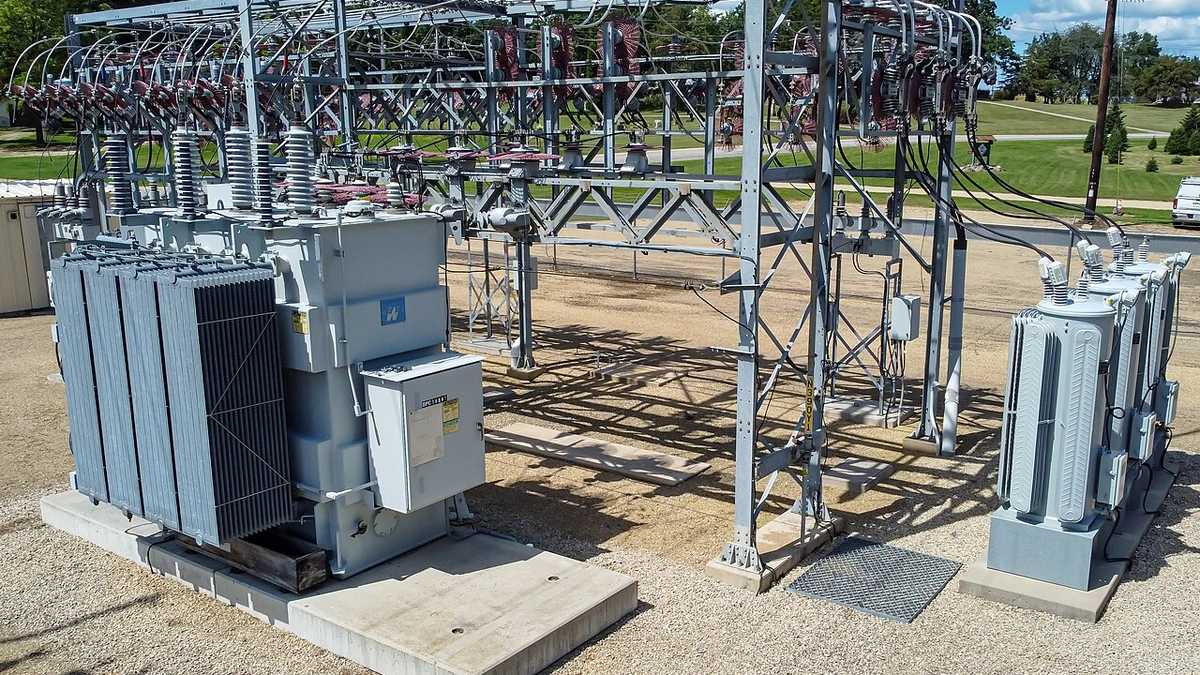
The U.S. Department of Energy opened a $237 million funding opportunity on Friday, October 30, aimed at easing shortages of equipment used to move electricity across the country. The program will support work on refurbishing existing grid hardware and developing alternatives to imported materials and components, two areas the agency says could help utilities obtain critical equipment faster and at lower cost.
The funding opportunity, called Grid Supply Chain Alternatives to Lead Energy Dominance, or Grid SCALED, is the first round under a wider federal grid supply chain program. DOE is seeking project proposals rather than announcing a list of grant recipients. The distinction matters because the benefits described by the agency depend on projects being selected, completed and adopted by utilities or equipment suppliers.
DOE said in its October 30 announcement that the effort could generate an estimated $125 million in annual savings for utilities and keep another estimated $50 million a year in the U.S. economy that would otherwise flow to foreign suppliers. Those are departmental projections, not realized savings or amounts that have already been distributed.
Most of the Funding Is Directed at Domestic Materials and Components
Of the $237 million available, up to $187 million is designated for projects that expand the use of alternative grid materials and subcomponents sourced and manufactured in the United States. The remaining $50 million is intended to encourage refurbishment and reuse of existing grid equipment and materials. Both tracks address the same constraint from different directions: dependence on new equipment that can be expensive or slow to obtain.
Transformers are a particular concern. They adjust voltage as electricity moves between generation facilities, transmission networks and local distribution systems. They also require specialized inputs and manufacturing capacity, so a shortage of one part or material can delay delivery of an entire unit. DOE has identified electrical steel used in transformer cores and copper used in windings as important domestic supply constraints.
The larger funding track is designed to make alternative U.S.-sourced inputs more practical for grid equipment producers. DOE’s Office of Electricity has pointed to research at Pacific Northwest National Laboratory on copper-graphene and aluminum-graphene composites as an example of material innovation. According to the office, researchers have developed composites that conduct electricity 5% to 7% better than the pure metals commonly used today.
That laboratory work illustrates the direction of the research, but it does not establish that every proposed substitute is ready for widespread utility use. Grid components must meet demanding requirements for performance, reliability and service life. Reducing dependence on imports will therefore require both a workable domestic supply chain and equipment that manufacturers and utilities are prepared to use.
The $50 million refurbishment track offers a more immediate route for some equipment needs. Retired or damaged transformers may contain functioning parts or valuable materials that can be recovered, repaired and tested instead of replaced entirely. An equipment owner that can return a suitable unit to service may avoid waiting for a new transformer to be manufactured and delivered.
DOE estimates that refurbished transformers can cost 10% to 40% less than new units. The savings are not automatic: refurbishment must be economically viable for the particular equipment, and utilities need confidence that rebuilt units will perform reliably. The department has identified inconsistent remanufacturing practices, limited testing capacity and inadequate documentation as obstacles to broader acceptance.
Transformer Supply Delays Have Become a Cost Problem
The funding announcement follows years of pressure on the U.S. market for power and distribution transformers. Utilities need replacement units for aging infrastructure while also adding equipment for new homes, industrial sites and large electricity users. Expanding generating capacity alone does not eliminate the need for substations, transformers and related hardware to carry electricity to customers.
In an October 26 assessment, DOE’s Office of Electricity said imports account for about 80% of U.S. power transformers and half of distribution transformers. The office linked the heavy reliance on foreign suppliers to shortages in domestic production of both finished equipment and key inputs. These are the agency’s estimates of supply dependence, not independently measured outcomes of the new funding round.
The shortage has also changed the time utilities may need to plan for procurement. In a distribution-transformer webinar held earlier in 2026, DOE said demand for those units had climbed 41% since 2019. It described lead times that had expanded from roughly three to six months in 2019 to one or two years or longer in 2024, the latest year covered by the historical comparison. The figures describe that earlier market period and should not be treated as a live quote for every transformer order today.
Availability differs by transformer type and specification, which limits the usefulness of a single industrywide lead-time figure. Large power transformers, specialized components and common distribution units do not necessarily face the same conditions. Still, a delayed transformer can affect the schedule of a larger grid project even when other construction work and equipment are ready.
The cost argument behind refurbishment is similarly conditional. DOE has estimated that refurbishing 30% of distribution transformers reaching the end of their service lives could save ratepayers as much as $125 million a year. That scenario helps explain the savings figure associated with the funding initiative, but it is not a guarantee that utilities will reach the assumed refurbishment rate or pass through a specific amount to individual electricity customers.
Manufacturing standards are another part of the supply-chain challenge. DOE has said that the large number of transformer configurations used by utilities makes equipment less interchangeable and can complicate production. Wider agreement on common designs could allow producers to manufacture fewer variations at greater scale, but such changes would require agreement on technical needs across the industry.
Applications Open Now; Further Funding Is Expected in 2027
DOE has set November 20, 2026, as the deadline for concept papers. Submitting a concept paper is required to qualify for a full application, which is due February 8, 2027. The opportunity is listed in DOE’s eXCHANGE system as DE-FOA-0003641, with the Grid SCALED title. Prospective applicants will need to consult the official funding notice for the full submission conditions and technical requirements.
The new $237 million opportunity sits within DOE’s Grid Supply Chain Program, which is authorized to provide up to $375 million. That larger authorization should not be read as a separate $375 million award announced Friday. It establishes the scale of the broader initiative, with the October solicitation representing the first named funding round.
The department expects more funding announcements in 2027. It has identified solid-state transformers and wider use of standardized equipment configurations among the areas it intends to pursue. Solid-state transformers rely on power electronics to perform functions traditionally handled by conventional transformer designs, but DOE has not identified recipients or confirmed grant awards for the future round.
For the current round, the immediate milestone is the November concept-paper deadline, followed by the February full-application cutoff. Whether the program delivers the savings and shorter equipment waits outlined by DOE will depend on which projects receive support and whether their equipment or materials reach practical commercial use.
More News


Latest News
View all news- Chevron Posts $9.9 Billion Quarterly Profit as U.S. Refinery Throughput Hits Record
- AbbVie Raises 2026 Earnings Outlook After Revenue Climbs 10.3%
- Federal Radiation Compensation Approvals Reach $909 Million, With More Than 50,000 Claims Pending
- Spain Inflation Holds at 4.9% in October as Core Stays at 3.1%
- Italy Inflation Surges to 5.4% in October as Energy Prices Jump