Federal Reserve Enters Blackout Period Ahead of December Interest Rate Decision
The Fed will receive fresh employment figures before its December 9 rate decision, but the next consumer inflation report arrives a day later.
Our editorial standards
MarketReview publishes clear, independently produced financial information using reliable sources and transparent editorial standards.
Read our Editorial Policy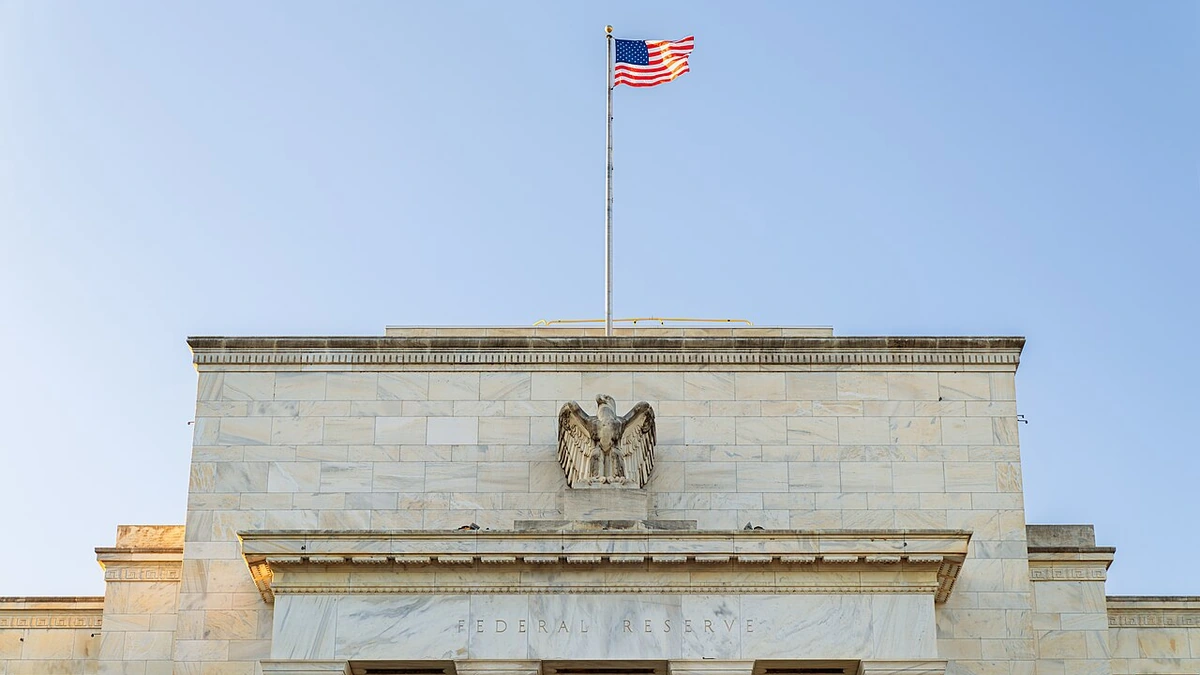
The Federal Reserve entered its final scheduled monetary policy blackout period of 2026 on Saturday, November 28, restricting public comments from policymakers ahead of the December 8–9 meeting. The central bank will announce its next interest rate decision on December 9, with its benchmark rate currently in a range of 3.75% to 4.00%.
The pause in public commentary comes at a time when the direction of US monetary policy is still in question. Two officials voted for higher rates in October, and the minutes of that meeting indicated considerable support among policymakers for further tightening if the economy and inflation developed as expected. December’s meeting will also bring a new set of economic and interest rate projections.
What the Fed’s blackout period restricts
Under the Federal Reserve’s official blackout calendar, the restrictions began at midnight Eastern Time on November 28 and run through 11:59 p.m. on December 10. They cover the days leading up to the Federal Open Market Committee (FOMC) meeting, the meeting itself and the following day.
The communications policy limits participants from publicly discussing their own assessments of economic conditions and monetary policy during this interval. It is a regular part of the Fed’s meeting cycle, intended to give officials room for deliberation and reduce conflicting signals in the run-up to a collective decision. The blackout is not a suspension of monetary policy operations, nor does it prevent the committee from announcing its decision or the chair from explaining it at the scheduled press conference.
For financial markets, the immediate difference is that an important source of guidance becomes less available. A speech or interview can ordinarily help clarify how an individual policymaker interprets a new inflation or employment report. Over the next several trading sessions, investors will have to assess such developments without the usual stream of individual Fed assessments. Silence from officials during the period should not be interpreted as evidence that they have reached agreement on rates.
October’s hold left the door open to higher rates
The October 27–28 meeting followed a unanimous decision in September to raise rates by a quarter percentage point. In October, the FOMC voted 10–2 to leave the federal funds target range unchanged. Governor Lisa Cook and Cleveland Fed President Beth Hammack dissented in favor of a quarter-point increase. In its statement, the committee judged that the economy was growing strongly and that inflation remained above its 2% objective.
Minutes published November 18 offered more detail about the disagreements behind that decision. Nearly all participants considered further rate increases likely to be appropriate under their economic assumptions at the time. A few officials who supported the October hold regarded it as a close decision. Those assessments were conditional on the outlook and should not be read as commitments to a particular December vote.
More recent economic evidence has been mixed. In its November 25 Beige Book, the Fed reported that eight of its 12 districts experienced slight to moderate growth and four saw essentially flat activity. Consumer spending was broadly stable, but residential property activity weakened and demand for bank loans remained subdued. Businesses continued to report rising costs, with some unable to pass the full increases on to customers.
The Beige Book draws on regional business and community contacts rather than the policy preferences of Fed officials. Its account of weaker housing demand is relevant because borrowing costs are already affecting parts of the economy, even as continuing price pressures make it difficult for the central bank to declare its inflation objective achieved. The effects of existing rates therefore matter alongside the case for any additional increase.
Employment data arrives before the decision, inflation data after it
The blackout coincides with several economic releases that could influence expectations for the December meeting. According to the Bureau of Labor Statistics’ December release calendar, October job openings data are due on December 1, followed by the November employment report on December 4. Revised third-quarter productivity and labor cost figures are scheduled for December 8, the first day of the FOMC meeting.
In its November 6 employment report, the BLS said nonfarm payrolls increased by 165,000 in October, with unemployment little changed at 4.1%. The unemployment rate had stayed between 4.1% and 4.3% since March. A material departure from that pattern in the November figures would give policymakers fresh evidence about the employment side of their mandate before they vote.
Unlike the jobs figures, the next CPI report will not be available publicly before the vote. November’s consumer price index (CPI) is scheduled for 8:30 a.m. ET on December 10, the morning after the rate announcement. The October report showed a seasonally adjusted monthly increase of 0.4%, down from 0.6% in September. Prices excluding food and energy increased 0.3% for a third consecutive month.
Year-over-year CPI comparisons for October were also affected by missing data from the previous year’s federal funding lapse. The BLS could not calculate annual changes for indexes for which the October 2025 data were missing. The absence of those comparisons makes the monthly figures useful, although the Fed’s 2% inflation goal is expressed in terms of a different measure, the personal consumption expenditures price index.
December projections will extend the focus into 2027
A decision to hold or raise rates in December would settle only the immediate policy question. The new Summary of Economic Projections will reveal how individual participants see the appropriate path of rates alongside their forecasts for growth, unemployment and inflation. Those projections can help distinguish an isolated policy adjustment from an expectation that borrowing costs will stay elevated for longer.
The September projections provide a benchmark for the new forecasts. At that meeting, the median projected federal funds rate was 4.1% at the end of both 2026 and 2027, compared with June projections of 3.8% and 3.6%, respectively. The individual projections are not binding commitments by the committee.
Differences in the expected path of rates matter well beyond overnight borrowing. Longer-term Treasury yields, fixed mortgage rates and corporate funding costs reflect expectations about future monetary policy as well as other economic and market conditions. Even an unchanged benchmark rate can be accompanied by changes in longer-term borrowing costs if the projected path of policy differs from what investors had anticipated.
On December 9, the Fed is scheduled to release its decision at 2 p.m. ET, followed by Chair Kevin Warsh’s press conference at 2:30 p.m. The blackout ends late the following evening. Minutes of the December meeting are scheduled for December 30.
More from Investing


Latest News
View all news- Black Friday Online Spending Hits Record $13.1 Billion, Up 11.1% From Last Year
- United Fidelity Bank Branches Begin Operating Under First Citizens After Failure of $5.9 Billion Lender
- Small Business Saturday Puts Independent Retailers in Focus During Holiday Shopping Season
- Italy Publishes Industrial Investment and Infrastructure Funding Decree
- India Uncovers ₹88 Crore GST Refund Fraud in Tobacco Sector, Restricts Cigarettes Worth Over ₹150 Crore