Italy Publishes Industrial Investment and Infrastructure Funding Decree
The measure shifts €118 million into a European industrial projects fund for 2027 and 2028, with compensating adjustments in later years.
Our editorial standards
MarketReview publishes clear, independently produced financial information using reliable sources and transparent editorial standards.
Read our Editorial Policy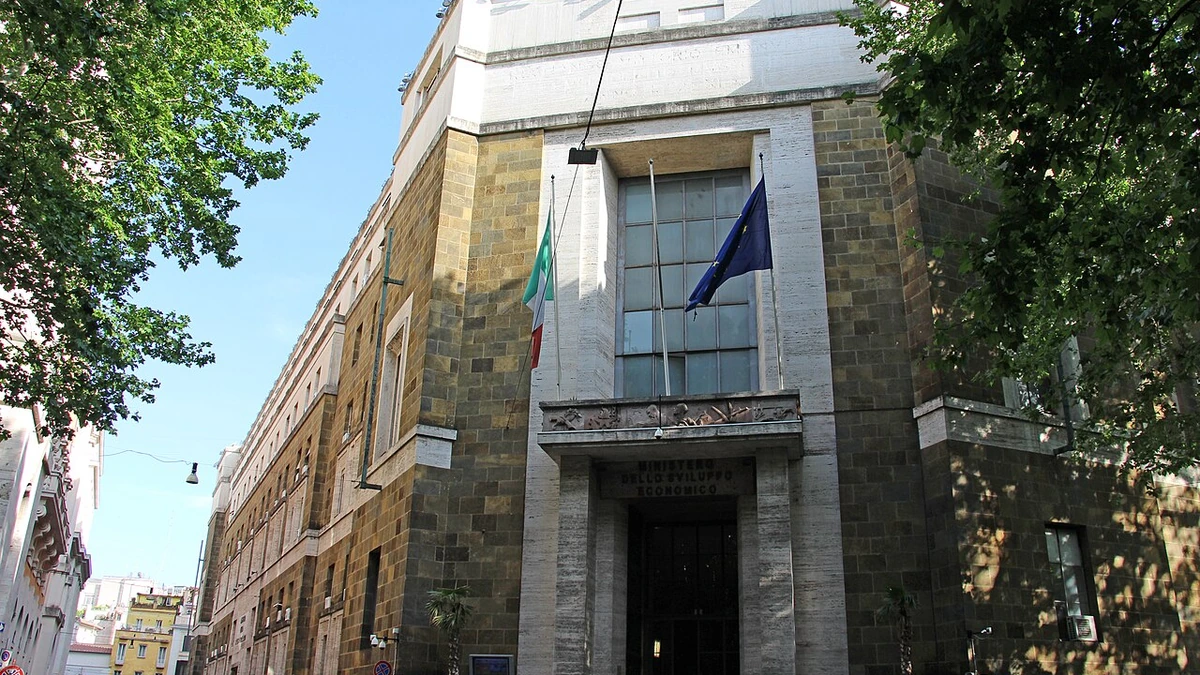
Italy published a decree on Saturday revising the funding schedule for industrial investment and infrastructure projects administered by the Ministry of Enterprises and Made in Italy. Among its provisions is the transfer of €118 million to a fund supporting companies involved in Important Projects of Common European Interest (IPCEIs) over 2027 and 2028.
The measure, signed by Economy and Finance Minister Giancarlo Giorgetti on November 2, also redirects some industrial development funding toward the ministry’s own property and digital infrastructure. Rather than introducing a new, standalone stimulus package, it changes how money from an existing public investment framework is allocated and when it can be used.
European industrial projects receive earlier funding
Under Article 2 of the decree published in the official gazette, €89 million will move to the IPCEI fund in 2027 and another €29 million in 2028. The adjustments affect resources previously scheduled for industrial and environmental development contracts, tourism development contracts and innovation agreements. Compensating amounts of €53 million in 2029 and €65 million in 2034 are specified in the same provision.
For businesses whose investment plans depend on public support, the timing is potentially as important as the nominal amount of assistance available. An industrial project may require considerable spending on equipment or research well before it can generate commercial revenue. Bringing funding forward could reduce the amount of interim financing that a beneficiary needs, although the decree itself does not specify when individual companies will receive payments.
IPCEIs are distinct from conventional domestic business subsidies. According to the European Commission’s guidance, participating countries design the projects and select candidates for support from their national budgets. There is no central EU fund dedicated to IPCEIs. The Commission assesses notified projects under state aid rules, so Italy’s decision to earmark money for the programme is not in itself a new European approval of aid for a particular business.
The Commission’s register includes projects in fields such as batteries, hydrogen, microelectronics, cloud computing and health. They typically involve coordinated work across companies and countries, with knowledge shared beyond the immediate recipients of public aid. The Italian decree does not divide the €118 million among those sectors or identify a new set of beneficiaries. Assigning the money to a particular technology or listed company on the strength of the decree alone would therefore be premature.
Changes to Italy’s existing investment programme
The funding framework predates Saturday’s publication. Italy’s 2025 budget law established a central government investment and infrastructure fund with an initial allocation of €18.486 billion covering 2027 through 2036. An October 2025 decree designated €3.261 billion for 11 investment lines under the Ministry of Enterprises and Made in Italy. Those amounts describe the original framework, not fresh expenditure authorized this weekend.
In June 2026 the finance ministry approved projects covering eight of those investment lines, according to the latest decree. The earlier allocation amounted to €1.429 billion, leaving €1.832 billion associated with the other three lines before the November changes. The latest measure follows an October submission from the enterprise ministry containing revised project documents and additional proposals.
The development contract programme is one of the established instruments affected by the new schedule. Invitalia, Italy’s national development agency, says its standard minimum investment requirement is €20 million. A lower threshold of €7.5 million applies to certain agricultural processing and tourism projects, including eligible developments in inland areas or projects involving disused buildings.
Both domestic and foreign companies can participate. Financial assistance under the programme may include grants or subsidized borrowing, with the level of support depending in part on the location and size of the proposed investment and the applicant. A shift in the government’s annual spending profile does not, by itself, change those eligibility conditions. Companies considering an investment still need to assess the rules of the relevant incentive and its application process.
Funding for ministry property and digital services
Three additional uses for industrial development resources appear in Article 2: major property maintenance, redevelopment of a building at Piazzale Morandi in Milan, and improvements to the ministry’s digital services for businesses and citizens. The digital work also covers cybersecurity and compliance with the EU’s NIS2 requirements.
These allocations have a different economic purpose from the development contracts. Spending on the ministry’s systems and buildings would procure goods or services for the public administration rather than directly subsidize a company’s capital investment. For suppliers of technology or construction services, any commercial opportunity would depend on the applicable procurement process, not merely on the inclusion of a project in the funding decree.
Payments remain subject to project progress
Allocation is only one stage in the funding process. The decree retains existing authorization procedures, ties disbursements to project schedules and requires each payment to carry the investment’s unique project code, known as the CUP. The codes allow spending to be tracked separately even when multiple projects draw on the same budget line.
Similar controls appeared in the June decree. They give the government a way to adjust spending as projects progress without treating every delay as a reason to increase the budget. The enterprise ministry can request changes within the relevant annual funding limits, subject to fiscal constraints. The State General Accounting Department has 30 days to respond or request further documentation.
Missing a procedural milestone may lead to withdrawal of funding, and recovered sums or savings may be reassigned to eligible projects under the specified conditions. By July 31 each year, the enterprise ministry must submit a report to the State General Accounting Department detailing implementation progress. The reports, along with subsequent award and payment decisions, will provide a better measure of how much of the planned investment is actually being carried out.
More News



Latest News
View all news- United Fidelity Bank Branches Begin Operating Under First Citizens After Failure of $5.9 Billion Lender
- GS Group Breaks Ground on 15 Trillion Won AI Data Center in South Korea
- 41% of German Companies Plan to Cut Domestic Investment, Ifo Survey Finds
- French Senate Retains Green Industry Tax Credit Expansion in 2027 Budget Bill
- Federal Reserve Enters Blackout Period Ahead of December Interest Rate Decision