
GAO Questions Cost Controls on $45 Billion U.S. Immigration Detention Funding
Federal auditors say ICE has not revised its detention spending plan after scaling back warehouse purchases and has yet to assess the full costs of further expansion.
Our editorial standards
MarketReview publishes clear, independently produced financial information using reliable sources and transparent editorial standards.
Read our Editorial Policy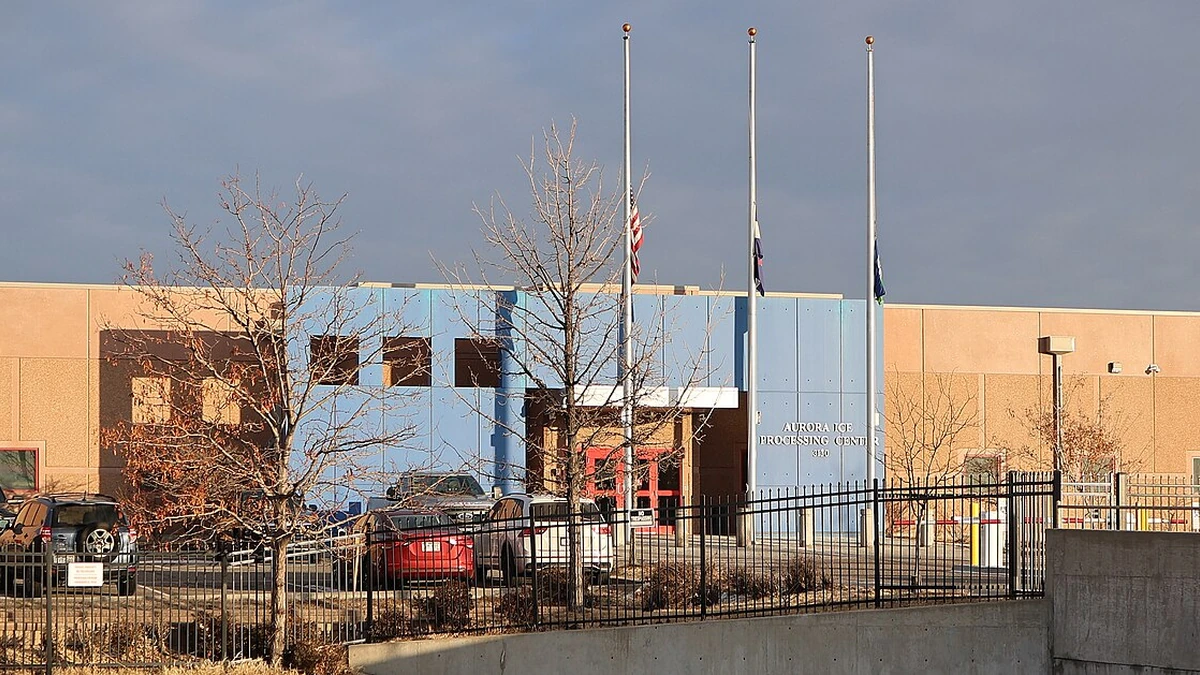
The U.S. Government Accountability Office says Immigration and Customs Enforcement has not updated its spending plan for $45 billion in detention funding despite major changes to its facility expansion efforts. The federal watchdog also found that ICE had not properly assessed the long-term costs of new detention investments, raising questions about how future purchases will be evaluated.
The funding was enacted in July 2025 and remains available through September 2029. It is not a new appropriation announced this week, nor does the $45 billion figure represent money already spent. Congress designated the funds for single-adult detention capacity and family residential centers under Public Law 119-21.
In a report published November 19, GAO described a shifting expansion program that included roughly $1.07 billion in warehouse purchases and about $2.2 billion for four existing detention facilities. Its central concern is whether ICE has current plans and cost comparisons to support decisions about further investments, rather than whether detention spending was authorized in the first place.
Warehouse purchases outpaced the revised expansion plan
ICE initially pursued an initiative to acquire warehouses and convert them into detention facilities. It bought 11 properties for approximately $1.07 billion, but the agency subsequently reduced the scope of that effort and plans to sell seven of the buildings. The revised approach leaves a different mix of facilities from the one reflected in its earlier spending projections.
ICE had not revised its spending plan to account for the scaled-back warehouse initiative or other planned facility acquisitions, contrary to its internal guidance, GAO said. As a result, the estimate of planned obligations was inflated. An outdated projection complicates congressional oversight and makes it harder for ICE to assess when the money will be needed.
Separately, ICE moved into direct purchases of existing detention sites. In July and August 2026, it bought four detention facilities for approximately $2.2 billion in total. Yet GAO said the scope, timing and estimated costs of any further facility acquisitions had not been determined. The reported purchases are distinct from the remaining potential investments, for which auditors want a fuller financial case.
A separate GAO review released in September had already identified more than $20 million in costs the government could not recover on the seven warehouses slated for sale, including purchasing-related expenses and ongoing services such as security. That finding does not mean the entire $1.07 billion purchase price was lost: ICE still owned the properties and intended to sell seven. Future sale proceeds and additional carrying costs will affect the ultimate financial result.
Daily detention rates vary across facility types
The November audit also examined how much ICE pays to house people in different kinds of facilities. It reported that ICE obligated about $2.8 billion for detention in fiscal 2025, roughly 41% more than in the previous fiscal year, as immigration enforcement activity expanded. Obligations are amounts committed for spending; they are not the same measure as cash paid out or the entire multi-year appropriation.
Rates varied considerably by operator. The nine Federal Bureau of Prisons facilities used by ICE charged a median daily rate of $180 per detained person, the highest among the facility types GAO compared. Privately operated facilities had a median rate of $151. Facilities operated through agreements with the U.S. Marshals Service or state and local governments had median rates ranging from $85 to $103.
Those figures show the financial differences among detention arrangements, but they do not establish that the lowest quoted daily rate delivers the best overall value. ICE officials told GAO that rates also reflect services, detention standards and location. A daily operating charge is not necessarily a complete measure of the costs of buying, renovating and maintaining a facility over its useful life.
Buying property changes the timing of costs as well. An upfront purchase and any renovations have to be considered alongside operating expenses over the facility’s useful life. Comparing ownership and contracted detention space on the same long-term basis would help ICE test whether its higher initial investment can be justified by the capacity and costs expected over time.
Oversight staff face a heavier invoice workload
ICE has procedures for approving facility charges and checking invoices, but the rapid addition of detention sites strained that work. Employees responsible for oversight and invoice validation faced a substantially larger workload. ICE was working to fill 55 of 87 positions allocated nationwide for these duties, GAO reported.
Invoice review is an important cost control because detention arrangements can involve different operators, services and payment terms. A larger portfolio brings more bills to examine and more operating agreements to monitor. GAO did not describe the staffing figure as a measure of improper payments; the finding was that the oversight workload and capacity to check charges had been affected by the speed of expansion.
The auditors assessed records covering costs from October 2022 through various points in 2026, interviewed headquarters staff and officials at four ICE field offices, and visited existing and planned detention sites. They also reviewed available estimates against agency guidance. The investigation therefore covered both the investment decisions and the day-to-day systems used to monitor facility costs.
GAO calls for long-term cost estimates before further purchases
Beyond the outdated spending plan, GAO found that ICE did not manage significant detention facility investments in line with Department of Homeland Security acquisition practices, which include developing life-cycle cost estimates. Such estimates are intended to account for costs over a facility’s expected use, rather than judging a proposal only by its acquisition price or a single year of operations.
The watchdog made two recommendations. First, ICE should update its detention spending plans promptly, in accordance with its own guidance, and include the required information. Second, ICE should work with DHS management to prepare life-cycle cost estimates and evaluate alternatives before making significant additional detention facility investments.
DHS agreed with both recommendations. The GAO report listed them as open, meaning the watchdog had not yet confirmed sufficient action to close them. Agreement with a recommendation therefore does not establish that an updated spending plan or the proposed cost studies have already been completed.
The latest recommendations follow GAO’s September call for a broader strategic plan covering ICE’s detention expansion goals, activities and resource needs. DHS had indicated that the broader plan was expected by August 31, 2027, a schedule GAO said might not be timely enough given the scale of funding and the risk of further waste. For the current audit, the immediate documented steps are narrower: revise the spending figures to match actual plans and assess competing facility options before committing to more purchases.
More News

Latest News
View all news- Walmart Raises Full-Year Outlook After Revenue Climbs 5.2% in Third Quarter
- RBI Absorbs ₹11,682 Crore Through Reverse Repo Auction at 5.49%
- U.S. Leading Economic Index Falls 0.3% in October as Housing Permits Weaken
- U.S. Jobless Claims Rise to 203,000 as Continuing Claims Jump by 70,000
- Williams-Sonoma Reports 21% EPS Growth, Helped by Tariff Refunds
