
Haemonetics Signs U.S. Plasma Collection Supply Deal With CSL
CSL may deploy Haemonetics' NexSys PCS devices with Persona PLUS technology across part of its U.S. plasma network, but the non-exclusive agreement has no minimum purchase commitments and no quantified rollout yet.
Our editorial standards
MarketReview publishes clear, independently produced financial information using reliable sources and transparent editorial standards.
Read our Editorial Policy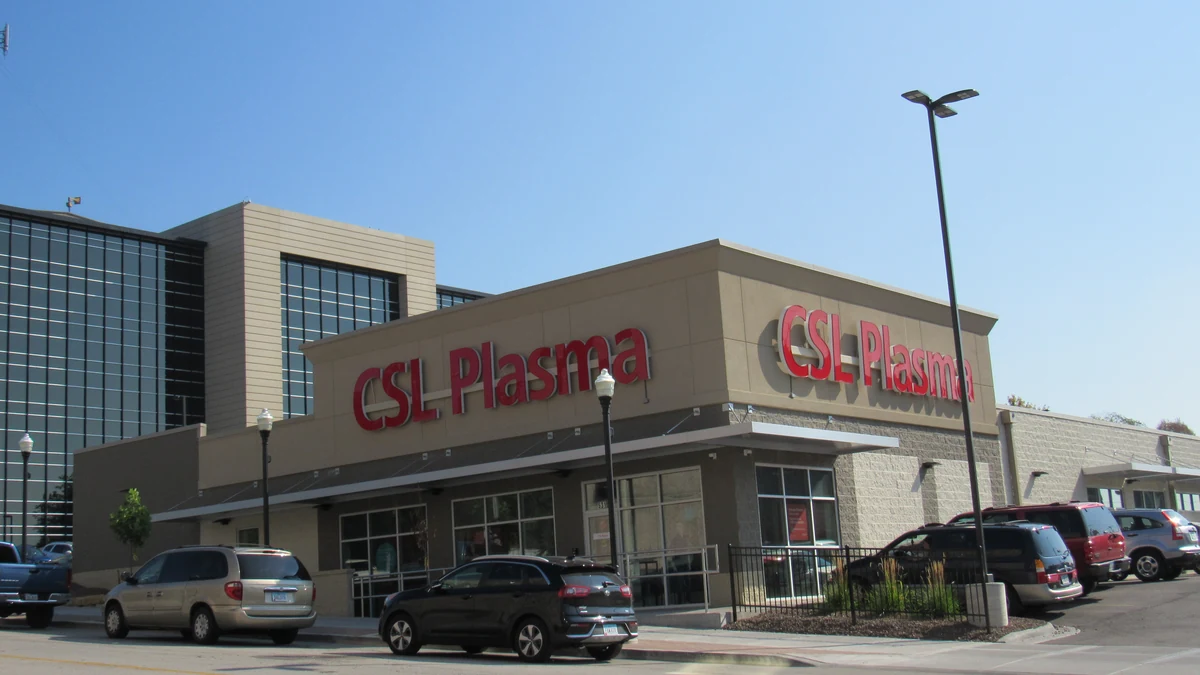
Haemonetics has signed a new U.S. supply agreement with CSL Plasma that allows the plasma collector to use Haemonetics’ NexSys PCS devices equipped with Persona PLUS technology and buy related disposables. The agreement was entered into on August 14 and disclosed by Haemonetics on August 18.
The commercial opportunity could be meaningful because CSL has been a major Haemonetics plasma customer in the past, but the new contract does not establish a fixed volume or guaranteed revenue stream. It is non-exclusive, contains no minimum purchase commitments, and Haemonetics said the scope and timing of CSL’s planned transition have not yet been determined.
In its Form 8-K filed Tuesday, Haemonetics said it expects CSL to transition a portion of its U.S. plasma collection centers to the company’s devices and disposables. Haemonetics is not changing its previously issued fiscal 2027 guidance because it does not yet have enough certainty about implementation. The company expects to provide an update on the anticipated fiscal 2027 financial impact when it reports second-quarter results in November.
The agreement reconnects two companies after a multiyear transition
The new arrangement is notable in part because CSL had been reducing its reliance on Haemonetics’ earlier U.S. plasma collection platform. In April 2021, CSL told Haemonetics that it did not intend to renew a supply agreement covering PCS2 plasma collection systems and disposable plasmapheresis kits. That contract had initially been scheduled to expire in June 2022.
Haemonetics later amended the arrangement so CSL could continue using PCS2 devices and buying disposables on a non-exclusive basis. Company filings show that revenue under the older agreement was $102.4 million in fiscal 2022. A subsequent amendment extended the relationship through December 2025, giving the companies a longer transition period rather than ending supplies on the original schedule.
The customer was large enough to matter to Haemonetics’ overall results. CSL and its affiliates accounted for about 13% of Haemonetics’ net revenue in fiscal 2024, according to the company’s annual report. The financial effect declined as the transition progressed. In a filing covering the nine months ended December 27, 2025, Haemonetics said lower North American plasma sales volumes were primarily related to the previously announced CSL transition and that it did not expect any North America disposable sales to CSL Plasma in fiscal 2026.
That history makes the August 2026 agreement a return of potential U.S. device and disposable business from a familiar customer, but it does not mean the earlier revenue level is coming back. The previous relationship included defined purchase commitments at certain stages. The new agreement specifically has no minimum purchase commitment, and Haemonetics has not disclosed how many CSL centers will adopt NexSys PCS, how many devices could be placed, or what disposable volumes those centers could generate.
Persona PLUS is the technology at the center of the new deal
The agreement centers on NexSys PCS with Persona PLUS, a newer configuration of Haemonetics’ plasma collection technology. Haemonetics received U.S. Food and Drug Administration 510(k) clearance for the system with Persona PLUS in February 2026. The company says the technology adjusts plasma collection to individual donors with the goal of improving the average amount collected per donation.
Haemonetics said the FDA clearance was supported by a prospective, randomized, controlled, multicenter trial involving more than 30,000 plasma donations from nearly 3,000 donors. According to the company, the trial found that Persona PLUS delivered an average mid-single-digit percentage increase in plasma collected per donation compared with its earlier Persona technology. Those results describe the clinical study and do not establish what productivity improvement CSL will achieve in routine operations.
CSL gives Haemonetics a potentially broad operating environment for the product. CSL says its plasma business runs more than 300 collection centers across the United States, Europe and China, with collected plasma used by CSL Behring to manufacture therapies distributed in more than 100 countries. Haemonetics’ new agreement applies to the United States, and the filing says only that a portion of CSL’s U.S. centers is expected to transition. It does not say that all U.S. locations, or the broader global network, will use the system.
The inclusion of related disposables is financially important because the agreement is not limited to equipment placement. If CSL adopts the devices at more centers, those locations could also create recurring demand for compatible disposable products. That is a reasonable commercial implication of the contract structure, not a guaranteed sales outcome. Actual revenue will depend on the pace of deployment, collection activity and the volume of products CSL chooses to purchase.
Haemonetics is leaving the financial impact open until November
The absence of minimum commitments is the clearest reason not to assign a contract value to the deal now. Haemonetics did not disclose pricing, a number of devices, a number of participating centers, an implementation schedule or expected revenue. The filing also does not specify whether CSL has committed to any particular share of its U.S. collections being handled on Haemonetics equipment.
That uncertainty is reflected in the company’s decision to leave fiscal 2027 guidance unchanged. Rather than adding an assumed contribution from CSL to its outlook, Haemonetics said it will wait until its second-quarter earnings call in November to discuss the anticipated impact. The timing gives the company several more months to assess how the rollout is developing before incorporating it into its financial expectations.
Haemonetics also identified the main variables that could cause results to differ from its expectations. These include customer demand and adoption, the timing and volume of purchases, and the company’s ability to manufacture and supply products. Those factors are especially relevant for a non-exclusive agreement in which CSL is not required to buy a minimum amount.
For investors, the agreement therefore changes the opportunity set without yet providing a reliable revenue figure. Haemonetics has regained a path to U.S. plasma collection business with a customer that once represented a substantial share of company revenue, and the contract places its newly cleared Persona PLUS technology into consideration for part of a large plasma center network. The next concrete financial checkpoint is Haemonetics’ fiscal second-quarter earnings call in November, when management says it expects to quantify the agreement’s anticipated fiscal 2027 impact.
More from Investing

Latest News
View all news- FTC, USDA Launch Joint Inquiry Into Agricultural Equipment Market Practices
- VAALCO Completes Gabon Phase 3 Drilling as ETSEM-3H Starts at About 2,000 BOPD
- U.S. Crude Inventories Fall 3.2 Million Barrels in Latest EIA Report
- UK Trade Remedies Authority Proposes Five-Year Anti-Dumping Duty on Chinese Rutile Titanium Dioxide
- OCC Launches Direct Payments-Fraud Reporting Tool for Community Banks
