
Hanmi Pharm Licenses Obesity Drug Candidate to Genentech in Deal Worth Up to $2.3 Billion
Genentech gets rights to HM17321 outside South Korea and will take over development after Phase 1, while Hanmi receives $190 million upfront and remains eligible for milestone payments and separate royalties.
Our editorial standards
MarketReview publishes clear, independently produced financial information using reliable sources and transparent editorial standards.
Read our Editorial Policy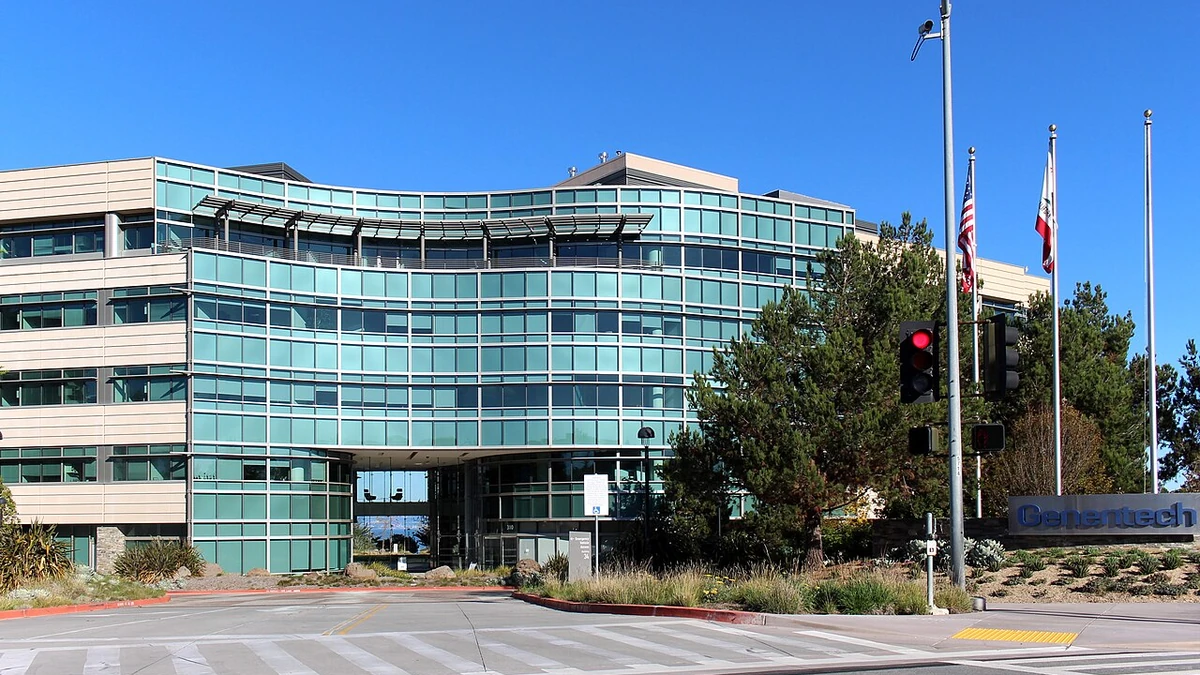
Hanmi Pharm has agreed to license its experimental obesity and metabolic-disease drug candidate HM17321 to Genentech, giving the Roche Group company exclusive development, manufacturing and commercialization rights outside South Korea in a deal worth up to about $2.3 billion.
Hanmi will receive $190 million upfront. The rest of the headline value depends on future clinical-development, regulatory and commercialization milestones, and Hanmi said it would also receive separate royalties on sales if the drug reaches the market. That structure makes the upfront payment the only portion of the $2.3 billion ceiling that is fixed at signing.
The company announced the agreement Monday, saying it will complete the ongoing Phase 1 study before Genentech takes over development from Phase 2. Hanmi shares closed at 540,000 won in Seoul, up 29.96% from Friday, after reaching the market’s daily price limit.
Genentech gets global rights outside South Korea
The license covers HM17321 for obesity and related metabolic conditions, including type 2 diabetes and cardiovascular disease. South Korea is carved out of the agreement, leaving Hanmi with rights in its home market while Genentech controls the program elsewhere.
For Hanmi, the economics are unusually large relative to the candidate’s stage of development. HM17321 is still in its first human trial, so most of the potential payment remains conditional on years of successful development and approval work. The $190 million upfront payment is therefore a more immediate measure of Genentech’s commitment than the maximum value of the agreement.
The companies are not new partners. Hanmi’s investor materials list a 2016 agreement that gave Genentech rights to the oncology candidate belvarafenib, with a disclosed out-licensing value of up to $910 million. The new accord broadens that relationship into cardiometabolic medicine, an area Roche has been building through both internal programs and external deals.
Roche has said it is assembling a broader obesity portfolio rather than relying on a single mechanism. Its CT-388 program, a dual GLP-1/GIP receptor agonist, produced 22.5% placebo-adjusted weight loss at 48 weeks at the highest dose in a Phase 2 study reported in January. Roche has also described CT-388 as a potential combination asset with the amylin analog petrelintide. HM17321 gives the group another mechanism to test alongside those incretin-based and amylin approaches.
HM17321 tests a non-incretin approach to body composition
HM17321 is a long-acting analog of urocortin-2, or UCN2. Hanmi designed it to activate the CRF2 receptor rather than the incretin receptors targeted by drugs such as GLP-1 therapies. The scientific premise is not simply to drive down body weight, but to reduce fat while preserving or potentially increasing lean mass and muscle function.
That distinction is important because large weight losses can include reductions in lean tissue as well as fat. Hanmi has reported preclinical results in animal models showing weight loss together with improved body composition, including studies of HM17321 alone and in combination with incretin drugs. Those findings remain preclinical, however, and do not establish that the same effects will occur in people.
The current Phase 1 study registered at ClinicalTrials.gov is randomized, double-blind and placebo-controlled. It is designed to enroll about 90 healthy and obese adults in single- and multiple-ascending-dose groups, with safety, tolerability, pharmacokinetics and pharmacodynamics as the main focus. The study is listed as recruiting. No human efficacy results have been posted.
Hanmi has also pointed to formulation flexibility as part of HM17321’s potential. Because the candidate is a peptide, the company says it could eventually be developed for use with incretin therapies, including combination treatment or a fixed-dose combination. Whether that becomes commercially practical will depend on the human data, dose requirements, tolerability and the development choices Genentech makes after Phase 1.
The upfront payment strengthens Hanmi’s licensing momentum
The $190 million upfront payment is large in the context of Hanmi’s own research budget. The company said it spent 60.3 billion won on research and development in the second quarter of 2026. Using Hanmi’s announced won value of roughly 262.9 billion won for the upfront payment, the initial consideration alone is more than four times that quarterly R&D spending. Accounting recognition can differ from cash receipt, so the comparison is about scale rather than an assumption that the full amount immediately becomes reported profit.
It is also Hanmi’s second large global licensing announcement in less than three months. On June 1, the company licensed sonefpeglutide, a long-acting GLP-2 analog, to Eli Lilly for $75 million upfront and up to $1.185 billion in additional development, regulatory and commercialization milestones, plus separate royalties after launch. That program is different from HM17321, but the two agreements show how Hanmi is using partnerships with larger drugmakers to finance and advance assets beyond South Korea.
The Genentech agreement does not remove the clinical risk. Early-stage obesity programs can fail because of safety, tolerability, dosing, manufacturing or efficacy issues. More importantly for the headline value, the remaining payments are tied to specified development, regulatory and commercialization milestones. If those goals are not reached, Hanmi will not receive the full $2.3 billion maximum.
The next substantive test is the Phase 1 readout. Hanmi has said it will finish that study, after which Genentech is expected to lead Phase 2 and subsequent global development outside South Korea. Until human data show whether HM17321 can reproduce the body-composition effects seen preclinically, the $2.3 billion figure remains a maximum potential value rather than a guaranteed payment.
More from Investing



Latest News
View all news- Vertex Reports Positive Inaxaplin Data, Completes AMPLITUDE Enrollment
- Palo Alto Networks Launches Agentic AI Security Service Using Anthropic and OpenAI Models
- Fed’s Jefferson Says Discount-Window Upgrades Can Support Treasury-Market Liquidity
- Nasdaq Composite Hits New Intraday Record as Tech Stocks Rebound
- New York Fed’s Williams Says Rate-Control Toolkit Is Working Well in Ample-Reserves Regime
