
India’s Inflation Hits 6.09% in October, Breaching RBI’s Upper Tolerance Limit
Food inflation accelerated to 8.94% as the October CPI reading moved above the RBI’s 6% ceiling, adding pressure ahead of its December policy meeting.
Our editorial standards
MarketReview publishes clear, independently produced financial information using reliable sources and transparent editorial standards.
Read our Editorial Policy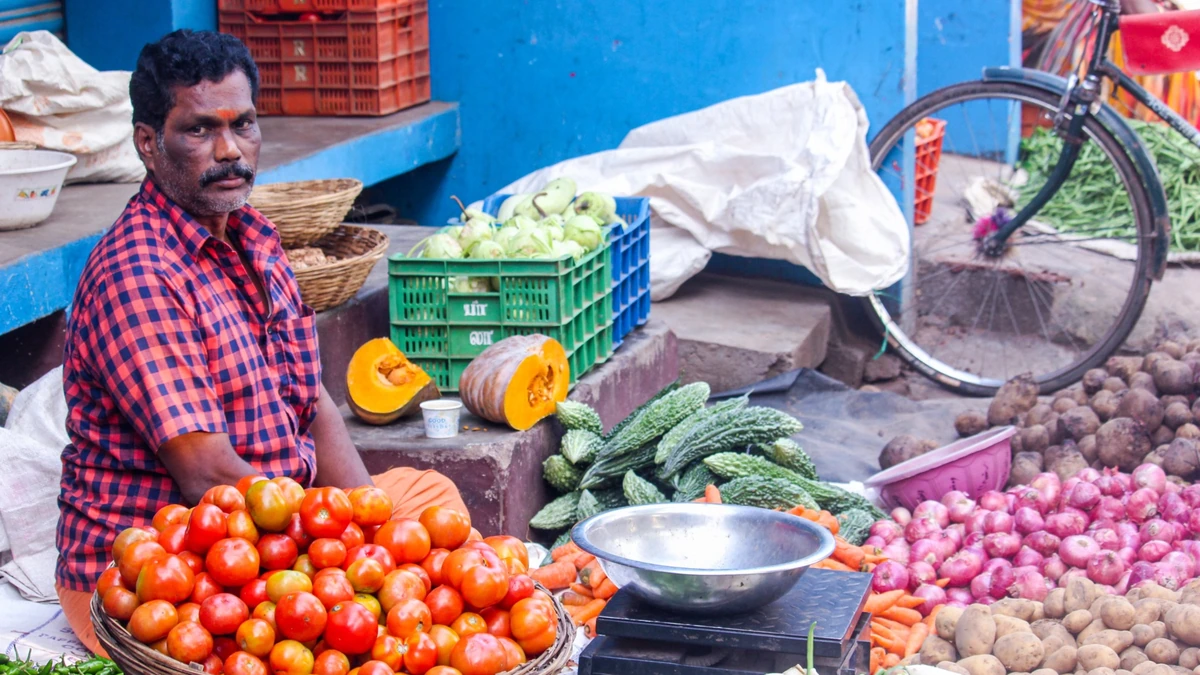
India’s retail inflation rose to 6.09% in October 2026 from 5.54% in September, crossing the Reserve Bank of India’s 6% upper tolerance limit as food prices continued to climb. The provisional Consumer Price Index reading, released by the Ministry of Statistics and Programme Implementation on November 12, marks a 55-basis-point increase in the annual rate in one month.
The breach is narrow in numerical terms: inflation stood just 0.09 percentage points above the ceiling. It nevertheless puts the latest price data squarely in the path of the RBI’s next interest-rate decision, after the central bank raised its benchmark rate in October amid concerns about persistent inflation.
Food inflation, measured by the Consumer Food Price Index, accelerated to 8.94% from 7.74% a month earlier. Prices increased more quickly in rural areas than in cities, underscoring the uneven pressure on household budgets even as headline inflation refers to the countrywide average.
Food prices account for much of the acceleration
Vegetables and other food staples were prominent in the October price figures. Onions recorded a 116.22% year-on-year increase, while garlic prices were 60.74% higher than a year earlier. Ginger and lemons also featured among the items with the steepest annual increases. The numbers describe changes from October 2025, not how much those items became costlier during October alone.
The statistics ministry’s October CPI release reported a food inflation rate almost three percentage points above the overall rate. The September comparison matters here: food inflation was already elevated at 7.74%, so October brought a further increase rather than the start of a new price surge.
Not all fresh produce moved in the same direction. Potatoes were 14.24% cheaper than a year earlier, according to the reported item-level figures, and cauliflower prices also declined. These differences are important when interpreting a market photograph or individual shopping bills. A sharp increase in some widely purchased ingredients does not mean that every vegetable or food category became more expensive at the same pace.
Food has an outsized influence on the index because it remains its largest expenditure component. Rising prices in essential categories can therefore lift headline inflation even when the increases in other parts of the basket are smaller. The exceptionally high figure for onions is striking, but it is not itself a measure of the inflation faced by a typical household.
The combined CPI index rose to 110.05 in October from 109.49 in September. That is an increase of roughly half a percent in the index level between the two months, a different comparison from the 6.09% annual inflation rate. Both measures help describe price trends, but they should not be treated as interchangeable.
Rural inflation exceeds the urban rate
Annual consumer-price inflation reached 6.63% in rural India and 5.41% in urban areas. The corresponding September readings were 6.08% and 4.88%. Both increased, leaving rural inflation more than a percentage point higher than the urban rate in October.
The food-specific figures tell a similar story, though the rural-urban gap is smaller. Rural food inflation reached 9.09% and urban food inflation 8.68%. These are growth rates in measured prices, not evidence that the same basket of groceries costs more in villages than in cities. Differences in purchasing patterns and the weights assigned to items help shape the indices for each sector.
Higher food inflation can be especially difficult to absorb because households cannot postpone all purchases of essential groceries. Whether the increase leads to lower spending elsewhere depends on incomes, savings and the prices of other goods and services. The CPI reading captures average price changes across expenditure categories rather than the financial circumstances of any particular family.
India’s CPI now uses a 2024 base year and expenditure weights drawn from the 2023-24 Household Consumption Expenditure Survey. The revised series, introduced in February 2026, updates the basket to include newer spending patterns and provides more detailed classifications. The statistics office also collects prices from markets and villages across the country, including selected online markets.
The change in the index is relevant to comparisons with earlier inflation episodes. Monthly readings within 2026 can be evaluated on the same revised basis, but comparisons with figures released under the previous 2012-based series require care because the weights, coverage and methodology changed. Calling the latest rate a record over a longer period without accounting for that shift could overstate what the data establish.
RBI’s December meeting now carries added weight
The RBI had already moved toward tighter monetary policy before the October CPI reading was published. At its October 5-7 meeting, the Monetary Policy Committee unanimously raised the repo rate by 25 basis points to 5.50% and adopted a stance of calibrated tightening. The decision was based on the information available at that time, including supply-side price pressures and signs that inflation was becoming more widespread.
In its October forecasts, the RBI projected inflation averaging 5.2% for the 2026-27 financial year, with a 6.0% rate for the October-December quarter and 5.7% for the following quarter. Those were projections, not measured outcomes, and they preceded this latest CPI release. One month’s reading above the quarterly forecast does not by itself establish what the full quarter will average.
India’s formal inflation framework sets a 4% target with a tolerance range of 2% to 6%, retained through March 2031. Under the RBI’s published monetary-policy framework, a single monthly reading above 6% does not automatically amount to a statutory failure to meet the target. The formal failure condition concerns average inflation remaining outside the tolerance range for three consecutive quarters.
That distinction matters for interpreting the headline. October’s reading is a breach of the monthly upper tolerance level, not proof that the three-quarter condition has been met. It does, however, add fresh evidence for policymakers assessing whether price pressures are temporary, spreading to more categories or beginning to affect expectations about future inflation.
Higher policy rates may eventually influence borrowing costs, credit demand and spending, although the timing varies with individual loans and financial institutions. They are less direct tools for resolving a sudden shortage of vegetables or a weather-related disruption in food supply. The RBI’s challenge is to prevent such shocks from feeding into sustained price increases elsewhere without unnecessarily weakening economic activity.
For the December decision, officials will have to weigh food-price pressures against broader inflation trends and the outlook for growth. The central bank’s October resolution left open the possibility of another rate increase or a pause, depending on subsequent evidence. The next Monetary Policy Committee meeting is scheduled for December 2-4, 2026.
More News



Latest News
View all news- National Vision More Than Doubles Adjusted Earnings Per Share but Cuts Sales Outlook
- Chicago Fed Releases New Reading on U.S. Financial Conditions
- Fed Governor Barr Warns AI Could Widen Wealth Inequality
- Canadian Building Permits Fall 4.1% as Residential Construction Intentions Weaken
- Dutch Business Bankruptcies Surge 27% in October, Official Data Shows
