
Intel Plans $15 Billion Stock Sale as AI Demand Drives Higher Spending
Intel is tapping its 2026 stock rally for fresh capital as AI demand pushes the chipmaker to expand manufacturing and advanced packaging capacity.
Our editorial standards
MarketReview publishes clear, independently produced financial information using reliable sources and transparent editorial standards.
Read our Editorial Policy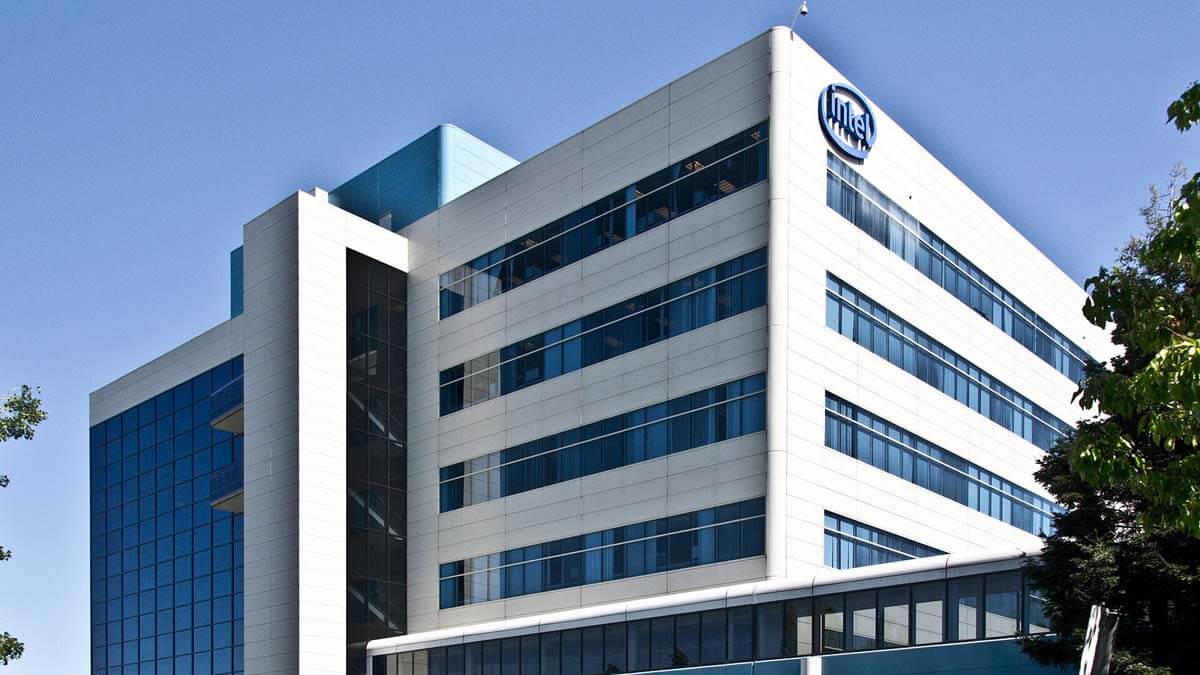
Intel plans to raise $15 billion through a common-stock sale after a powerful rally in its shares, giving the chipmaker additional financial flexibility as artificial-intelligence demand pushes its spending plans higher. Underwriters will have a 30-day option to purchase as much as $2.25 billion of additional stock, which could increase the total amount sold to $17.25 billion if the option is exercised in full. JPMorgan Securities, Goldman Sachs, Morgan Stanley and Citigroup are serving as joint book-running managers.
Intel said the proceeds will be available for general corporate purposes, including capital expenditures and working capital. That wording is important because the company has not earmarked the entire raise for any single business or project. The financing comes as Intel is increasing investment across several areas tied to AI demand, including data-center processors, custom silicon, advanced packaging, wafer production and manufacturing capacity.
Intel shares fell roughly 4% on Monday after the announcement as investors weighed the benefits of a stronger balance sheet against the dilution created by issuing a large amount of new equity. The decline followed a major advance in the stock over the past year, which has made raising money through shares considerably less expensive for existing owners than it would have been when Intel traded at much lower levels.
For shareholders, the basic tradeoff is straightforward. Intel gains more cash to support a larger investment program without taking on an equivalent amount of new debt, but future earnings will be spread across a larger number of shares.
AI demand is changing Intel’s spending needs
The financing follows a sharp improvement in Intel’s operating momentum. Second-quarter revenue rose 25% from a year earlier to $16.1 billion, the company’s strongest revenue growth in more than 15 years. Intel forecast third-quarter revenue of $15.8 billion to $16.8 billion and non-GAAP earnings of 38 cents a share.
Much of the recent optimism around the company has been tied to the expansion of AI computing, although Intel participates in that market differently from Nvidia and other companies best known for accelerators. Large AI systems also require CPUs, networking, custom chips, memory interfaces, wafer capacity and increasingly complex packaging that combines different types of silicon.
CEO Lip-Bu Tan has said the shift from large foundational models toward inference and autonomous AI agents is increasing demand for Intel’s data-center CPUs and other infrastructure products. Intel has also highlighted opportunities in custom silicon, advanced packaging and external wafer production as customers spend more heavily on AI systems.
That stronger demand has already changed Intel’s budget. Intel raised its 2026 capital expenditure forecast from $18 billion to $20 billion and indicated that spending is expected to rise again in 2027. The increase marks a shift from the earlier stages of Intel’s turnaround, when management was focused heavily on cost reductions, restructuring and tighter controls over factory investment.
Intel is now trying to balance that discipline with the need to expand in areas where customer demand is growing. Earlier this year, Intel Foundry expanded assembly and testing operations in Penang, Malaysia, citing rising demand for advanced packaging. In July, the company announced another €5 billion investment in Ireland to expand leading-edge manufacturing capacity.
Advanced packaging is an important part of the broader spending story because AI systems increasingly combine CPUs, accelerators, memory and specialized chiplets rather than relying on a single monolithic processor. Intel has continued investing in technologies such as EMIB and Foveros, which allow multiple pieces of silicon to be integrated into complex packages.
The company is also investing in new process technologies and manufacturing capacity that can serve both Intel’s own products and external customers. Its foundry ambitions remain relevant to the financing because semiconductor manufacturing is expensive and long dated, but they are one part of a wider set of uses for the additional cash rather than the stated sole purpose of the stock sale.
Intel has repeatedly said that future manufacturing investment must be tied more closely to customer commitments and economic returns. That constraint remains important because leading-edge fabrication plants require billions of dollars in spending before they reach full production, and the company needs sufficient volume to earn acceptable returns on those facilities.
The foundry business is therefore best viewed as part of the longer-term financial backdrop. Intel is already producing its own products using Intel 18A and continues to develop later process technologies, while also seeking more outside manufacturing customers. Intel has previously announced a multiyear, multibillion-dollar framework with Amazon Web Services that includes an AI fabric chip on Intel 18A and work spanning several Intel process generations.
Whether those external manufacturing efforts eventually justify the scale of investment remains an important question for Intel, but the immediate financing announcement is broader. The company is raising money at a time when AI-related demand is increasing spending across processors, packaging, wafer capacity and other parts of its manufacturing network.
Intel is taking advantage of a much stronger share price
The timing of the sale matters almost as much as its size. Intel is tapping the equity market after a dramatic recovery in its stock, allowing it to raise a large amount of cash while issuing fewer shares than would have been required at a lower valuation.
That does not eliminate dilution. Existing shareholders will own a smaller percentage of the company after the new shares are issued, and the eventual effect on per-share earnings will depend on the price of the sale, the number of shares issued and whether the underwriters exercise their additional $2.25 billion option.
A stronger stock price nevertheless gives management a financing choice that was less attractive during the weaker stages of Intel’s turnaround. Borrowing the full amount would add interest costs and future refinancing obligations, while issuing equity converts some of the market’s renewed confidence in the company into cash that can be invested immediately.
Intel has already used several other sources of outside funding as it reshapes its balance sheet. In August 2025, SoftBank agreed to invest $2 billion by purchasing approximately 87 million newly issued Intel shares at $23 apiece.
Days later, Intel reached a larger arrangement with the U.S. government in which previously committed CHIPS Act and Secure Enclave funding was converted into an $8.9 billion investment in Intel common stock. Based on the terms announced at the time, the federal government received a roughly 9.9% stake.
The company has also continued to use debt. In April, Intel issued $6.5 billion of senior notes with maturities ranging from 2031 through 2066. Those proceeds were used in connection with its repurchase of the minority interest in the entity associated with Fab 34 in Ireland.
Adding a large stock sale to those earlier steps gives Intel more room to fund expansion without placing another $15 billion of borrowing on the balance sheet. That can matter when the underlying investments may take years to generate full returns.
The contrast with Intel’s earlier capital allocation is substantial. Reuters has reported that the company spent roughly $82 billion buying back its own shares during the 2010s. Intel is now issuing new stock while directing more money toward manufacturing and AI-related growth opportunities.
The comparison does not mean those earlier repurchases directly created the current financing need. Intel’s competitive position, manufacturing roadmap and industry economics have changed considerably since then. It does show how decisively the company’s priorities have moved from returning cash to shareholders toward funding a more capital-intensive rebuilding effort.
The return on the new money matters more than the initial dilution
The market’s negative reaction to the announcement reflects a real cost for shareholders, but the long-term outcome will depend on what Intel earns from the money it raises rather than on dilution alone. Intel’s recent operating results give management a stronger case for investing than it had when revenue was shrinking and restructuring dominated the story. Revenue growth has accelerated, data-center demand has strengthened, and the company has enough confidence in its outlook to increase its spending plans.
The risk is that higher investment does not automatically translate into attractive returns. Semiconductor factories, process development and advanced packaging require large upfront commitments, and Intel still has to execute on manufacturing yields, product competitiveness and customer wins while competing with companies that have stronger positions in several parts of the market.
If Intel converts AI-related demand into sustained CPU sales, custom-silicon business, packaging revenue and better utilization of its manufacturing network, the additional funding could strengthen the turnaround. If demand weakens or new capacity fails to earn adequate returns, shareholders could be left with both a larger share count and an expensive asset base.
That is why the wording around the use of proceeds matters. Intel is not presenting the $15 billion sale as financing for one narrowly defined foundry project. It is adding a large pool of general corporate funding while its overall investment requirements are rising, with manufacturing, packaging, products and external customer opportunities all competing for capital.
Second-quarter results provide some support for that decision. Revenue increased 25% year over year to $16.1 billion, and Intel raised its 2026 capital expenditure plan to $20 billion while signaling more spending next year. Intel is using a much stronger market valuation to reinforce its finances at the same time that management sees more opportunities to invest.
The final cost to existing shareholders will depend on the price at which the $15 billion stock sale is completed and whether underwriters purchase the additional $2.25 billion of shares. The larger question will take longer to answer: whether Intel can turn the capital it raises into enough profitable growth to offset the dilution.
Sources
Reuters: Intel’s $15 billion offering, market reaction, capital spending and offering terms.
Intel Investor Relations: Intel’s 2026 AI-demand, manufacturing and advanced-packaging strategy.
More from Investing



Latest News
View all news- FTC, USDA Launch Joint Inquiry Into Agricultural Equipment Market Practices
- VAALCO Completes Gabon Phase 3 Drilling as ETSEM-3H Starts at About 2,000 BOPD
- U.S. Crude Inventories Fall 3.2 Million Barrels in Latest EIA Report
- UK Trade Remedies Authority Proposes Five-Year Anti-Dumping Duty on Chinese Rutile Titanium Dioxide
- OCC Launches Direct Payments-Fraud Reporting Tool for Community Banks
