
Italy’s Business Confidence Rises for Third Month as Construction Sentiment Surges
ISTAT’s composite business confidence indicator rose to 96.9 in August, led by a sharp rebound in construction and broader gains across services, manufacturing and retail.
Our editorial standards
MarketReview publishes clear, independently produced financial information using reliable sources and transparent editorial standards.
Read our Editorial Policy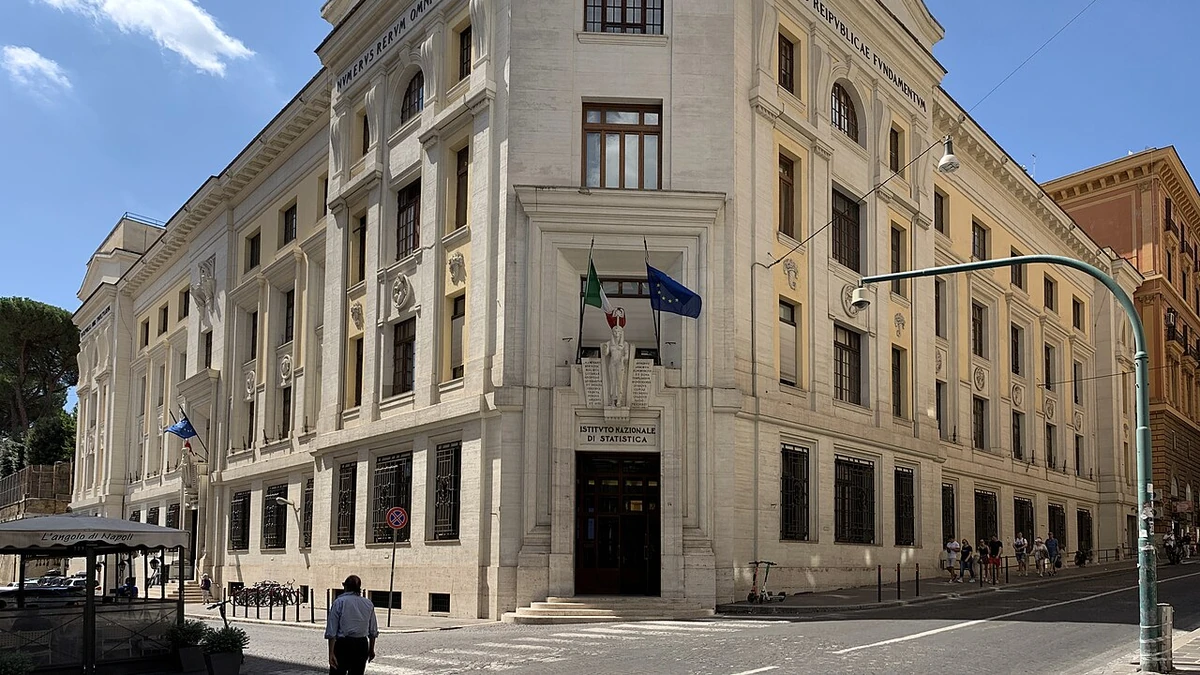
Italy’s business confidence strengthened again in August, extending its recovery to a third month as a sharp rebound in construction accompanied more modest gains elsewhere. ISTAT said its composite business confidence index rose to 96.9 from 95.7 in July, while construction confidence jumped to 102.9 from 96.8.
The move broadened beyond construction. Market services improved to 99.5 from 98.2, manufacturing edged up to 89.9 from 89.7 and retail confidence rose slightly to 106.6 from 106.5. Consumer confidence also increased, reaching 94.5 from 94.2 for a second consecutive monthly gain.
The August report, published by ISTAT on August 28, showed that business sentiment improved across all four sectors covered by the survey. The direction of the composite index has been positive in the agency’s June, July and August releases after a decline in May, although ISTAT’s monthly series can be revised as new releases are prepared.
Construction rebounds after July setback
Construction produced by far the largest sector move in August. The confidence index rose 6.1 points to 102.9, reversing July’s fall to 96.8 from 101.6 in June. The latest increase therefore represents a rebound from a weak July reading rather than a smooth acceleration across the summer.
Both components used in the construction confidence measure improved. The balance for employment expectations climbed to 10.0 from 2.8, while the balance for assessments of order books improved to minus 4.0 from minus 9.0. A less negative order-book balance indicates a better net assessment of current orders, while the employment balance shows a more favorable hiring outlook among surveyed businesses.
ISTAT’s construction survey covers building construction, civil engineering and specialized construction activities. Its panel currently includes about 700 enterprises and is stratified by company size, activity and geographic area. That makes the August jump useful as a timely read on contractor expectations, but it is still a confidence survey rather than a direct measure of construction output, investment or completed projects.
The rebound also matters because July had been the clear weak spot in an otherwise improving business-confidence picture. In that month, manufacturing, services and retail sentiment all rose while construction fell. August reversed that pattern decisively, with construction recording the largest sectoral increase.
Manufacturing and services also improve
Manufacturing confidence moved only slightly higher, but the underlying responses were mixed rather than uniformly weak. Production expectations improved sharply, with the balance rising to 9.6 from 4.5. At the same time, current order-book assessments deteriorated to minus 20.4 from minus 17.1, indicating that manufacturers were more optimistic about production ahead even as they judged present orders less favorably.
Market services delivered a firmer increase. The sector index rose 1.3 points to 99.5, supported by improvement in every component used by ISTAT. Expectations for order books increased to 8.0 from 5.4, current order-book assessments rose to 3.7 from 3.0 and the balance for business activity advanced to 7.0 from 6.0.
Retail confidence barely changed at the headline level, but expectations remained comparatively strong. The balance for future sales rose to 33.2 from 31.7, while assessments of current business activity slipped to 16.4 from 16.8. Inventories increased again, with that balance moving to 8.2 from 7.5.
The Italian data were released on the same day that the European Commission reported stronger economic sentiment across both the European Union and the euro area. The Commission’s Economic Sentiment Indicator rose to 98.2 in the EU and 98.4 in the euro area in August. That is a separate harmonized measure from ISTAT’s IESI, so the levels should not be compared directly, but the regional direction was also positive.
Consumer confidence improves, but remains more subdued
Household confidence rose more gradually than business sentiment. ISTAT’s consumer index increased to 94.5 from 94.2, with the economic climate component rising to 92.3 from 90.9. The current climate improved to 97.8 from 97.4 and the future climate reached 90.2 from 89.8, while the personal climate was unchanged at 95.4.
The smaller monthly gain among consumers shows that the August improvement was not equally strong across households and companies. Businesses reported better expectations across several sectors, especially construction and services, while the consumer index advanced only 0.3 point. ISTAT said the household increase was supported by better assessments of the general economy and personal conditions, lower unemployment expectations and improved views on the possibility of saving in the future.
The confidence indexes are designed to capture short-term changes in sentiment rather than provide a direct reading of gross domestic product or company earnings. Business responses are collected during the first 18 to 20 days of the reference month and focus on current conditions and expectations over a roughly three-month horizon. Starting with the July 2026 survey, ISTAT has used a combination of web and telephone interviewing for business data collection.
For investors and economists, the August results point to a broader improvement in Italian business sentiment, but the details argue against treating the headline as a uniform boom. Construction rebounded strongly after a weak July, services improved more steadily, manufacturing remained constrained by poor current orders and retail sentiment was nearly flat. The next ISTAT consumer and business confidence release is scheduled for September 30, when the durability of August’s construction rebound and the broader three-month improvement will become clearer.
More News


Latest News
View all news- Prologis Q3 Core FFO Rises to $1.60 a Share as Leasing Demand Holds Firm
- U.S. Natural Gas Storage Rises 67 Bcf to 3,567 Bcf, EIA Reports
- U.S. Business Inventories Increase 0.4% in August as Sales Climb 1.1%
- Philadelphia Fed Manufacturing Index Falls to 20.9 as Factory Growth Moderates
- New York Manufacturing Index Jumps to 25.5, Highest Since December 2021
