Japan Services Producer Prices Rise 3.7% in September as Inflation Accelerates
The Bank of Japan reported faster annual services producer price growth, led by ocean freight, while the measure excluding international transportation held steady at 2.9%.
Our editorial standards
MarketReview publishes clear, independently produced financial information using reliable sources and transparent editorial standards.
Read our Editorial Policy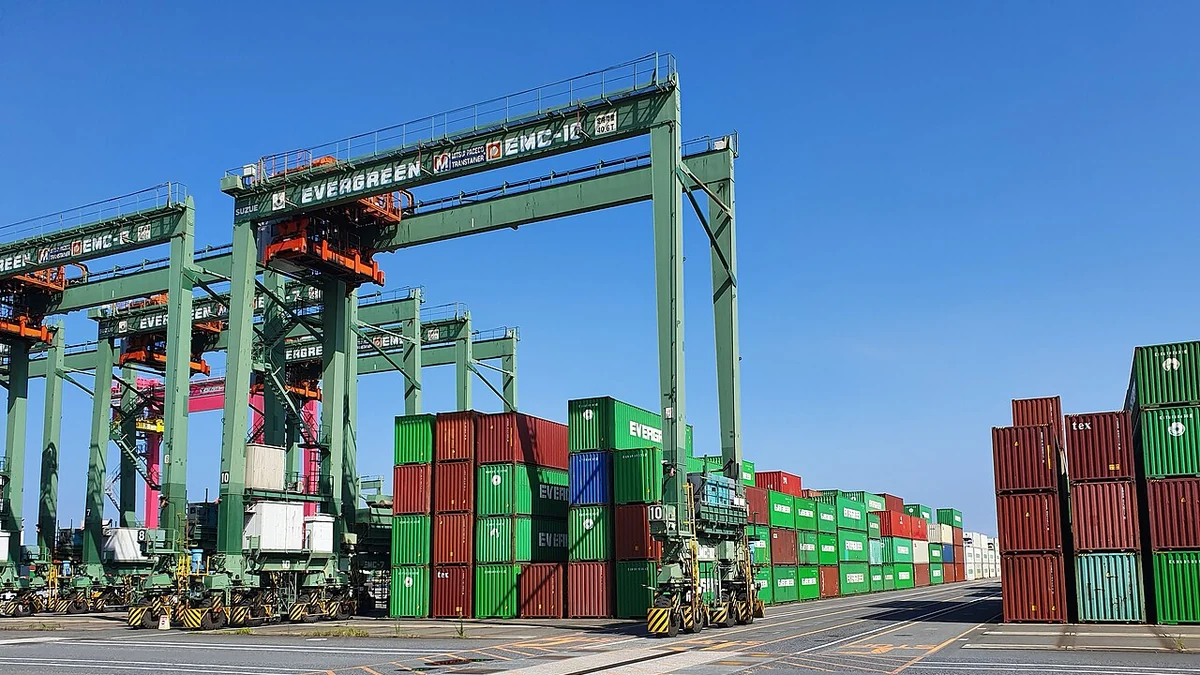
Prices charged by Japanese service providers to other businesses rose 3.7% in September from a year earlier, accelerating from a revised 3.5% increase in August, according to figures released by the Bank of Japan on Tuesday. The pickup was concentrated in transportation costs rather than a uniform rise across domestic services.
The central bank’s September Services Producer Price Index report showed a 0.3% monthly increase after a revised 0.1% gain in August. Stripping out international transportation, annual price growth was unchanged at 2.9%. That distinction is important because the headline index includes cross-border shipping prices that can move sharply with global freight conditions.
The index measures prices businesses pay other businesses for services such as freight, property-related activities, leasing and advertising. It is not Japan’s consumer price index, nor does a 3.7% rise mean households paid 3.7% more for services. The series instead offers a view of cost changes moving through parts of the business sector.
Ocean freight accounts for much of the acceleration
Transportation and postal activities recorded an 8.4% annual price increase in September, up from 6.8% in August. The category made the largest positive contribution to the change in the overall inflation rate, adding 0.25 percentage points to the month-to-month difference in annual growth, the BOJ’s breakdown showed.
Ocean freight transportation was the standout component. Its prices climbed 97.7% from a year earlier, compared with a 74.6% rise in August. The BOJ calculated that ocean freight alone contributed about 0.20 percentage points to the change in the overall annual rate, equivalent to the headline index’s net acceleration from 3.5% to 3.7%. Other categories supplied both additional increases and offsetting declines.
Price increases were not confined to ships. Road freight transportation rose 4.6% from a year earlier, after 4.3% in August. Domestic air passenger transportation accelerated to 7.9% from 5.4%, while travel arrangement services increased 4.9%, compared with 1.4% the previous month. Those changes were smaller drivers of the overall increase than ocean freight, but they show that several transportation-related services became more expensive.
The scale of the ocean freight increase also requires care in interpretation. An annual rate close to 100% indicates a sharp change against the comparable period a year ago; it does not establish that every Japanese company faced a similar increase in its shipping bill. Nor does the index identify a single cause for that movement. Shipping is exposed to international conditions, and higher quoted freight rates do not necessarily pass through immediately to all domestic service prices.
Hotels and leasing rise, while advertising prices fall
Outside transportation, price changes were mixed. The BOJ’s other services category increased 2.8% year over year, up from 2.5%. Hotel prices accounted for an important part of that shift, rising 9.7% after an increase of just 1.6% in August. In the central bank’s calculation, hotels added 0.14 percentage points to the change in annual inflation.
Other activities within that group moved in the opposite direction. Prices for civil engineering and architectural services rose 2.0% from a year earlier, slowing from 3.5%. That deceleration reduced the change in the overall annual inflation rate by 0.05 percentage points. The figures illustrate how the aggregate can accelerate even when some business services become less inflationary.
Leasing and rental services also became costlier, with their annual inflation rate rising to 11.7% from 11.0%. Within the group, leasing costs increased 17.1%, compared with 16.2% previously, and rental costs rose 1.7% after a 1.2% advance. These prices matter to businesses using equipment, vehicles and commercial assets, although their eventual impact on customers depends on contracts, margins and competitive conditions.
Advertising provided a sizeable counterweight. Prices for advertising services fell 5.2% from a year earlier, after a 0.8% decline in August. Television and radio advertising prices were down 11.7%, compared with a 7.0% drop previously. A separate grouping covering internet, newspaper, magazine and other advertising shifted from a 3.0% rise to a 1.0% fall.
Taken together, advertising lowered the change in the overall annual index by 0.19 percentage points, according to the BOJ. That offset helps explain why the headline accelerated by only 0.2 percentage points despite substantial increases in shipping and hotel prices. Sector contributions reflect their weights in the index, not a simple average of each reported price change.
Domestic inflation signals remain more restrained
The measure excluding international transportation offers a different reading of September. Its annual increase stayed at 2.9% for a second month, so the headline pickup was not matched by an acceleration in this narrower measure. The exclusion removes specified international passenger, freight and mail services, leaving a closer view of prices in activities less directly influenced by cross-border transport swings.
The BOJ’s breakdown by labor intensity points to a similar distinction. Prices for services with a high labor-cost ratio rose 2.6% from a year earlier, easing from 2.7% in August. Services with a low labor-cost ratio saw faster inflation of 4.8%, up from 4.4%. A high-labor-cost grouping is generally more sensitive to domestic wages, while the lower-labor-cost grouping can respond more to other input costs and market conditions, as the BOJ has explained in its research on the index.
That does not mean wage pressure has disappeared. Labor-intensive service prices are still rising, and the September comparison alone cannot establish how much of any increase came from salaries rather than demand or other costs. It does mean the 3.7% headline should not, on its own, be taken as proof that wage-driven inflation across Japanese services accelerated during the month.
Interpreting the latest release also requires consistent historical data. The central bank carried out a scheduled retroactive revision of its services producer price series in September, changing some figures from January 2025 onward. The comparison with August in the latest report therefore uses the revised 3.5% reading rather than treating earlier published values as unchanged.
For monetary policy, producer service prices are one input among several, not a direct substitute for consumer inflation or the BOJ’s assessment of longer-term price trends. The divergence between international freight costs and labor-intensive services gives policymakers competing information: businesses still face rising service charges, but the September increase was not broad-based across the measures most closely associated with domestic cost pressures.
The next scheduled policy decision comes after the Bank of Japan’s October 29–30 meeting. The central bank is also due to release its updated outlook for economic activity and prices on October 30, providing a fuller account of how officials assess inflation and the path of the economy.
More News



Latest News
View all news- National Vision More Than Doubles Adjusted Earnings Per Share but Cuts Sales Outlook
- U.S. Existing-Home Sales Plunge 5.5% to Lowest Level Since 2010
- Chicago Fed Releases New Reading on U.S. Financial Conditions
- Fed Governor Barr Warns AI Could Widen Wealth Inequality
- Canadian Building Permits Fall 4.1% as Residential Construction Intentions Weaken