Japan Begins Refund-Based Tax-Free Shopping for Foreign Visitors
Japan has switched foreign tourists from point-of-sale tax exemption to a refund model, requiring customs confirmation at departure before consumption tax is returned.
Our editorial standards
MarketReview publishes clear, independently produced financial information using reliable sources and transparent editorial standards.
Read our Editorial Policy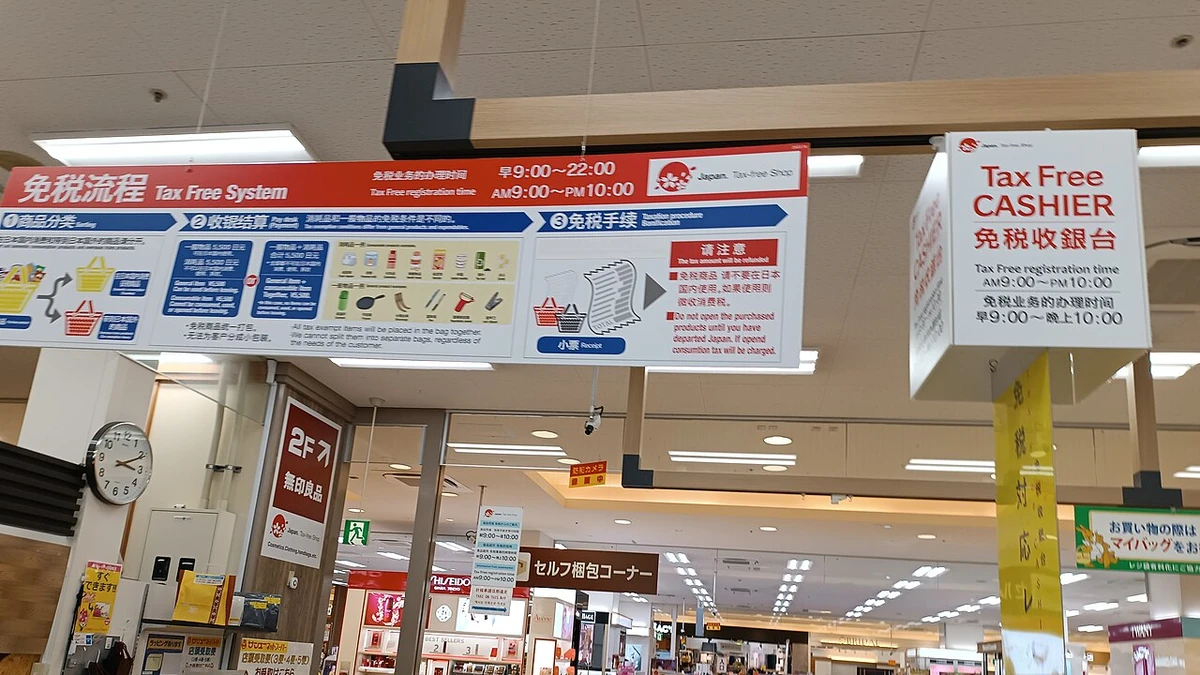
Japan began a major change in tax-free shopping for foreign visitors on Saturday, replacing the long-running point-of-sale exemption with a refund-based system that requires customs confirmation at departure. The shift means eligible travelers now pay the tax-inclusive price when they buy goods at participating tax-free stores and receive back an amount equivalent to consumption tax only after Japanese customs confirms that the purchases are leaving the country.
The change took effect for purchases made on or after November 1, 2026. Under the previous system, qualifying travelers could usually buy eligible goods without paying consumption tax at the register. From now on, the tax benefit arrives later in the process, after a departure check at an airport or seaport. That procedural shift is the central practical change for tourists, retailers and refund operators as Japan enters one of the busiest parts of the inbound travel season.
Official guidance published by the Japan Tourism Agency says purchasers will buy eligible goods at tax-inclusive prices, undergo customs confirmation when leaving Japan and then receive the refund from the tax-free shop or a service provider working for the shop. The agency’s English-language traveler page also makes clear that the refund method applies to purchases made on or after November 1.
What changes at the register and who can use the system
For travelers, the immediate effect is simple: the sticker or counter that says “tax free” no longer means the tax disappears at checkout. A qualifying visitor still needs to present the required identification at the store, but the store now records the purchase and charges the full tax-inclusive amount first. The refund comes later, after export of the goods is confirmed.
The baseline purchase threshold remains 5,000 yen excluding tax per store per day. The revised rules also remove several distinctions that made the earlier system more cumbersome. The National Tax Agency has said the reform abolishes the category split between general goods and consumables, ends the separate maximum purchase ceiling that had applied to consumables and removes the special packaging requirement that many visitors associated with food, cosmetics and other consumable items.
That simplification does not mean every item qualifies. Gold and platinum bullion, certain coins and goods that are already exempt from consumption tax remain outside the tax-free shopping regime. The revised framework also says purchases must be limited to goods that the traveler can personally carry out of Japan at departure, a practical limit that matters in larger shopping sprees as well as in group travel.
The new rules are aimed chiefly at foreign visitors, but they also cover other eligible non-resident purchasers under Japan’s broader tax-free framework. For most readers, the key operational point is narrower: if a store advertises tax-free shopping, visitors should still expect to pay the tax at the time of purchase unless a separate direct-shipping arrangement applies.
Departure customs confirmation is now the trigger for refunds
The most important procedural step now happens when the traveler leaves Japan. According to Japan Customs, eligible purchasers must complete customs confirmation within 90 days from the date of purchase. At airports and seaports, travelers are required to present their passport at a tax-free procedure terminal, sometimes called a kiosk or electronic terminal, before baggage check-in. That timing matters because travelers must have the goods with them when the procedure is completed.
Customs says the terminal will show whether the passenger has cleared the process or must undergo a further inspection. A green result means the procedure is complete. A red result means the traveler must take the goods to a designated customs inspection area for verification. At major airports including Narita, Haneda, Kansai, Chubu, Fukuoka, New Chitose and Naha, the process can also be handled online through Visit Japan Web within certain parts of the international departure lobby before the security checkpoint.
Japan’s guidance warns travelers not to wait until the last minute. If a passenger has already checked luggage containing tax-free goods, the process cannot be completed afterward because the goods must be available for inspection if customs requires it. If a traveler fails to complete the customs procedure before boarding formalities are finished, the inspection is treated as incomplete. Customs also says that if even one item from a single purchase record or receipt is missing, none of the goods connected to that receipt can receive customs confirmation for the refund.
Refund timing is also more decentralized than some travelers may expect. Customs does not hand cash back at the airport. Instead, the tax-free shop itself or a refund service provider entrusted by the shop returns the tax amount equivalent after confirmation is recorded. In practice, that means travelers may encounter different refund workflows depending on the store, the payment method and the intermediary handling the transaction.
Why Japan changed the system and what travelers should watch
Japan did not make the change only to modernize checkout counters. The National Tax Agency has tied the reform to abuse concerns under the old framework, saying authorities had seen fraudulent cases in which large amounts of supposedly tax-free goods were suspected of remaining in Japan and being resold domestically. By moving the tax benefit to the end of the process, after customs confirms export, the government is trying to tighten enforcement without eliminating the incentive for legitimate tourist spending.
The reform also tries to streamline parts of the old system. Consumables no longer need special sealed packaging, for example, and the distinction between general and consumable goods no longer determines the minimum purchase calculation. At the same time, the system still places real obligations on the traveler. If goods are consumed in Japan and are no longer in the traveler’s possession at departure, they are not eligible for customs confirmation and therefore not eligible for the refund. Customs says travelers who consumed such goods should report that fact to a customs officer rather than attempt to process them as tax-free exports.
For retailers, the transition means more back-end recordkeeping and closer coordination with refund service providers. The National Tax Agency’s outline of the reform says tax-free shops must preserve purchase record information and customs confirmation information in order to obtain tax exemption on the sale. That administrative change matters because the tax benefit now depends on the confirmation trail, not simply on what happened at the counter when the item was sold.
For visitors, the clearest practical takeaway is that tax-free shopping in Japan now works more like a post-purchase refund program than an instant discount. Travelers planning big shopping days may want to budget for the temporary tax outlay, keep receipts and goods organized by purchase record, leave extra time at the airport and confirm how a particular store handles the refund. Purchases made through October 31 remain under the old system, but purchases made from November 1 onward follow the new refund method.
More News



Latest News
View all news- Optimum Skips $102.5 Million in Bond Interest Payments Amid Debt Restructuring Talks
- New York Fed Markets Chief Says Currency Trading Has Withstood Global Volatility
- Macerich Announces $250 Million Acquisition of San Jose’s Oakridge Mall
- FHFA Suspends Six Companies From Doing Business With Major Housing-Finance Institutions
- Fed’s Barr Warns AI Financing Could Amplify Risks From a Market Selloff