Kansas City Fed Services Index Drops to -3 as Tenth District Services Contract
Current services activity turned negative in August after July’s jump, but year-over-year growth and six-month expectations remained positive.
Our editorial standards
MarketReview publishes clear, independently produced financial information using reliable sources and transparent editorial standards.
Read our Editorial Policy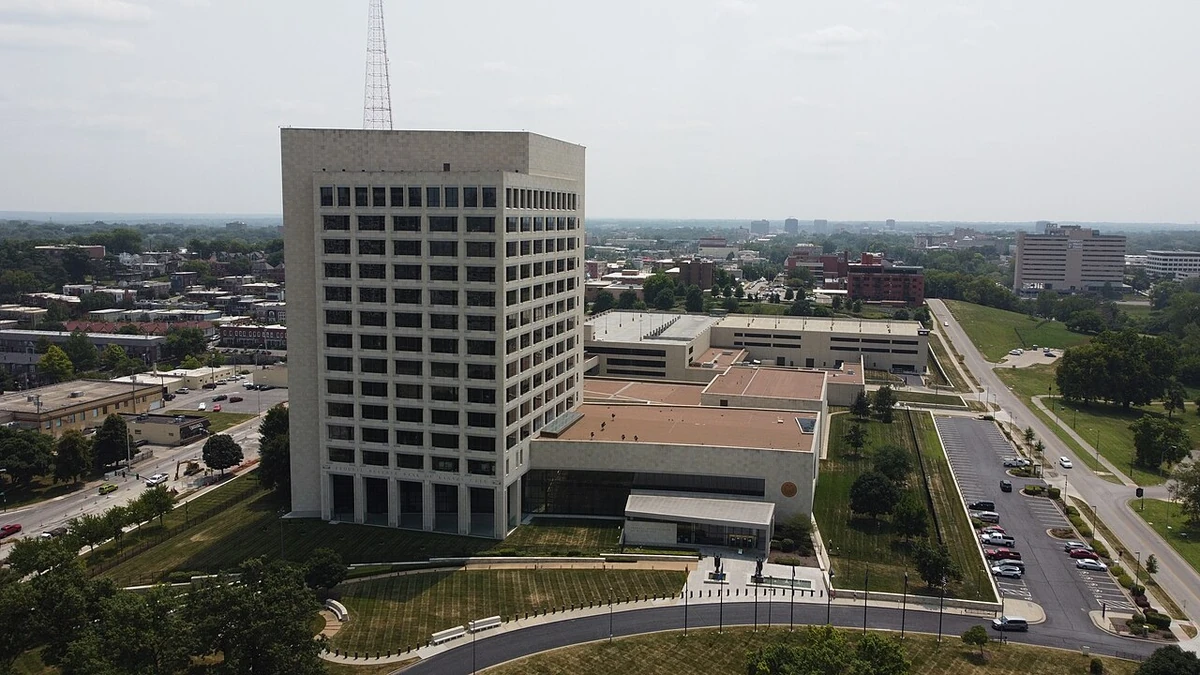
Services activity across the Federal Reserve Bank of Kansas City’s Tenth District slipped into contraction in August, reversing the strong improvement reported a month earlier. The month-over-month services composite index fell to -3 from 14 in July and 5 in June, putting the measure below zero after seven consecutive positive readings.
Underlying measures also lost momentum. General revenue and sales dropped to 0 from 19 in July, while the employment index fell to -4 from 4. Inventory and employment measures posted moderate declines, although the year-over-year services composite index edged up to 11 from 10 and capital expenditures eased only slightly to 14 from 16.
The Kansas City Fed’s August Services Survey showed a split across industries. Wholesale trade and leisure and hospitality activity fell considerably, while education and health services increased. Expectations for the next six months also cooled sharply, but they did not turn negative.
August breaks a seven-month positive streak
Earlier in 2026, the services index had remained above zero every month. It registered 2 in January, 6 in February and 15 in March, then eased to 3 in April before rising to 10 in May, 5 in June and 14 in July. August’s -3 result is the first negative month-over-month composite reading since November 2025.
Unlike a measure such as gross domestic product, the composite does not estimate the percentage change in output. Kansas City Fed methodology constructs it from diffusion indexes for general revenue or sales, employment and inventories, weighted at 50%, 30% and 20%, respectively. Each diffusion index is based on the share of firms reporting an increase minus the share reporting a decrease, so a negative composite means declines outweighed increases across the weighted components.
That makes the size and direction of the move more informative than treating -3 as a conventional growth rate. July had produced the strongest monthly reading since March, and August reversed that acceleration in a single survey period. At the same time, the year-over-year composite remained positive at 11, showing that firms still reported more activity than a year earlier even as conditions weakened from July.
Coverage extends across all of Kansas, Colorado, Nebraska, Oklahoma and Wyoming, plus western Missouri and northern New Mexico. Participating firms include retailers, wholesalers, transportation companies, real estate businesses, professional services, education and health providers, restaurants and tourism-related companies. The breadth makes the survey a useful regional signal, but it does not measure every industry or establish that the entire Tenth District economy contracted in August.
Wholesale and leisure services weaken as expectations cool
Sector details help explain why the headline index turned negative without pointing to a uniform downturn. Wholesale trade and leisure and hospitality weakened considerably, while education and health services moved in the opposite direction. The contrast suggests that August’s slowdown was concentrated in important parts of the service economy rather than shared evenly across the survey universe.
Forward-looking sentiment also changed materially. The future services composite index fell to 5 from 24 in July, driven mainly by softer expectations for general revenue and sales. A reading of 5 remains on the expansionary side of the diffusion scale, so respondents as a group still leaned toward better activity over the next six months. The margin of optimism, however, narrowed substantially.
Price indicators offered another sign of softer near-term conditions. Input-price growth was steady in August, while the selling-price index decreased from the prior month. The combination does not by itself establish a squeeze on profits, but it is notable after July’s survey showed widespread margin pressure. In that earlier poll, 60% of services firms said profit margins had declined since the beginning of the year, including 13% reporting a significant decrease.
Revenue weakness was especially visible in the current month. The general revenue and sales index dropped 19 points to zero, meaning the balance between firms reporting increases and decreases was essentially even on that measure. Employment moved from a modestly positive reading to -4, while capital spending stayed positive at 14. Those details make August look more like a pullback in operating momentum than a wholesale retreat from investment.
Manufacturing strength makes the regional picture mixed
Manufacturing sent a very different signal one day before the services release. The Kansas City Fed’s manufacturing composite index rose to 10 in August from 9 in July, and the year-over-year factory index increased to 16 from 14. Expectations among manufacturers also remained expansionary, with the future composite index at 20.
Viewed together, the two surveys show an uneven Tenth District economy rather than a synchronized regional contraction. Factory activity continued to expand as services slipped below zero on a month-over-month basis. Even within services, the positive year-over-year reading of 11 and the future index of 5 argue against interpreting one negative monthly composite as evidence of a broad collapse.
Monthly diffusion surveys can move quickly as firms reassess sales, staffing and inventories, which is why persistence matters. A second negative reading accompanied by further deterioration in employment or revenue would provide stronger evidence that the August slowdown is becoming entrenched. A rebound would instead make the latest decline look more like a sharp reversal after July’s unusually strong services reading.
September 25 is the next scheduled release date for the Kansas City Fed Services Survey. It will provide the first test of whether August’s contraction was temporary or the beginning of a broader cooling trend among Tenth District service businesses.
More News
Latest News
View all news- Prologis Q3 Core FFO Rises to $1.60 a Share as Leasing Demand Holds Firm
- U.S. Natural Gas Storage Rises 67 Bcf to 3,567 Bcf, EIA Reports
- U.S. Business Inventories Increase 0.4% in August as Sales Climb 1.1%
- Philadelphia Fed Manufacturing Index Falls to 20.9 as Factory Growth Moderates
- New York Manufacturing Index Jumps to 25.5, Highest Since December 2021