
MaxCyte Announces $151.8 Million Acquisition of Akron BioProducts
The purchase would add materials used throughout cell-therapy manufacturing, with MaxCyte expecting to close the deal before the end of 2026.
Our editorial standards
MarketReview publishes clear, independently produced financial information using reliable sources and transparent editorial standards.
Read our Editorial Policy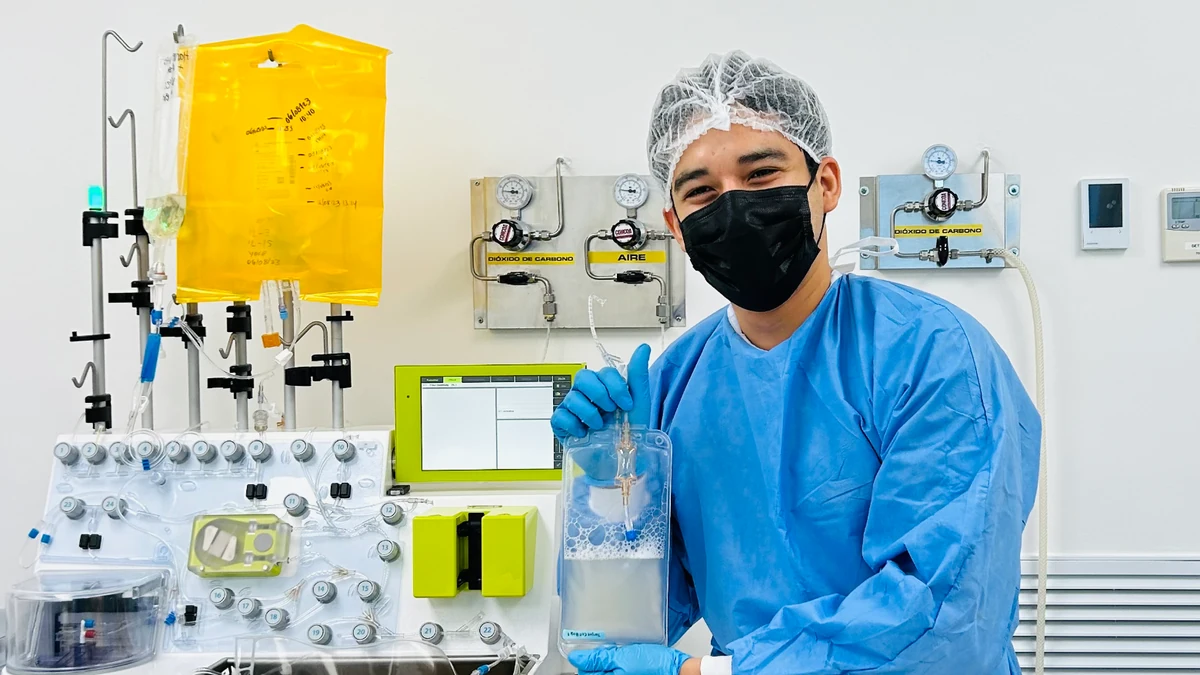
MaxCyte has agreed to acquire Akron BioProducts for $151.8 million, a purchase that would take the cell-engineering company further into the materials used to manufacture cell therapies. Announced on November 10, the agreement covers the privately held supplier of reagents and other production inputs. MaxCyte expects the acquisition to close before the end of 2026, subject to customary conditions.
The buyer, based in Rockville, Maryland, is best known for technology that introduces genetic material into cells without relying on viral delivery. Akron, headquartered in Boca Raton, Florida, supplies materials needed to grow, process and preserve cells as therapies move from development into commercial production. MaxCyte plans to retain the Akron brand after closing.
The announcement from MaxCyte presents the acquisition as a way to gain more recurring sales from manufacturing supplies, rather than relying solely on instruments, disposable processing components and licensing arrangements. It also brings a business that MaxCyte expects to generate approximately $28 million of revenue in 2026, a substantial addition alongside the buyer’s existing sales base.
How the $151.8 Million Purchase Is Structured
The headline value is not an all-cash payment. MaxCyte will pay $105 million in cash at closing, subject to customary adjustments, and issue 20,639,733 shares of its common stock. Those shares were valued at about $26.8 million using the November 9 closing share price, so their market value can change even though the number of shares specified in the agreement is fixed.
Another $20 million will be paid in guaranteed deferred cash installments. The sellers are due $10 million on the first business day of 2028 and a further $10 million on the first business day of 2029. The agreement was signed November 9 with entities affiliated with Arcline Investment Management, which is selling Akron. The Form 8-K filed with the Securities and Exchange Commission confirms the payment terms and planned timing.
The stock component also means existing MaxCyte investors will own a smaller percentage of the company than they otherwise would, because additional shares will be issued to the sellers. The new shares are subject to a six-month lock-up after closing, according to the filing. Arcline’s affiliates will therefore retain an equity interest for at least that restricted period rather than receiving the entire purchase price in cash.
MaxCyte said the acquisition does not require a shareholder vote and is not conditional on obtaining financing. Those provisions remove two potential closing hurdles but do not make completion certain: the agreement still depends on its customary closing conditions being met. The anticipated date remains before year-end, not a completed purchase as of the announcement.
Why Akron Fits Into the Cell-Therapy Production Process
MaxCyte’s Flow Electroporation technology is used to introduce material into cells as part of developing engineered cell therapies. Akron occupies other points in that workflow. Its products include cytokines and growth factors, human plasma-derived materials, specialized culture media and products used to prepare or preserve cells. They can be needed before a cell is engineered, during expansion or later when a therapy is prepared for storage.
That distinction is central to the purchase. A manufacturer can use electroporation to modify cells, then rely on repeated supplies of production materials as batches are made. Equipment and licensing can produce revenue at different points in a program’s life; consumables may be ordered throughout routine manufacturing. MaxCyte expects Akron to expand its exposure to those recurring purchases and to cell therapies already being sold to patients.
Akron’s products also serve workflows using viral methods of cell engineering, allowing MaxCyte to reach beyond the non-viral focus of its own platform. According to the company, the two product portfolios would be represented in manufacturing processes for five commercially approved therapies and more than 100 clinical programs. That describes their role as suppliers to therapy developers, not ownership of those treatments or a guarantee of future sales.
The products can be incorporated into manufacturing procedures and regulatory submissions that identify materials used in making a therapy. MaxCyte said both businesses have drug master files referenced by customers in regulatory filings. This helps explain why dependable supply and documentation matter to their buyers, and why changing a qualified production material may involve more than finding an alternative product on a price list.
Management also sees a potential sales opportunity because the customer bases overlap only to a limited extent. MaxCyte could offer Akron materials to existing instrument and licensing customers, while Akron’s established relationships may introduce MaxCyte to developers using different engineering methods. Those are expected commercial benefits of the acquisition, not revenue synergies already realized.
Revenue Growth and the Profitability Forecast
The acquisition announcement came alongside MaxCyte’s third-quarter results. Revenue for the three months ended September 30 was $10.2 million, up 49% from a year earlier, including $8.2 million from its core business and $2.0 million tied to strategic platform license programs. Its quarterly net loss narrowed to $4.8 million from $12.4 million in the comparable period of 2025, according to the company’s earnings release.
MaxCyte separately raised its 2026 revenue outlook to at least $34.5 million, excluding any contribution from the pending acquisition. Against that baseline, the approximately $28 million of 2026 revenue expected at Akron helps explain why MaxCyte describes the purchase as nearly doubling its revenue base. The figures refer to company estimates for full-year sales, not a forecast of the revenue MaxCyte will actually recognize from Akron in the remaining weeks of 2026.
Akron is also expected to generate $7 million to $8 million of earnings before interest, taxes, depreciation and amortization this year, a non-GAAP measure known as EBITDA. MaxCyte says Akron is cash-flow positive, an attractive feature for a buyer still reporting net losses. Neither the EBITDA estimate nor the statement about cash generation establishes what the acquired business will contribute to MaxCyte’s reported net income after financing costs and acquisition-related expenses.
Under MaxCyte’s current projections, the enlarged business could reduce its annual cash burn to less than $10 million in 2027. The company expects the added commercial revenue and existing operating cost reductions to help it reach profitability without drawing the entire financing facility arranged alongside the purchase. These projections depend on closing the acquisition and on its assumptions about customer demand, margins and expenses holding up.
A New Credit Facility and the Remaining Risks
MaxCyte has arranged up to $75 million in financing from MidCap Financial, divided into a $55 million term-loan facility and a $20 million revolving credit line. It expects to draw $20 million from the term loan and $2 million from the revolver when the acquisition closes. MaxCyte said the facility, together with remaining cash and investment resources, is intended to support the business through its planned path to profitability.
The financing should not be confused with the purchase-price breakdown. MaxCyte describes the consideration paid at closing as cash on hand plus newly issued shares, with the separate deferred cash obligations falling due in later years. Its September 30 cash, cash equivalents and investments totaled $132.7 million. After accounting for the purchase and associated costs as well as expected credit-facility borrowings, management projects a cash and investments balance of about $40 million to $45 million at the end of 2026 if the acquisition closes.
That would leave a smaller cash buffer than MaxCyte held before the acquisition, alongside new debt obligations and the promised future cash payments. Issuing more than 20 million shares also dilutes existing holdings. MaxCyte has identified the possibility of higher acquisition costs, delayed closing and difficulty realizing anticipated benefits among the risks associated with the agreement.
Akron is expected to continue operating under its current brand, with its leadership team and employees remaining part of the business. MaxCyte’s next stated milestone is closing before the end of 2026, subject to the remaining conditions, with the MidCap financing planned to close concurrently.
More from Investing

Latest News
View all news- U.S. Consumer Prices Rise 0.4% in October as Inflation Remains Elevated
- India’s Unemployment Rate Falls to 5.1% as Rural Job Market Improves
- U.S. Real Hourly Earnings Stall in October as Inflation Offsets Wage Gains
- Fed Governor Waller Backs December Rate Increase Despite Stable U.S. Labor Market
- U.S. Small-Business Confidence Holds Near Long-Term Average as Tax Concerns Rise
