
Nauticus Robotics Says Strategic Investor May Invest Up to $50 Million
The subsea robotics company signed a non-binding letter of intent for a private placement of up to $50 million, but the investor has no obligation to fund the proposal.
Our editorial standards
MarketReview publishes clear, independently produced financial information using reliable sources and transparent editorial standards.
Read our Editorial Policy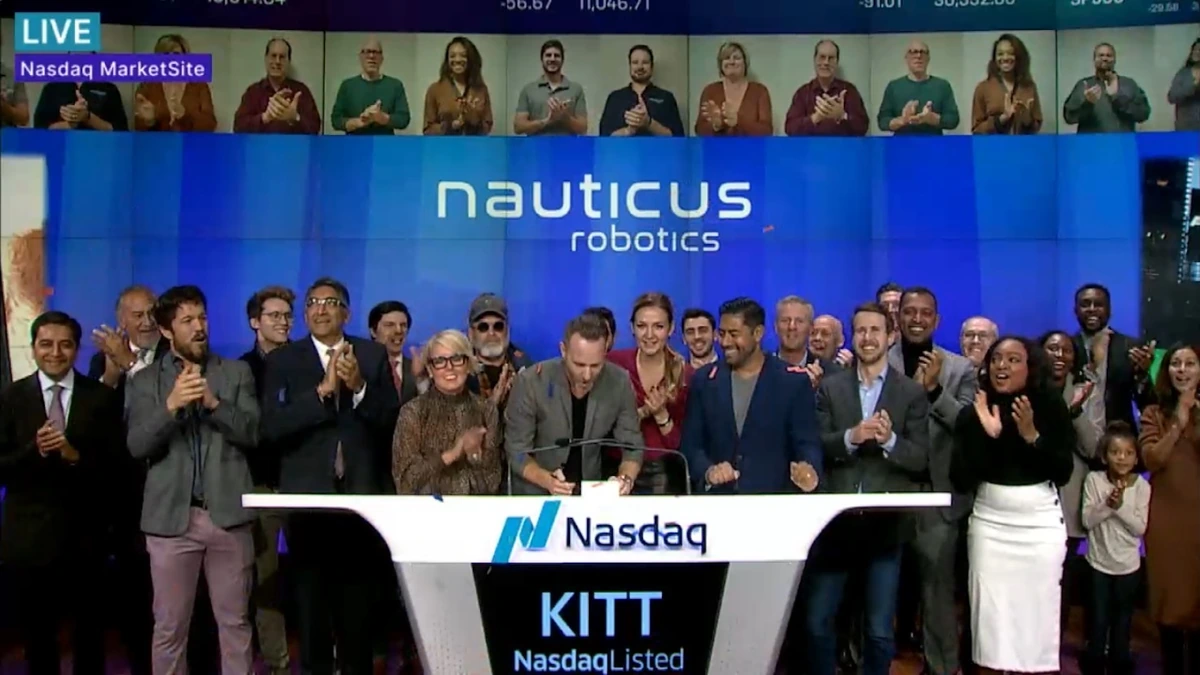
Nauticus Robotics said Friday it has signed a non-binding letter of intent with an unnamed strategic investor that is considering a private placement equity investment of up to $50 million in the subsea robotics company.
The proposal does not require the investor to provide funding. Nauticus said the investment remains subject to due diligence, negotiation and execution of definitive agreements, applicable approvals and closing conditions. The company also said its board is evaluating the proposal and is considering retaining an independent financial adviser to assist with that review.
The announcement establishes a possible source of new equity capital, but it leaves several terms unresolved. Nauticus did not disclose the investor’s identity, the price at which securities could be issued, the form of equity that might be sold, the amount of any initial funding, or a timetable for reaching definitive agreements.
The $50 million figure is a ceiling, not committed capital
The wording of the letter of intent matters because the headline amount represents the maximum contemplated investment, not cash that Nauticus has secured. A non-binding LOI can provide a framework for negotiations, but the company expressly said the investor is not obligated to fund the proposal.
Nauticus described the possible financing as a private placement equity investment intended to support its short- and long-term commercial objectives. It did not allocate the prospective proceeds to a specific robot program, manufacturing project, acquisition, debt repayment or other use in Friday’s announcement. That makes it premature to treat the full $50 million as available capital or to assign the money to a particular initiative.
The absence of pricing and security terms also means the potential effect on existing shareholders cannot yet be calculated. An equity financing would ordinarily add capital in exchange for an ownership interest, but the level of dilution would depend on the amount actually invested, the type and number of securities issued, their purchase price and any related rights or warrants. None of those details was provided for the new proposal.
The company also did not identify the strategic investor. That distinction is important because Nauticus has pursued other financing arrangements this year, including a separate February agreement with Master Investment Group. Friday’s release does not provide enough information to determine whether the new LOI is connected to that earlier arrangement, so the two should not be treated as the same financing unless Nauticus later says so.
Potential funding would be large relative to Nauticus’ liquidity
The maximum amount under consideration is substantial relative to Nauticus’ recent financial position. In its second-quarter results, the company reported $2.0 million of cash, cash equivalents and restricted cash at June 30, 2026, down from $7.6 million at the end of 2025. The contemplated $50 million maximum is more than 25 times that June 30 liquidity figure, although there is no assurance that the full amount, or any amount, will be funded.
Nauticus reported second-quarter revenue of $0.9 million, compared with $2.1 million in the same period a year earlier. Its net loss for the quarter was $11.1 million, compared with $7.4 million a year earlier. Those figures help explain why the size and structure of any new financing could be material to the company even before the commercial terms are known.
The operating story has continued to develop since the June quarter. On September 1, Nauticus said both of its Comanche remotely operated vehicle systems were working on commercial projects, one in the U.S. Northeast in support of offshore wind development and the other on platform inspection work off the Gulf Coast. The company characterized the activity as a stronger third quarter for its ROV operations, while also stating that it does not provide revenue guidance.
Nauticus followed that update on September 9 with the commercial release of Nauticus ToolKITT, its autonomy software suite for underwater vehicles. The initial Pilot Assist module is designed to help ROV pilots with functions such as station keeping and waypoint navigation while leaving the vehicle under operator supervision. Management has been positioning software licensing, offshore services, defense opportunities and international expansion as routes toward a broader commercial base.
The proposal follows other financing moves and a reverse stock split
Nauticus has already used several capital-raising tools during 2026. A February securities purchase agreement with Master Investment Group contemplated up to $3 million of Series D convertible preferred stock initially and as much as another $47 million through later milestone closings, together with warrants tied to those purchases. Nauticus’ June 30 Form 10-Q said no Series D preferred shares had been issued under that arrangement as of the date of the financial statements because no services had been provided or exchanges made under the agreement.
The company’s latest quarterly filing also disclosed sales under its at-the-market common-stock program. Nauticus said it sold about 1.06 million shares during the first six months of 2026 for gross proceeds of about $4.24 million and net proceeds of about $4.06 million after commissions and offering expenses. Those existing financing channels provide useful context for Friday’s announcement, but they do not establish the terms of the new LOI.
The possible investment was announced the same day Nauticus expected its common stock to begin trading on a split-adjusted basis after a 1-for-6 reverse stock split. In a September 23 SEC filing, Nauticus said the reverse split would become effective at 8:01 p.m. Eastern Time on September 24 and that split-adjusted trading was expected to begin at the market open on September 25. The company said the board approved the move to meet Nasdaq’s minimum bid-price requirements.
A reverse split reduces the number of shares outstanding and proportionally increases the per-share price without, by itself, changing the company’s overall value. It also means that comparisons involving historical per-share amounts need to account for the split. The financing proposal is a separate matter: if it advances, the economic effect will depend on the final equity terms rather than on the reverse split itself.
Nauticus has not announced a deadline for completing due diligence or signing definitive agreements with the prospective strategic investor. Until those steps occur, the company has no committed proceeds under the LOI and has not disclosed enough information to quantify the potential ownership stake or dilution.
More from Investing


Latest News
View all news- German Export Expectations Fall as Auto Industry Turns Negative Again
- Nasdaq Begins Trading Three New Portfolio Building Block ETFs
- Addex Regains Global GABAB Drug Portfolio Rights From Indivior
- Bank of England Market Minutes Show Rate-Hike Expectations in UK Curve
- Japan’s 3-Month Bill Auction Clears at 1.2555% Average Yield
