
Nvidia Backs OpenAI’s Ohio AI Data-Center Lease With Up to $105 Billion Guarantee
The chipmaker’s obligation is a contingent residual-value backstop, not a $105 billion upfront investment, and it is tied to leases covering an initial 4.25 gigawatts of IT load.
Our editorial standards
MarketReview publishes clear, independently produced financial information using reliable sources and transparent editorial standards.
Read our Editorial Policy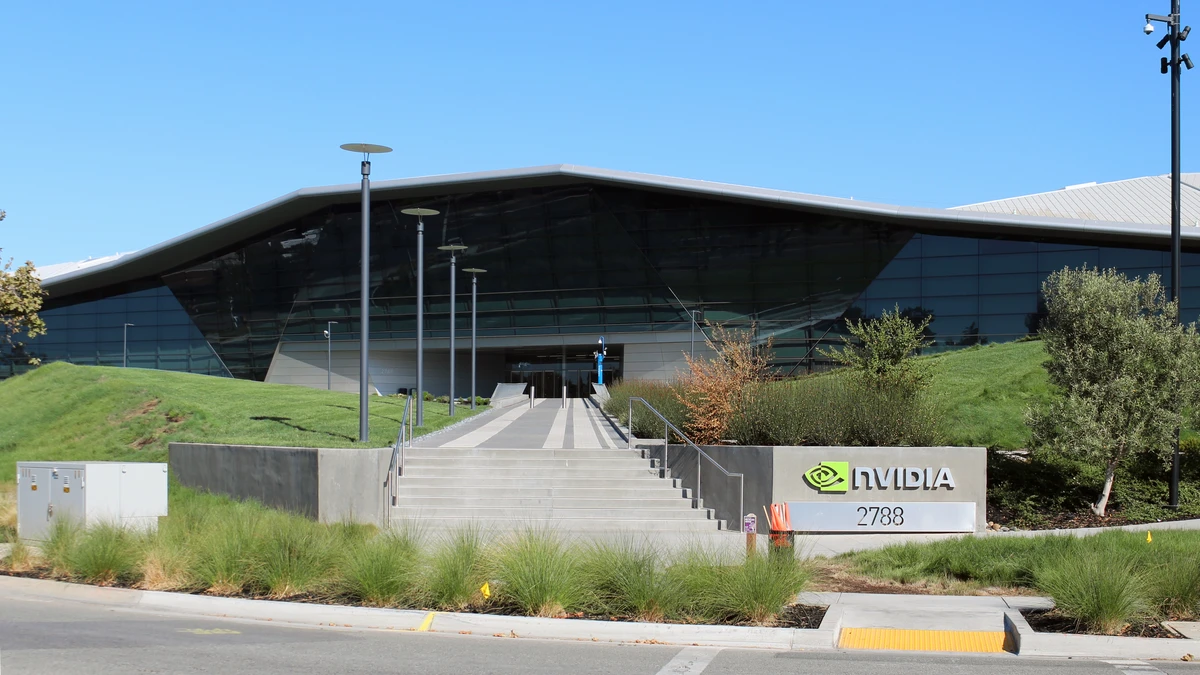
Nvidia has agreed to provide up to $105 billion of residual-value guarantees tied to OpenAI’s 20-year lease of a large AI data-center campus in Pike County, Ohio, giving the chipmaker direct contingent exposure to infrastructure that is expected to host its own computing systems. The commitment sits alongside a separate $1.5 billion equity investment in SB Energy, the SoftBank-backed developer that will build, own and operate the site.
The headline number is not a $105 billion upfront payment to OpenAI or SB Energy. Nvidia’s obligation is a financial backstop that can be triggered if OpenAI becomes insolvent and defaults on a lease or fails to make required lease payments, subject to other conditions. The initial guarantees cover leases supporting about 4.25 gigawatts of IT load, while Nvidia can choose to provide credit support for roughly another 3.8 gigawatts.
Under Nvidia’s August 17 Form 8-K, the aggregate payment obligation for the initial commitment is capped at $105 billion. The agreements generally become effective when the applicable lease begins, and Nvidia’s payment obligations depend in part on SB Energy satisfying ready-for-service conditions for the relevant premises, which are expected to begin in 2028.
The $105 billion figure is a residual-value backstop, not the full lease bill
The mechanics matter because a guarantee can sound more like a direct investment than it is. If a qualifying OpenAI default occurs, Nvidia generally would owe the shortfall between a contractually guaranteed minimum value for the affected lease and whatever SB Energy can recover by re-leasing or selling the premises. In other words, Nvidia is not promising to write a $105 billion check simply because the project is built, and the filing does not describe the cap as the total cost of the Ohio campus or as a guarantee of every dollar OpenAI owes over 20 years.
Nvidia also has several options after a trigger event. It may assume the applicable lease, require SB Energy to seek a replacement tenant, initiate a sale process, permit the lease to terminate, or delay those remedies for as long as one year while paying specified project costs. OpenAI has agreed to reimburse and indemnify Nvidia for amounts Nvidia actually pays to SB Energy under the guarantees.
The reimbursement provision reduces the economic exposure only to the extent OpenAI is able to honor it. A guarantee is most likely to be called when the original tenant is already under financial stress, so an indemnity from that same tenant cannot be treated as the equivalent of cash collateral. The other important protection is the underlying asset. If the campus can be re-leased or sold near the guaranteed minimum value, Nvidia’s shortfall would be smaller. If demand, power economics or the value of the site deteriorate sharply, the residual-value risk becomes more important.
The full guarantee forms are not yet public. Nvidia said the form of the agreements will be filed as an exhibit to its Form 10-Q for the quarter ended July 26, 2026. Until those documents are available, investors do not have the complete schedule of guaranteed minimum values or all detailed covenants and remedies, and the August 17 filing does not state how Nvidia will measure the new guarantees for accounting purposes.
Nvidia is using its credit to remove a bottleneck to future chip demand
The arrangement is different from a conventional GPU sale because Nvidia is helping make the physical site financeable and usable before it collects the hardware revenue the campus could generate. In its announcement of the partnership, Nvidia said it had secured land, power and shell capacity at the PORTS-Pike Technology Campus and would be the exclusive AI compute infrastructure provider there. OpenAI will be the customer, and the initial 4.25-gigawatt deployment is planned around Nvidia’s DSX AI factory platform, including GPUs, CPUs and networking.
The structure aligns the financing support with Nvidia’s commercial interest. If the site is completed and OpenAI uses the capacity as planned, Nvidia is positioned to sell multiple layers of hardware into a long-lived campus rather than making a one-time chip shipment. Jensen Huang told Reuters that the initial site could contribute as much as $200 billion to Nvidia revenue. That figure is a company estimate, not contracted revenue disclosed in the 8-K, and it depends on the project being built, equipped and used at the expected scale.
The strategy also addresses a constraint Nvidia has already identified in its own financial filings. In its April-quarter 10-Q, the company said the availability of data centers, energy and capital is crucial to deployment of Nvidia-based AI infrastructure and warned that shortages or financing constraints could delay customer projects. The Ohio agreement puts Nvidia’s credit behind one of those bottlenecks rather than waiting for a developer and tenant to solve the financing problem on their own.
Nvidia had already begun moving in this direction, but the Ohio commitment is much larger than the facility lease guarantees it had previously disclosed. As of April 26, Nvidia reported maximum gross exposure of $3.5 billion across earlier partner facility lease guarantees. The new $105 billion cap is 30 times that amount on a nominal basis, although the structures and risk profiles are not necessarily identical and the new obligation is contingent rather than funded upfront.
The scale also stands out against Nvidia’s latest reported liquidity. At April 26, the company held $50.3 billion of cash, cash equivalents and marketable debt securities, plus $30.2 billion of marketable equity securities. That does not mean Nvidia needs $105 billion of cash on hand for the Ohio agreement. Payments would depend on future trigger events and asset recoveries, and the guarantees can run for years. It does show that the nominal cap is large enough to be material even for a company generating tens of billions of dollars of quarterly operating cash flow.
Ohio turns Nvidia’s infrastructure-financing strategy into direct contingent risk
The deal follows Nvidia’s broader push to bring outside capital into AI infrastructure. A week earlier, the company announced partnerships with Apollo, BlackRock, Blackstone, Brookfield, Goldman Sachs and KKR intended to mobilize more than $500 billion of third-party capital for AI compute projects. MarketReview previously examined how that financing-platform strategy is designed to make Nvidia-based infrastructure easier to fund without requiring Nvidia to supply all of the capital itself.
The Ohio financing arrangement goes a step further because Nvidia itself is taking a defined contingent obligation tied to OpenAI’s lease performance and the site’s recoverable value. That creates a tighter financial link among the chip supplier, the data-center owner and the tenant. The commercial logic is clear: securing scarce land and power can accelerate deployment of Nvidia systems. The risk is that Nvidia is no longer exposed only to whether customers want to buy its chips. It also has exposure, under specified circumstances, to customer credit and the residual economics of a very large infrastructure asset.
SB Energy is planning the campus in phases. Nvidia and SB Energy said at least 10 gigawatts of new energy generation is planned to support 8 gigawatts of IT capacity, alongside at least $4.2 billion of regional grid investment with AEP Ohio. OpenAI said the first 800 megawatts are expected to become available in 2028, largely using existing AEP infrastructure, while later development will require new generation, transmission, permits, environmental reviews and financing.
Those dependencies matter to Nvidia’s risk because the guarantees are not detached from construction and readiness. The 8-K says payment obligations are subject to specified conditions, including the relevant premises meeting ready-for-service requirements. That limits the idea that Nvidia has guaranteed the entire construction program from day one. Its separate $1.5 billion investment in SB Energy, however, is an equity commitment and therefore carries a different kind of exposure to the developer’s execution and long-term value.
The 20-year lease also gives Nvidia an unusually long window over which its relationship with OpenAI and the economics of AI infrastructure can change. Nvidia’s guarantee obligations can terminate earlier if OpenAI ends a lease in accordance with its terms, reaches a satisfactory credit rating or other specified termination events occur. If none of those happens, the obligation can extend to the 20th anniversary of the applicable lease commencement.
For Nvidia, the Ohio campus is therefore both a demand-enablement strategy and a credit decision. The company is using financial capacity to help secure land, power and buildings that can host successive generations of its compute platform, while accepting contingent downside if the tenant cannot support the lease and the asset cannot be recovered at the guaranteed value. The next document to watch is Nvidia’s coming quarterly filing, where the company has said it will publish the form of the guarantee agreements and provide investors with the contractual detail that the August 17 8-K does not yet contain.
More from Investing


Latest News
View all news- FTC, USDA Launch Joint Inquiry Into Agricultural Equipment Market Practices
- VAALCO Completes Gabon Phase 3 Drilling as ETSEM-3H Starts at About 2,000 BOPD
- U.S. Crude Inventories Fall 3.2 Million Barrels in Latest EIA Report
- UK Trade Remedies Authority Proposes Five-Year Anti-Dumping Duty on Chinese Rutile Titanium Dioxide
- OCC Launches Direct Payments-Fraud Reporting Tool for Community Banks
