
Pixxel Raises $100 Million in Series C to Expand Satellite and Earth-Intelligence Business
The round, led by Temasek and Seraphim, will fund Pixxel's Honeybee constellation, new sensing capabilities, Aurora software and added satellite manufacturing capacity.
Our editorial standards
MarketReview publishes clear, independently produced financial information using reliable sources and transparent editorial standards.
Read our Editorial Policy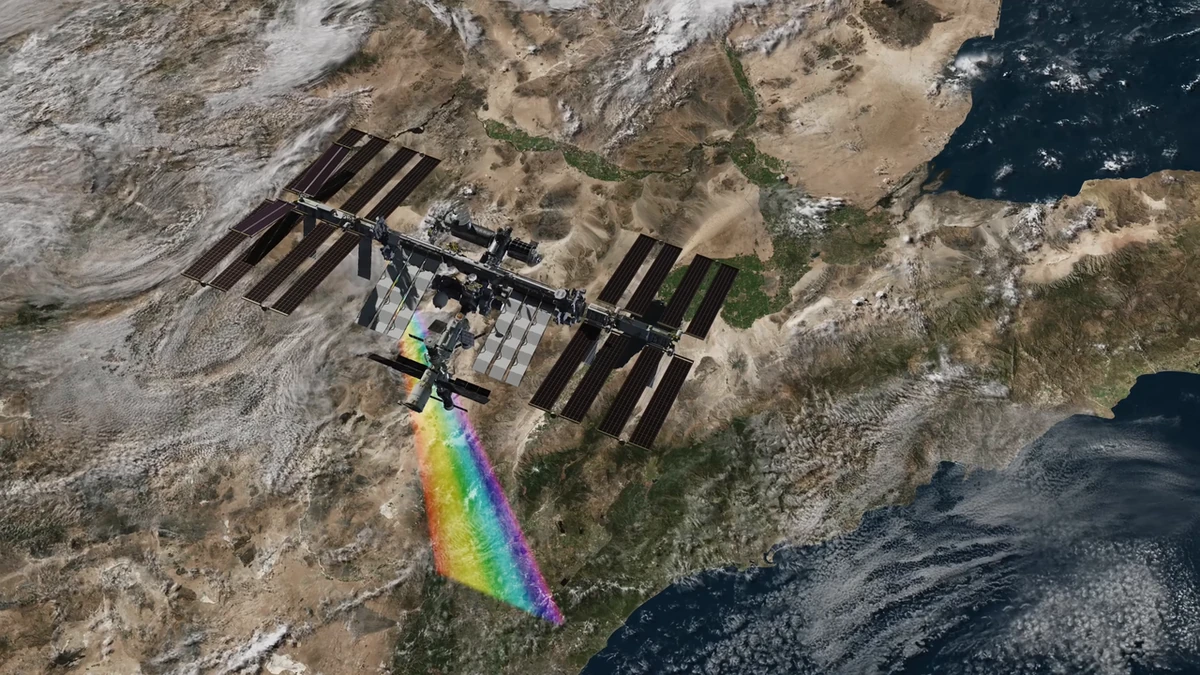
Pixxel said on September 7 that it closed a $100 million Series C round, giving the Bengaluru and Los Angeles based space company fresh capital to widen its business beyond hyperspectral imaging and scale what it describes as planetary infrastructure. Temasek and Seraphim co-led the round, while 360 ONE Asset and IMM Investment joined as new investors and several existing backers, including Radical Ventures and growX ventures, also participated.
The raise brings Pixxel’s total funding to $195 million and arrives at a point when the company is trying to prove it can become more than a specialist satellite operator. Management is positioning Pixxel as a broader Earth-intelligence platform spanning advanced sensing spacecraft, software that turns imagery into usable analysis, sovereign space systems for government customers and a larger manufacturing footprint in India and the United States.
In its September 7 funding announcement, Pixxel said the new money will be directed across four priorities. The list starts with the next-generation Honeybee hyperspectral constellation, which is expected to extend the company’s observations into the shortwave infrared range. It also includes new sensing technologies, specifically synthetic aperture radar and ultra-high-resolution optical imaging, further development of the Aurora Earth-intelligence platform, work on sovereign Earth-observation systems and more production capacity for advanced satellites.
Fresh capital is aimed at a wider product stack
That spending plan matters because it shows the round is not meant simply to finance a few additional satellites identical to the ones already in orbit. Pixxel is widening both the type of data it wants to collect and the way it intends to sell that information. Hyperspectral imagery remains central, but the company is now talking openly about combining several sensing approaches and pairing them with software that can turn raw imagery into decision-ready outputs for customers in agriculture, climate, defense, infrastructure and other sectors.
Honeybee is part of that shift. Pixxel said the first Honeybee satellite is expected to launch in 2027. If the company executes on its plan, the constellation would push its imaging into shortwave infrared, a range that can provide additional insight into surface composition, moisture and other characteristics that standard visible imagery may miss. At the same time, the planned addition of radar and very high resolution optical products would give Pixxel a more diversified menu of data rather than leaving the business tied to a single sensing mode.
Aurora is the other half of the strategy. Rather than selling imagery only as files or tasking capacity, Pixxel says it wants Aurora to serve as the intelligence layer that brings multiple datasets together and turns them into outputs customers can act on. That approach is common across maturing Earth-observation businesses because software can deepen customer ties and improve margins, but it also raises the execution bar. Selling analysis at scale requires dependable data pipelines, domain-specific workflows and enough customer trust for governments and enterprises to rely on the results.
Manufacturing is therefore not a side note. High-rate production capacity in India and the U.S. could help Pixxel shorten build cycles, keep more of the value chain in-house and respond faster if its product lineup broadens as planned. For investors, the round reads less like a bridge to the next launch and more like an attempt to finance a company that wants to own several layers of the Earth-observation stack.
Pixxel enters the round with an operating footprint and public-sector validation
The company is not pitching that ambition from a standing start. Pixxel said it has deployed six Firefly satellites over the past two years and launched Aurora. NASA’s Commercial Satellite Data Acquisition program separately says it has acquired commercial datasets from Pixxel for scientific purposes, and the agency describes the Firefly constellation as a set of high-resolution hyperspectral Earth-observation satellites that deliver analysis-ready data across more than 135 spectral bands in the visible and near-infrared range at a 5-meter ground sample distance.
That NASA description helps frame what Pixxel already has in service. Hyperspectral satellites do more than produce sharper pictures. They capture information across many spectral bands, which can support tasks such as monitoring crop and forest health, assessing water quality, identifying minerals, watching infrastructure and responding to disasters. Those capabilities give Pixxel a technical base that is attractive to both commercial buyers and government users that want remote sensing data with more analytical depth than standard imagery provides.
Public-sector relationships also matter for credibility. Pixxel said it has secured contracts with NASA and the NRO, won multiple iDEX challenges from India’s Ministry of Defence and unveiled plans for an orbital data-centre demonstration satellite. Not every one of those items translates immediately into recurring revenue, but together they show why investors may see the company as more than a concept-stage startup. There is a product in orbit, a software layer in market and evidence that major institutions are willing to engage.
Another piece of support came from India’s space policy machinery. In a New Year message published by IN-SPACe Chairman Pawan Goenka, the agency said the award of a public-private Earth-observation constellation to India’s first private space consortium led by Pixxel was one of the significant milestones of 2025. That reference gives outside confirmation that Pixxel has already been entrusted with a role in a larger national Earth-observation effort.
The round also signals a larger moment for India’s private space sector
Viewed more broadly, the financing says something about the maturity of India’s private space market. Pixxel called the raise the largest single funding round for an Indian space-technology company. That is the company’s characterization, and investors will still judge the claim against the wider market, but the size of the round is notable regardless. It comes after a period in which Indian space startups have moved from launch plans and prototype claims toward operating satellites, signed contracts and more formal government partnerships.
IN-SPACe’s January letter noted that Indian space startups raised more than $150 million during 2025, the highest amount recorded in a single year to date, and said the top ten space startups together represented a valuation of about $2 billion. Those figures describe the ecosystem rather than Pixxel alone, yet they help explain why a nine-figure funding round is now possible. A deeper investor base, a more active policy framework and a more visible set of commercial use cases are starting to support larger bets on Indian space companies.
For Pixxel, the immediate question is whether the new capital converts into a broader and more durable business fast enough to justify that confidence. Management has now laid out a multi-part expansion plan: launch Honeybee, add radar and very high resolution optical sensing, deepen Aurora, build sovereign systems and expand manufacturing. The next concrete milestone in that roadmap is the first Honeybee launch expected in 2027. Until then, the significance of this Series C lies in the scale of the ambition it finances and in the evidence that investors believe Pixxel has a plausible path to become a larger Earth-intelligence company rather than a niche imaging startup.
More from Investing


Latest News
View all news- Pending U.S. Home Sales Drop 7.3% in September as All Four Regions Decline
- U.S. Housing Starts Fall 5.2% in September to 1.22 Million Annual Rate
- Philadelphia Fed Survey Shows Improving Service-Sector Activity but Persistent Cost Pressures
- NCUA Proposes Easing Three Credit Union Rules, Including Investment Reserve Requirements
- Instacart Agrees to $5 Million Settlement Over U.S. Hiring Discrimination Allegations
