Samsung Plans Up to $80 Billion in 2026 Shareholder Returns as AI Chip Profits Surge
Samsung approved an estimated KRW 90 trillion to KRW 110 trillion of shareholder returns for 2026 as AI-driven memory earnings pushed its chip business to record profits.
Our editorial standards
MarketReview publishes clear, independently produced financial information using reliable sources and transparent editorial standards.
Read our Editorial Policy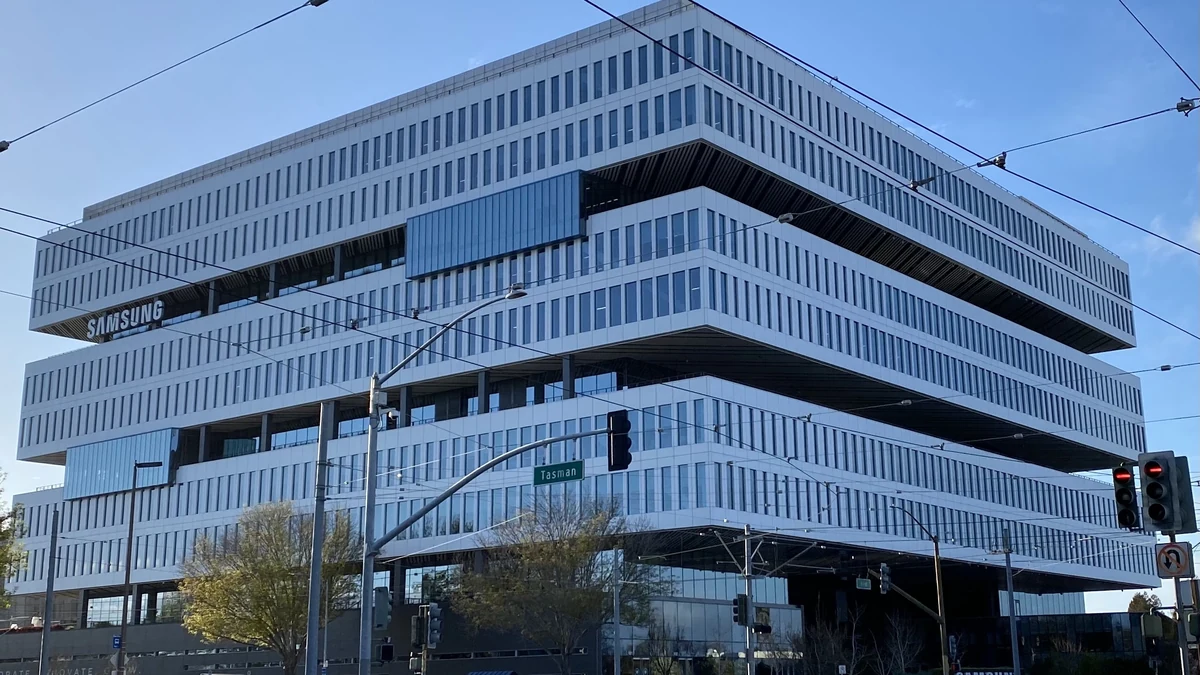
Samsung Electronics has approved an estimated KRW 90 trillion to KRW 110 trillion of shareholder returns for 2026, roughly $65 billion to $79.5 billion at the exchange rate cited by Reuters on Friday. The upper end would set a company record and comes as artificial-intelligence demand has driven Samsung’s semiconductor business to unprecedented profit levels.
The planned return is not a single $80 billion buyback. Samsung expects to distribute about KRW 30 trillion in cash dividends in the third quarter, including its regular dividend, while the final mix for the remaining amount will be decided after full-year results are known. Cash dividends, share repurchases and share cancellations are all under consideration for that later portion.
A record payout built on Samsung’s three-year cash-return policy
In its August 21 shareholder-return announcement, Samsung said the 2026 estimate is about five times its previous annual high of KRW 20.3 trillion, set in 2020. The company also described the planned amount as the largest shareholder return ever by a Korean company.
The range follows a policy Samsung introduced for 2024 through 2026 under which it committed to allocate 50% of cumulative free cash flow to shareholders over the three-year period. Samsung paid KRW 9.8 trillion in regular dividends in each of 2024 and 2025. It added a KRW 1.3 trillion special dividend in 2025 and repurchased and cancelled KRW 8.4 trillion of shares that year.
Those earlier payouts totaled about KRW 29.3 trillion. Including the amount now estimated for 2026, Samsung says shareholder returns over the full three-year policy period are expected to reach KRW 120 trillion to KRW 140 trillion. That makes this year’s plan the dominant part of the program rather than a continuation at the pace seen in the first two years.
The timing matters because only part of the 2026 return has been mapped out in detail. Samsung plans to pay about KRW 30 trillion in third-quarter cash dividends, with the exact terms due to be finalized at an October board meeting. The board is then expected to decide the remaining amount in January 2027 after the company’s 2026 financial performance is confirmed.
Samsung separately approved a share repurchase of about KRW 15 trillion for employee compensation. Friday’s announcement presented that employee-related repurchase alongside the shareholder-return plan, while the later shareholder distribution may use a combination of dividends, buybacks and cancellations. The distinction is important because the headline estimate does not mean Samsung has authorized KRW 90 trillion to KRW 110 trillion of stock purchases today.
AI memory demand is driving record semiconductor earnings
The cash-return plan follows a quarter in which the chip business accounted for almost all of Samsung’s operating profit. According to the company’s official second-quarter earnings materials, consolidated revenue reached KRW 171.5 trillion and operating profit rose to KRW 89.5 trillion. The Device Solutions division, which houses Samsung’s semiconductor businesses, generated KRW 127.5 trillion of revenue and KRW 89.2 trillion of operating profit.
Memory was the main engine. Samsung said it recorded another all-time high for quarterly memory earnings after focusing limited capacity on AI-server demand. Memory revenue reached KRW 120.8 trillion in the second quarter, up 62% from the first quarter and 471% from a year earlier. The company also pointed to rising industry prices and a record server share of the memory sales mix.
High-bandwidth memory has become one of the clearest links between the AI infrastructure boom and Samsung’s financial results. During the quarter, Samsung expanded HBM4 sales and shipped its first HBM4E samples to major customers. Management said demand for server DRAM, enterprise SSDs and HBM should keep the memory market undersupplied in the second half of 2026 even as mobile and PC demand moderates.
The foundry business also improved as orders tied to AI and high-performance computing broadened. Samsung cited HBM base-die demand, stronger U.S. customer orders and continued design wins, including engagements using its 2-nanometer process. For the second half, the foundry unit is targeting double-digit revenue growth as demand rises across U.S. and Chinese customers.
Samsung’s balance sheet provides another measure of the cash generated during the boom. At June 30, the company reported KRW 190 trillion of cash and KRW 167.59 trillion of net cash. Operating cash flow for the second quarter was KRW 105.08 trillion, compared with KRW 40.27 trillion in the first quarter. Those figures do not determine the shareholder-return calculation by themselves, but they show the scale of liquidity available as Samsung balances dividends, repurchases and major semiconductor investment needs.
The final payout mix still depends on full-year results
The announcement also lands in the middle of a broader shift among South Korean memory makers. SK hynix said earlier this week that it plans to repurchase and cancel KRW 40 trillion of shares and raise its shareholder-return target to more than 50% of cumulative free cash flow for 2025 through 2027. Both companies have benefited from strong AI-related memory demand, giving investors more leverage to press for larger distributions of excess cash.
Reuters reported that Samsung shares gained 3.5% on Friday, while SK hynix rose 4.4% and the broader KOSPI added 0.8%. The reaction came despite a recent pullback in chip stocks from record highs as investors questioned how long the current pace of AI infrastructure spending can continue. Reuters said Samsung shares had climbed about 300% over the previous 12 months, leaving the size and form of capital returns increasingly important to the investment case.
For Samsung, the next decision is not whether the 2026 program exists, but how the remaining amount will be divided. The October board meeting is expected to set the third-quarter dividend details. The more consequential allocation decision comes in January 2027, when the board will have full-year earnings and cash-flow data and can determine how much of the balance is paid as dividends versus share repurchases and cancellations.
That sequencing leaves the final 2026 figure inside a KRW 20 trillion range for now. A year-end result near the upper end would push Samsung’s three-year shareholder returns toward KRW 140 trillion, while a result near the lower end would still represent a multiple of its previous annual record. The January board meeting will determine how much of the AI-era earnings surge ultimately reaches shareholders through cash payments and any repurchases and cancellations Samsung chooses to use.
More from Investing
Latest News
View all news- Zscaler Reaffirms Q1 and FY2027 Financial Guidance at Investor Day
- U.S. Trade Deficit Widens 13.7% to $105.6 Billion in August as Imports Surge
- MIAX Hits Record 17.1% YTD U.S. Options Share as ADV Rises 22%
- Lamb Weston Raises FY2027 Outlook After First-Quarter Results
- Japan’s 10-Year Government Bond Auction Clears Near 3.10% With a 3.1% Coupon