
Select Water Signs 12-Year Permian Basin Infrastructure Agreement
The expanded deal covers more than 875,000 acres and calls for about 100 miles of new pipelines, 3 million barrels of storage and 60,000 barrels per day of added recycling capacity.
Our editorial standards
MarketReview publishes clear, independently produced financial information using reliable sources and transparent editorial standards.
Read our Editorial Policy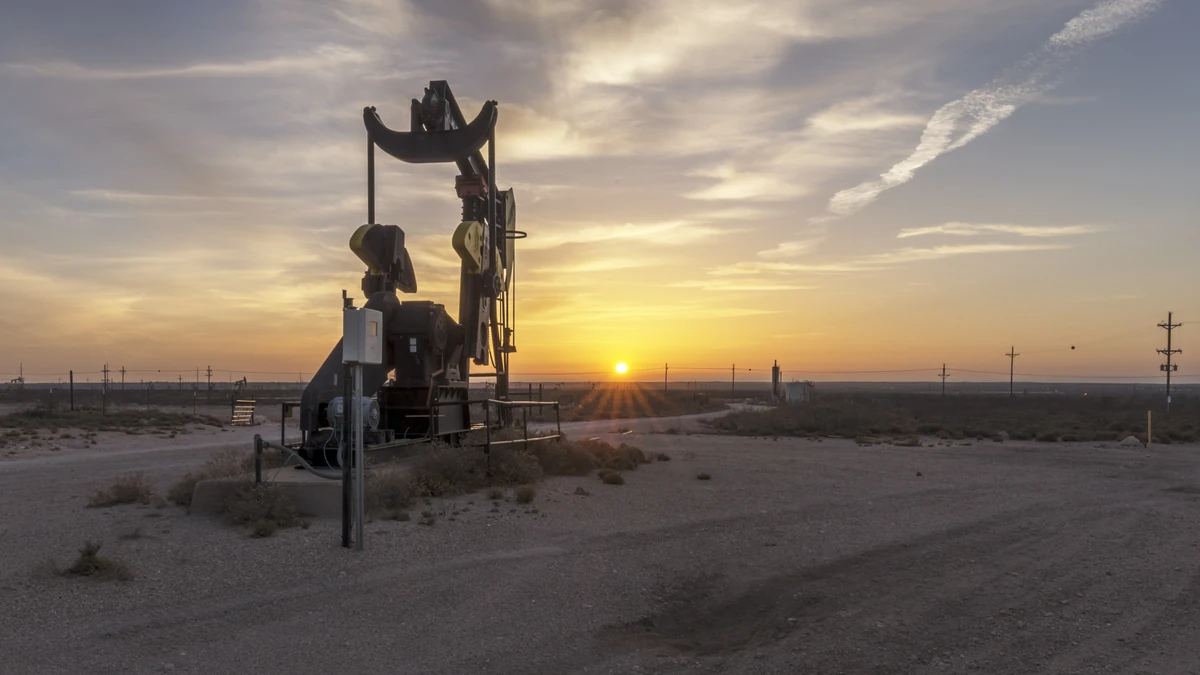
Select Water Solutions has signed an amended and expanded 12-year agreement with an unnamed investment-grade public operator for water-management services across its Northern Delaware Basin network, deepening the company’s infrastructure commitment in one of the most active parts of the Permian Basin. The agreement covers produced water gathering and disposal, treated water supply and distribution, recycling and pipeline services across more than 875,000 acres of dedicated and right-of-first-refusal acreage.
Select said the expansion will require about 100 miles of additional pipelines, 3 million barrels of storage capacity and 60,000 barrels per day of new recycling capacity in Eddy County, New Mexico. Select Water expects the full project to cost about $100 million to $120 million and to be operational by the end of 2027.
Expansion adds acreage, pipeline and recycling capacity
Select’s August 18 announcement says the amended arrangement is supported by roughly 500,000 dedicated acres and another 375,000 acres subject to rights of first refusal. Select Water highlighted 256,000 newly dedicated acres, including the conversion of 104,000 acres that had previously been covered by ROFR rights, as part of the expansion. It also said the consolidated acreage position includes 104,000 new ROFR acres.
The revised contract increases certain fixed pricing terms and extends the relationship for 12 years from the agreement’s effective date. Select did not disclose the operator’s identity, the exact pricing schedule, a minimum revenue commitment for the expanded contract or expected annual revenue from the new acreage. Those omissions make it difficult to calculate the project’s return from the public announcement alone, even though the longer term and larger dedicated footprint give Select more contractual visibility around future use of the system.
The operator has been a Select customer since late 2023, when it helped anchor Select’s first permanent commercial recycling facility in the Northern Delaware Basin, according to Chief Executive John Schmitz. The expanded system is intended to support the customer’s development plans across Eddy and Lea counties in New Mexico while using Select’s existing recycling and disposal network as the base for the new buildout.
Select also received an exclusive option to take assignment and conveyance of multiple saltwater disposal wells in Lea County, New Mexico, and Culberson County, Texas. That is an option rather than a completed asset transfer. If Select exercises it, the company expects to integrate the wells into its existing Permian Basin system and add further disposal capacity alongside the recycling network.
The physical expansion is substantial relative to the individual projects Select has announced earlier this year. The planned 100 miles of pipelines will connect new development areas to infrastructure already operating or under construction, while the added storage and recycling capacity are designed to handle larger water flows over the life of the customer’s drilling program. Select has not published a construction schedule for each component, so the end-of-2027 target remains a company forecast for the overall project.
Northern Delaware network is already driving segment growth
The new agreement arrives as Water Infrastructure has become a larger contributor to Select’s results. In the second quarter, the segment generated $101.6 million of revenue, up from $96.7 million in the first quarter and $80.9 million a year earlier. Gross margin before depreciation and amortization reached 58.3%, compared with 56.2% in the first quarter and 55.2% in the second quarter of 2025.
Select said it recycled or disposed of about 1.5 million barrels of produced water per day during the second quarter. Its second-quarter results attributed the segment’s sequential revenue increase to higher produced-water volumes as well as stronger skim-oil volumes and pricing. The company expected Water Infrastructure revenue to grow another 5% to 10% sequentially in the third quarter, with gross margin before depreciation and amortization in a 56% to 58% range.
Select has been building its Northern Delaware footprint through a mix of long-term contracts, acquisitions and customer-contributed assets. During the second quarter it signed a seven-year produced-water transportation agreement with a large public operator that included the conveyance of 14 saltwater disposal facilities in Lea and Eddy counties. Select also agreed to build 19 miles of large-diameter pipeline under that contract, which is supported by a 128-million-barrel minimum volume commitment and was expected to cost about $25 million to $30 million.
The company has not said that the seven-year agreement announced with second-quarter results and the 12-year expansion announced August 18 involve the same customer or the same project. The public disclosures therefore should not be combined as though they are one contract. What they do show is a broader strategy of using existing disposal, recycling and pipeline assets to win longer-duration commitments that can justify incremental infrastructure spending.
That approach is also visible in Select’s first-quarter activity. Earlier in 2026, the company disclosed another 12-year Northern Delaware agreement supported by about 2,700 acres of dedication and roughly nine miles of planned pipeline, with that project expected online by year-end. Select also acquired disposal facilities, water rights, storage and the Black River Ranch in Eddy County as it expanded the physical footprint supporting the New Mexico network.
New project adds 2027 growth spending, not a 2026 guidance increase
The $100 million to $120 million expansion announced August 18 is expected to add contracted growth capital spending in 2027. Select specifically said its 2026 capital expenditure guidance is unchanged. At the time of its August 4 earnings release, the company expected net capital expenditures of $250 million to $290 million for 2026 after raising the range to support infrastructure contract awards and other opportunities.
Select had $33.4 million of cash and cash equivalents at June 30 and $250 million outstanding under the term-loan portion of its sustainability-linked credit facility. It reported no borrowings on its revolving facility at quarter-end and total liquidity of $277.8 million, including approximately $244.4 million of available borrowing capacity after letters of credit. Those figures predate the August 18 agreement and do not specify how the new 2027 construction program will be financed.
The long contract term reduces some utilization uncertainty, but the economic outcome will still depend on the operator’s development pace, actual water volumes, construction costs and Select’s ability to bring the new facilities online as planned. The company also faces the usual permitting, equipment and execution risks associated with pipeline, recycling and disposal infrastructure. Select’s cost estimate and end-2027 completion target are forward-looking statements rather than completed milestones.
For now, the agreement gives Select a larger contracted footprint across its Northern Delaware system without changing the company’s current-year capital budget. The next major operational test is the buildout itself: about 100 miles of pipeline, 3 million barrels of storage and 60,000 barrels per day of additional recycling capacity are scheduled to be in service by the end of 2027.
More from Investing

Latest News
View all news- FTC, USDA Launch Joint Inquiry Into Agricultural Equipment Market Practices
- VAALCO Completes Gabon Phase 3 Drilling as ETSEM-3H Starts at About 2,000 BOPD
- U.S. Crude Inventories Fall 3.2 Million Barrels in Latest EIA Report
- UK Trade Remedies Authority Proposes Five-Year Anti-Dumping Duty on Chinese Rutile Titanium Dioxide
- OCC Launches Direct Payments-Fraud Reporting Tool for Community Banks
