Singapore Says Gas Importer May Seek Contract Remedies After Indonesia Cuts Supplies
Singapore says a temporary 17-billion-BTU daily gas shortfall is manageable, while importer Gas Supply reviews whether Indonesian suppliers breached their contracts.
Our editorial standards
MarketReview publishes clear, independently produced financial information using reliable sources and transparent editorial standards.
Read our Editorial Policy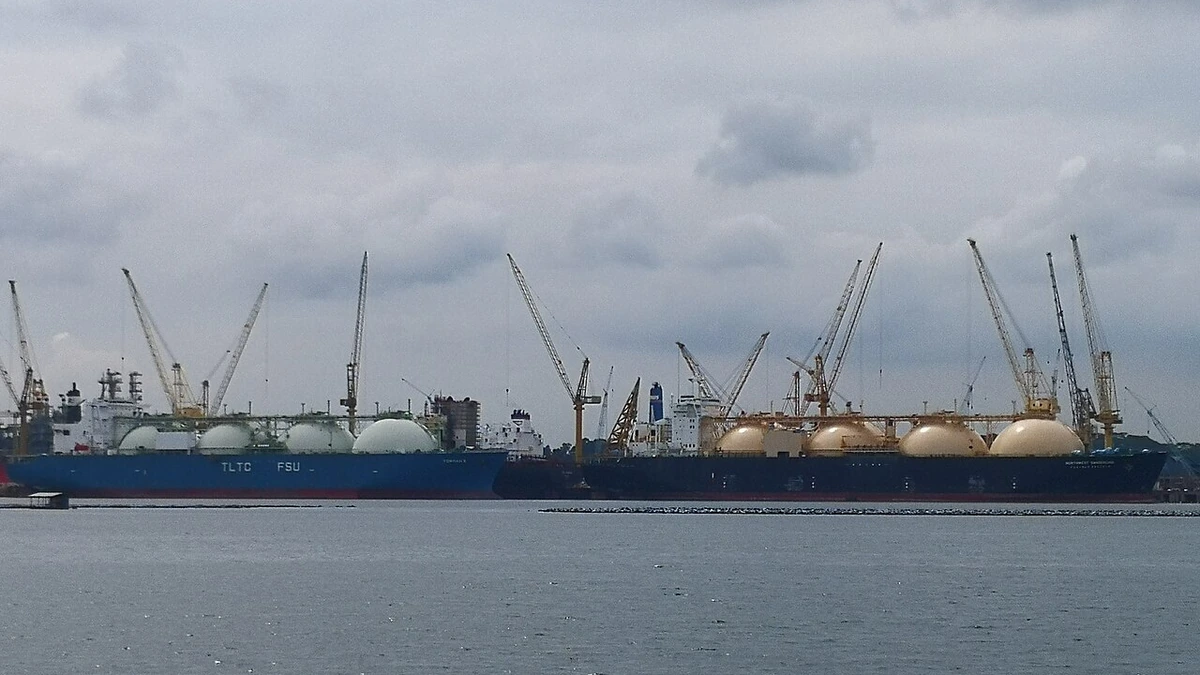
Singapore said its gas importer may pursue contractual remedies after Indonesia cut natural gas supplies, although officials have not determined whether any supplier has breached an agreement. Gas Supply Pte Ltd will first contact its Indonesian suppliers and examine its rights under the existing contracts, Energy and Industry Minister Tan See Leng said on Sunday, October 25.
The government put the reduction at 17 billion British thermal units per day over an 18-day period. That is less than 2% of Singapore’s daily gas demand for power generation, according to Tan, who said replacement supplies are available, including liquefied natural gas (LNG).
The relatively small share of national demand helps explain the government’s confidence that power supplies can be maintained. It does not settle the separate commercial question of whether the Indonesian suppliers have delivered the volumes and met the obligations agreed with the Singapore importer.
In remarks published by Singapore’s Ministry of Energy, Trade and Industry, Tan said Gas Supply would establish whether a breach occurred before seeking remedies available under its contracts. He also said the country had sufficient gas from other sources to meet demand.
The supplier review could lead to commercial claims
The distinction between a possible breach and an established one is important. Singapore has stated its expectation that gas contracts will be honoured, but it has not announced a legal claim, specified a payment being sought or publicly identified the contractual terms on which a remedy would depend. Gas Supply’s discussions with suppliers are therefore the immediate next step, not evidence that a penalty or damages award has already been triggered.
Those agreements determine how delivery commitments work, what happens when supplies are interrupted and what recourse a buyer may have. Without the contracts or a formal finding, there is no sound basis to assume that every reduction constitutes a breach. Nor is there enough public information to calculate any recoverable cost associated with securing replacement fuel.
Indonesia began reducing natural gas exports to Singapore on October 24. In comments to Singapore broadcaster CNA, Indonesia’s upstream oil and gas regulator SKK Migas said it was redirecting supplies to domestic electricity generation, including needs in Batam, Bintan and Sumatra. That account describes the Indonesian regulator’s stated reason for the diversion; it does not by itself establish whether the export cuts comply with the suppliers’ existing contracts.
Gas Supply, for its part, told CNA that temporary reductions from its upstream Indonesian supplier had affected deliveries to customers. It said it was communicating with those customers and engaging its supplier. Neither the number of affected customers nor a financial impact was established in the information reviewed for this report.
The ability to obtain replacement gas changes the practical consequences of an interruption, but it does not erase a buyer’s potential contractual rights. Singapore’s response reflects both priorities: maintaining energy supply now, and leaving the importer to assess the commercial position once the supplier discussions clarify what occurred.
Alternative LNG supplies provide a buffer
Singapore’s electricity system is heavily reliant on natural gas. The Energy Market Authority (EMA) says the fuel accounts for about 95% of electricity generation, making dependable imports central to the operations of power producers. Gas arrives through pipelines from Indonesia and Malaysia, as well as by sea from international suppliers.
The second route is particularly relevant to this disruption. According to EMA’s overview of Singapore’s gas market, the country began importing LNG in May 2013 through a receiving terminal on Jurong Island. The terminal has since expanded to four storage tanks and two jetties, with a peak send-out capacity of 11 million tonnes per year.
LNG is natural gas that has been cooled into liquid form for transport by ship and is converted back into gas after arrival. It allows Singapore to buy from producers beyond those connected to the island by pipeline. The government’s assurance that sufficient replacements are available rests on this broader import system, rather than on a suggestion that Indonesian pipeline deliveries are unimportant.
Tan also pointed to a standby LNG facility and Singapore GasCo’s readiness to import additional LNG when required. Electricity generators must maintain diesel reserves to help manage larger gas disruptions. EMA describes these requirements as part of the country’s supply-security arrangements, alongside a more diversified purchasing portfolio.
These safeguards reduce the risk that a relatively limited gas shortfall becomes an immediate electricity-supply problem. They do not mean every buyer’s supply arrangements are unaffected. The reported delivery changes at Gas Supply and the government’s national assessment address different parts of the market, and both can be true at the same time.
Fuel costs and the next supply decision remain open
The government’s supply assessment is not a forecast that replacement gas will carry the same price as the interrupted deliveries. EMA says natural gas costs in Singapore are generally linked to international market prices, which can influence electricity costs. No official estimate reviewed for this story quantified any additional procurement expense from this particular reduction, and the available information does not support attributing a specific change in consumer tariffs to it.
That distinction matters for businesses using electricity or gas under their own purchasing arrangements. A shortfall small enough to be absorbed across Singapore’s power sector can still require an importer or customer to adjust its procurement. The financial effect, if any, depends on purchase terms and the price of the replacement fuel, not solely on the percentage of national demand affected.
The interruption also arrives as Singapore expands the capacity to import gas from a wider set of countries. Tan said the government is building a second LNG terminal. In an earlier speech published by EMA, Prime Minister Lawrence Wong said the additional terminal is intended to give Singapore the capacity to meet all its natural gas requirements through LNG. That is a statement about planned import capacity, not a claim that the new facility is already operating or that future LNG volumes have all been contracted.
For now, Singapore has identified the scale and expected duration of the immediate reduction and said it can replace the lost supplies. The unresolved commercial issue is what Gas Supply’s discussions reveal about its Indonesian supply agreements. Tan is scheduled to address Singapore’s longer-term energy mix at a Singapore Energy Lecture on October 26, while the importer determines whether there are contractual remedies to pursue.
More News
Latest News
View all news- ISS and Glass Lewis Back Tempus AI’s Proposed Acquisition of Personalis Ahead of Vote
- SEC Settles Insider-Trading Case Linked to ANI Pharmaceuticals’ Alimera Acquisition
- SEC Publishes 24X Exchange Proposal to Expand Into Options Trading
- Labor Department Publishes Final Independent-Contractor Rule, Effective January 2027
- Swiss FINMA Raises Annual Supervisory Levy for Untied Insurance Intermediaries