
SpaceX Closes $60 Billion Cursor Acquisition in All-Stock AI Deal
The August 14 closing converts Anysphere shares into 389.3 million SpaceX Class A shares, bringing Cursor fully inside SpaceX after months of AI model-training collaboration.
Our editorial standards
MarketReview publishes clear, independently produced financial information using reliable sources and transparent editorial standards.
Read our Editorial Policy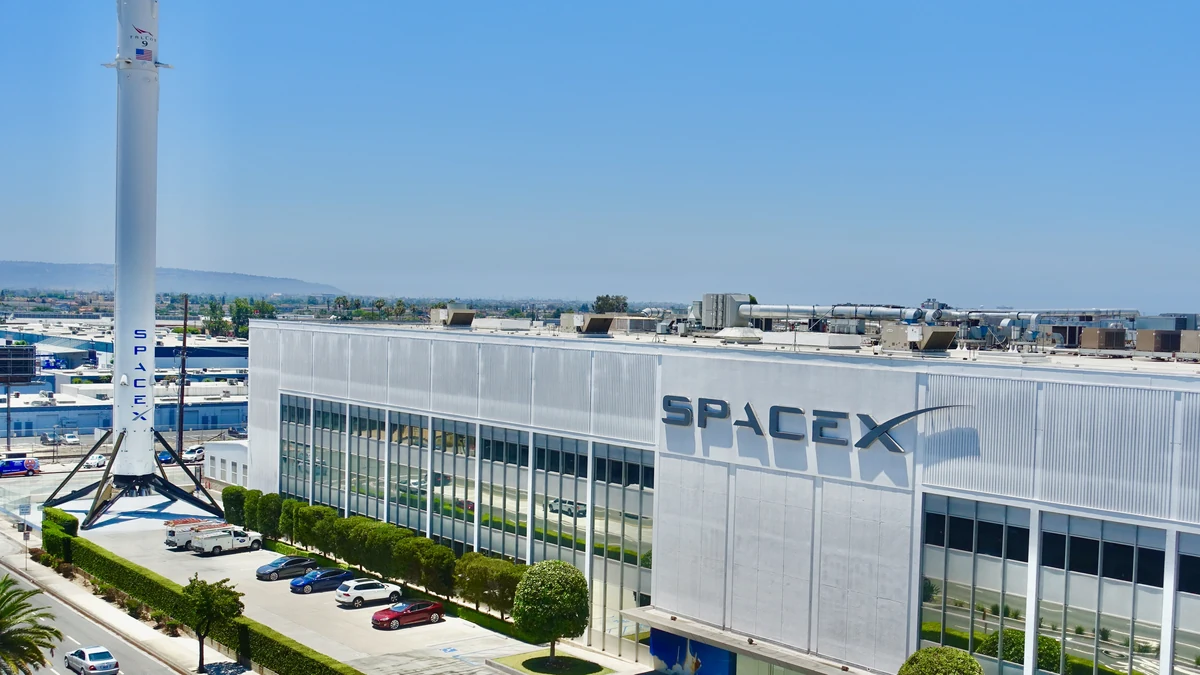
SpaceX completed its $60 billion all-stock acquisition of Anysphere, the company behind the Cursor AI coding platform, on Friday, turning a deal announced in June into a completed acquisition. The merger became effective on August 14, and Anysphere now survives as a wholly owned SpaceX subsidiary.
The timing matters because the acquisition was not new when markets opened Friday. SpaceX and Anysphere signed their merger agreement on June 16 after an earlier April partnership and purchase option. The new development is the closing itself, which removes the closing-stage uncertainty around an acquisition that SpaceX had previously expected to finish during the third quarter.
In an August 14 Form 8-K, SpaceX said Cursor common and preferred shares outstanding immediately before the merger became effective were converted into the right to receive 389,289,254 SpaceX Class A shares. The filing said that share issuance was based on an implied Anysphere equity value of $60 billion and a SpaceX share price equal to the volume-weighted average closing price over the seven trading days immediately before the closing.
How the $60 billion stock consideration worked
The 389.3 million-share figure covers the conversion of Anysphere common and preferred stock, but it is not the only equity component disclosed at closing. SpaceX also said vested Cursor restricted stock units were converted into rights to receive 1,752,426 Class A shares before tax withholding. Cash could be paid in place of fractional shares.
Unvested equity awards will continue in converted form. According to the filing, outstanding unvested Cursor restricted stock units were assumed and converted into approximately 29.1 million SpaceX restricted stock units tied to Class A common stock. Cursor stock options were also assumed and converted into about 44.4 million options to purchase SpaceX Class A shares. Those awards are separate from the 389.3 million shares issued for the outstanding common and preferred stock.
That structure is important for investors because the acquisition was funded primarily with SpaceX equity rather than a large cash payment. The $60 billion figure is an implied equity value for Anysphere under the merger formula, not a statement that SpaceX transferred $60 billion in cash on August 14. SpaceX also disclosed that the merger consideration was issued in reliance on the Securities Act Section 4(a)(2) exemption for a transaction by an issuer not involving a public offering.
The use of a seven-day volume-weighted average closing price meant the number of SpaceX shares delivered depended on the company’s trading price immediately before completion. That mechanism had been laid out in the June merger agreement and was repeated in SpaceX’s second-quarter filing. The closing 8-K provides the final share count for the common and preferred stock conversion, giving investors a concrete measure of the equity issued to complete the purchase.
Cursor moves fully inside SpaceX’s AI operation
The closing also changes the corporate relationship between the two companies. Cursor had already been working with SpaceXAI on model training, but Anysphere is now owned by SpaceX rather than operating only as a partner. In a statement published Friday, Cursor said it had officially been acquired and described the deal as the completion of a process that began with its April model-training partnership.
SpaceX’s own filings show why the acquisition fits its expanding AI business. The company reports three operating segments: Space, Connectivity and AI. Its second-quarter Form 10-Q said the April compute agreement with Cursor called for SpaceX to provide GPU cluster capacity and for the companies to collaborate on existing models, including Grok, while also jointly developing AI models and related products.
Cursor had identified compute access as a constraint even before SpaceX exercised its acquisition option. When the companies announced their April partnership, Cursor said it wanted to push its training efforts further but had been bottlenecked by compute, and that it would use SpaceXAI’s Colossus infrastructure to scale model training. That gave the relationship an operating component well before ownership changed.
The collaboration subsequently became visible in products. Cursor said in July that Grok 4.5 was trained jointly with SpaceXAI using trillions of tokens of Cursor data covering interactions with codebases and software tools. This week, Cursor released Grok 4.6 and said it too was jointly trained with SpaceXAI. Cursor’s Friday statement said the acquisition would give it access to SpaceX’s GPU fleet and that Grok 4.6 offered an early example of what the companies can build together. Those are company claims about the strategic benefits of the acquisition, rather than independent forecasts of how much revenue or profit the deal will produce.
For SpaceX, the result is direct ownership of a software product that sits at the application layer of its AI strategy. The company is no longer only providing computing capacity to Cursor or collaborating on models. It now owns the business through which those models can be delivered to developers and enterprise customers. That broadens the economic exposure of SpaceX’s AI segment from infrastructure and model development into a coding and agent platform.
From an April option to an August closing
The path to Friday’s completion began before the June merger announcement. SpaceX disclosed in its second-quarter filing that it entered an option agreement with Anysphere in April, giving it the right, but not the obligation, to acquire the company. The option could be exercised during a defined period tied to SpaceX’s IPO timing or September 30, 2026, and exercising it remained subject to board approval.
SpaceX exercised that option in June and signed the formal merger agreement on June 16. The agreement called for Anysphere to survive the merger as a wholly owned SpaceX subsidiary and made completion subject to closing conditions, including required regulatory approvals. At the time, SpaceX said it expected the acquisition to close in the third quarter. The August 14 filing confirms that the merger became effective within that window.
The size of the deal also gives the closing weight beyond a routine corporate update. Reuters reported in June, citing company data, that Cursor had roughly $2.6 billion in annualized business-to-business revenue as the acquisition was announced. The $60 billion implied equity value therefore represented a large bet on the durability and expansion of AI coding and enterprise software demand, as well as on the value SpaceX sees in combining compute infrastructure, models and applications under one corporate structure.
There are still questions the closing filing does not answer. It does not provide a new standalone revenue forecast for Cursor, a post-merger profitability target, or a detailed purchase-price allocation. It also does not quantify how much of SpaceX’s future AI revenue it expects Cursor to contribute. Those issues will matter more as the completed acquisition begins to flow through SpaceX’s financial statements. What Friday’s filing settles is the acquisition status and the final equity conversion for the shares outstanding at the effective time.
More from Investing
Latest News
View all news- FTC, USDA Launch Joint Inquiry Into Agricultural Equipment Market Practices
- VAALCO Completes Gabon Phase 3 Drilling as ETSEM-3H Starts at About 2,000 BOPD
- U.S. Crude Inventories Fall 3.2 Million Barrels in Latest EIA Report
- UK Trade Remedies Authority Proposes Five-Year Anti-Dumping Duty on Chinese Rutile Titanium Dioxide
- OCC Launches Direct Payments-Fraud Reporting Tool for Community Banks
