Thailand Reports $690 Million in Advanced Materials Investment Projects as AI and EV Demand Grows
The 35 applications filed since 2023 span capacitors, thermal films, battery materials and EV magnets; the announced value is planned investment, not money already spent.
Our editorial standards
MarketReview publishes clear, independently produced financial information using reliable sources and transparent editorial standards.
Read our Editorial Policy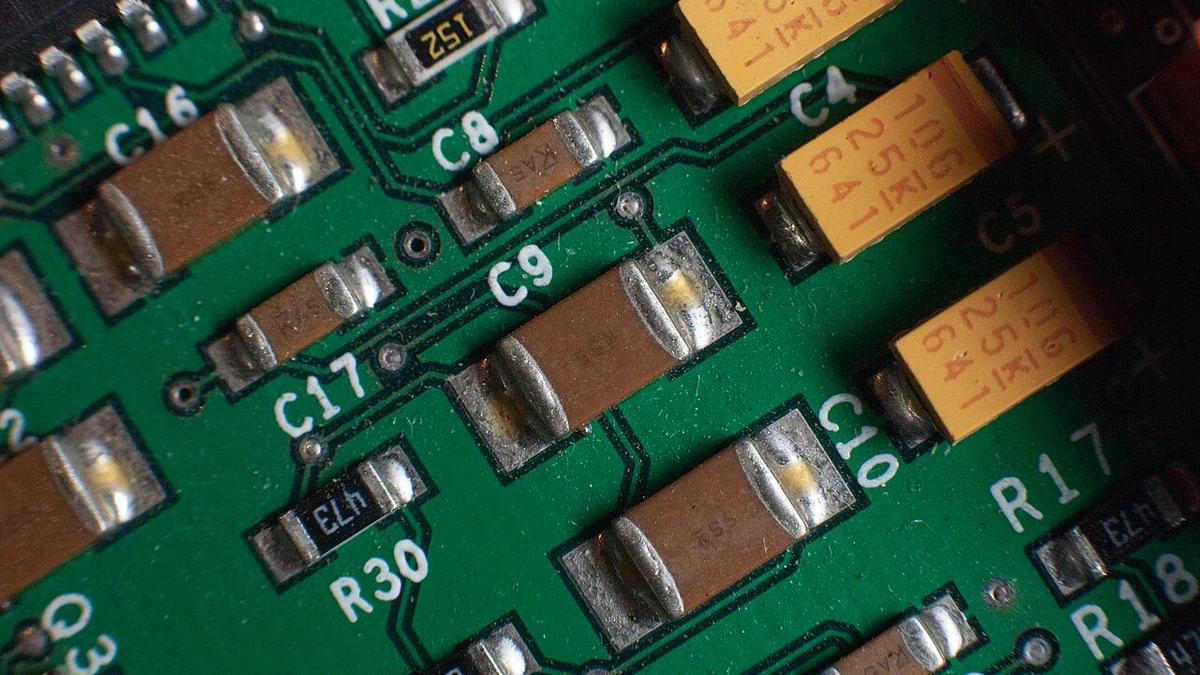
Thailand has received 35 applications for advanced-materials manufacturing projects involving planned investment of about 23.5 billion baht ($690 million) since 2023, the country’s Board of Investment said on October 24. The proposals span components used in artificial intelligence servers, electric vehicles and clean-energy equipment.
The agency’s figures cover submissions made through the first half of 2026. They measure proposed investment, not the value of factories already completed or capital that has necessarily been spent. The distinction is important because Thailand is trying to attract more of the specialized suppliers behind its established electronics and automotive manufacturing businesses.
The projects cover materials that are often less visible than the products they support: capacitors that help electronic systems manage power, films that transfer heat away from devices, and industrial ceramics used in demanding mechanical applications. By attracting producers of these inputs, Thailand hopes to reduce the need to source them from abroad and create more opportunities for domestic suppliers. Those are the investment agency’s stated objectives, rather than outcomes established by the application figures.
Suppliers target AI electronics, EV motors and batteries
Multilayer ceramic capacitors, or MLCCs, feature prominently in the BOI’s account. These small components are widely used on printed circuit boards in smartphones, vehicles and computing equipment. The agency said a high-end AI server can contain as many as 30,000 MLCCs, illustrating how component requirements can rise alongside increasingly complex computing systems. Thailand already hosts manufacturing operations associated with Japan’s Murata Electronics and Kyocera AVX Components, according to the BOI.
The latest applications extend beyond capacitors. Taiwan’s Fultech Fiber Glass is making glass fabric for printed circuit boards, including grades intended for AI-server hardware. Jones Tech is producing synthetic and natural graphite films that help carry heat away from electronic devices. Glass and quartz fabrics, thermal-management materials and precision nanomaterials also appear in the agency’s list of targeted products.
Those categories address different manufacturing needs. A circuit-board fabric is part of the material structure on which electronic components are mounted, whereas a graphite film helps control heat after a device is operating. The attraction for Thailand is not simply more electronics assembly: locally available specialist materials could connect upstream suppliers with board makers and other manufacturers already operating in the country.
Several named projects serve the automotive and clean-energy industries. The BOI identified BGN Thai’s coated foils for lithium-ion batteries and Phinis Well’s neodymium magnets for electric-vehicle motors. Xinyuan Graphite is producing bipolar plates for hydrogen fuel cells. The spread of products means the announced total covers more than electric-vehicle manufacturing alone.
The agency also pointed to CoorsTek Advanced Materials, a unit of U.S.-based CoorsTek, for ceramic components used in automotive pressure sensors and silicon nitride balls for hybrid bearings found in applications such as EVs and wind turbines. Golden Egret Cemented Carbide is making tungsten carbide powders for precision cutting tools. The range underscores how advanced-materials manufacturing can serve both newer technologies and established industrial supply chains.
Thailand has already attracted large electronics investments
These proposals sit within a broader buildout of Thailand’s electronics industry. In an August 2026 update on electronics investment, the BOI said the sector had attracted more than 1 trillion baht, or roughly $30.5 billion, in investment applications since 2023. Printed circuit boards and electronic components accounted for more than 331 billion baht across 224 projects in that account.
That larger number provides scale, but it is not an amount to which the newly announced $690 million can automatically be added. The reports cover different categories of manufacturing, and the BOI did not provide enough project-level detail to establish whether any of the 35 advanced-materials applications are included in the broader electronics figures.
A separate development shows how parts of this supply chain are moving beyond applications. Thailand’s Public Relations Department reported in August that the BOI had approved second-phase expansions by Compeq Technology, Multi-Fineline Electronics and Gold Circuit Electronics. Together, those printed-circuit-board investments exceeded $668 million and were expected to create more than 5,000 additional Thai jobs. They are separate, specifically approved expansions, not a breakdown of the latest 35 advanced-materials filings.
The two announcements highlight different layers of the manufacturing ecosystem. The three board makers expand capacity to fabricate the circuits used in electronic equipment; suppliers of glass fabrics, thermal films and other advanced inputs can potentially provide materials to businesses at an earlier stage of production. Having both capabilities in the same market may make local sourcing more practical, although the BOI’s new disclosure does not establish which companies have signed supply agreements with one another.
Thailand also offers an established industrial base. Automotive and electronics manufacturers were operating in the country well before the latest round of AI-related demand. The BOI is now seeking a greater share of the engineering and materials work associated with those products, a shift that would depend on suppliers meeting strict quality and performance specifications.
Applications are an early measure of investment, not completed spending
The 23.5-billion-baht figure gives a view of the proposed project pipeline, but several details needed to assess its eventual economic impact were not supplied. The October announcement did not set out individual capital budgets for all 35 applications, list commissioning dates or quantify jobs expected from the group. It also did not provide an aggregate figure for how much of the proposed spending had actually been deployed.
Its dollar value is approximate. The BOI said the conversion used a Bank of Thailand average selling rate of about 33.76 baht per U.S. dollar. The underlying local-currency amount is the more direct measure of the investment applications, while the rounded dollar figure makes the scale easier to compare internationally.
Secretary-General Narit Therdsteerasukdi described domestic advanced-materials production as a way to reduce import dependence and help Thai companies move into higher-value supply chains. He also said the agency would continue supporting research, technology development and workforce capabilities. Those efforts may affect whether proposed factories can establish reliable production and connect with customers, but the announcement did not set a timetable for the industry-wide goals.
For now, the report documents interest from suppliers operating across several technologies rather than a single wave of completed construction. Subsequent project approvals, factory openings and production figures would provide a firmer indication of how much of the announced investment pipeline becomes operating capacity in Thailand.
More News



Latest News
View all news- Egypt Details Startup Action Plan Targeting $5 Billion in Venture Capital and 5,000 Firms
- Italy’s New Fuel-Cost Relief Measures Take Effect for Transport, Farming and Fishing
- Amgen Cancer Drug Combination Cuts Death Risk 58% in Phase 3 Trial
- U.S. Consumer Sentiment Holds Near Record Lows as Inflation Expectations Rise
- U.S. Business Growth Moderates in October as Selling-Price Inflation Accelerates