U.S. Prepares New Iran Sanctions as Strait of Hormuz Disruption Keeps Oil Risks Elevated
Washington is expected to detail new Iran sanctions Monday as severe Strait of Hormuz constraints keep Gulf oil flows restricted and crude-price risks elevated.
Our editorial standards
MarketReview publishes clear, independently produced financial information using reliable sources and transparent editorial standards.
Read our Editorial Policy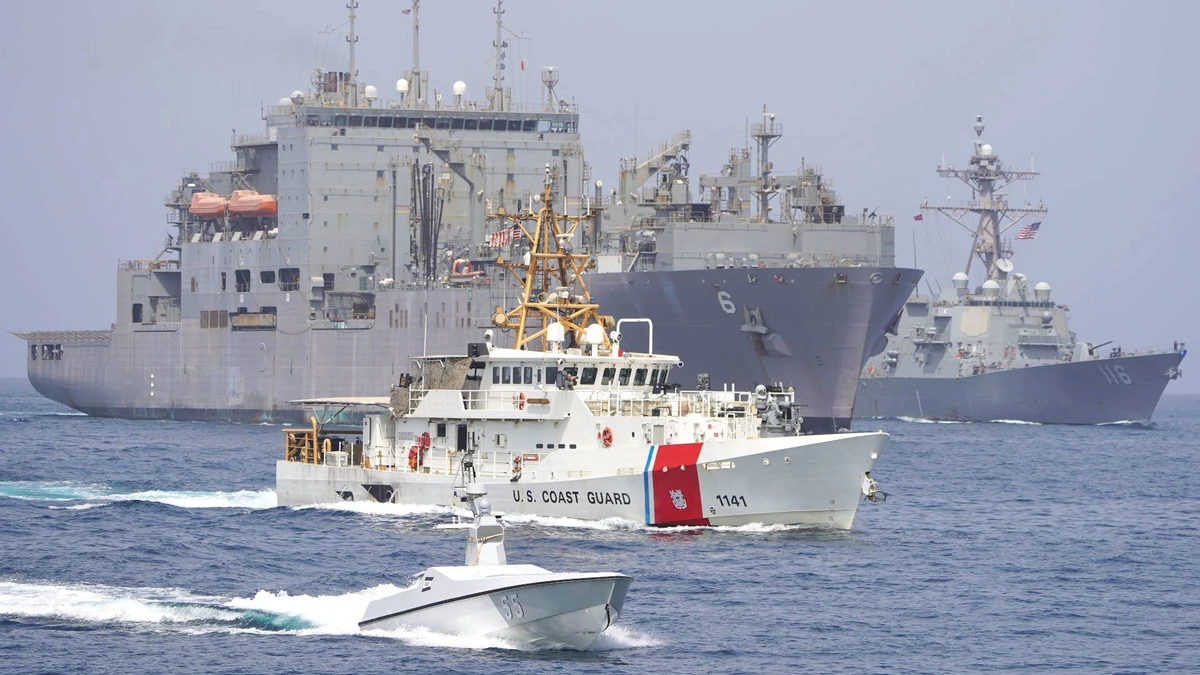
The United States is preparing a new round of sanctions on Iran, with Treasury Secretary Scott Bessent expected to outline the measures on Monday. Bessent has said Washington intends to impose what he called the “toughest sanctions in history,” but the package has not yet been published, so the exact entities, sectors and countries that could be affected remain unknown.
The timing matters for energy markets because restrictions on Iran are being discussed while the Strait of Hormuz is still operating far below normal conditions. Oil prices finished the week higher, with Brent crude settling at $94.39 a barrel on Friday and U.S. West Texas Intermediate at $87.06, according to Reuters. The latest gains do not show that the planned sanctions have already reduced supply. Iranian exports are already heavily constrained, and the larger near-term risk is whether tighter economic pressure leads to more disruption around the waterway used by Gulf producers to reach world markets.
New sanctions would extend an existing oil and shipping campaign
Washington has already spent much of 2026 expanding pressure on Iran’s oil, shipping and financial networks. In a July 29 action, the U.S. Treasury Department sanctioned two firms it said were part of an Islamic Revolutionary Guard Corps-backed maritime insurance scheme tied to passage through the Strait of Hormuz. The same action also targeted several companies and vessels involved in moving Iranian crude oil and petroleum products.
Treasury said at the time that it had sanctioned more than 100 vessels linked to Iran’s shadow fleet since the start of the year. Earlier in the campaign, the department also targeted Chinese independent refiners and shipping firms involved in buying or carrying Iranian petroleum. Those actions show the direction of U.S. policy even though the scope of Monday’s expected announcement is not yet public.
Bessent told CNBC on Thursday that the administration wanted to combine the existing blockade with additional sanctions. He also urged China to cooperate with Washington. Reuters reported that he is due to hold a press conference at 2 p.m. EDT on Monday to explain what the administration plans to do. President Donald Trump has separately warned of economic consequences for countries that provide Iran with financial or commercial support.
That language raises the possibility that the next step could reach beyond Iranian entities and place more pressure on foreign buyers, banks, shippers or other intermediaries. It would be premature, however, to treat any of those categories as confirmed targets before Treasury releases the actual measures. Iran has condemned the planned sanctions and argues that secondary restrictions on other countries lack a legal basis.
China is especially important to the sanctions question because it remains the principal destination for Iranian crude. Treasury said in April that Chinese independent refineries purchase the majority of Iran’s oil, and U.S. officials have repeatedly focused sanctions on the ships, traders and refiners that support those flows. Any new measures aimed more directly at third-country counterparties could therefore affect how easily Iranian barrels reach Asian buyers, but the effect will depend on the specific authorities used and how aggressively they are enforced.
Hormuz disruption remains the bigger immediate supply risk
The physical constraint on Middle Eastern oil flows remains more important to the near-term supply picture than the still-undefined sanctions package. The U.S. Energy Information Administration said in its August Short-Term Energy Outlook that crude oil and petroleum liquids moving through the Strait of Hormuz averaged 4.9 million barrels a day in the second quarter, down from 21.6 million barrels a day in the fourth quarter of 2025 before the conflict began.
EIA estimated that Middle Eastern crude production shut-ins averaged 5.5 million barrels a day in July. Its August forecast assumes shipments through Hormuz remain severely constrained through the end of August and begin rising only gradually in September. Under that scenario, the agency expects production and trade patterns to take until early 2027 to return broadly toward pre-conflict conditions.
The disruption is also drawing down inventories. EIA estimated global oil stocks fell by an average of 4.2 million barrels a day in the second quarter and forecast another 3.8 million-barrel-a-day decline in the third quarter. It raised its third-quarter Brent spot-price forecast to about $85 a barrel, $11 above the prior month’s estimate, and said prices should remain elevated until normal flows resume and inventories begin to rebuild.
Security conditions around the waterway remain difficult. An active U.S. Maritime Administration advisory says the risk of Iranian attacks on commercial shipping in the Persian Gulf, Strait of Hormuz and Gulf of Oman remains high. The advisory cites missiles, armed drones and unmanned surface vessels among the threats and warns that navigation systems in the area continue to face spoofing and jamming.
There have been limited signs of selective movement rather than a full reopening. Iranian state media reported on Saturday that some Iraqi oil tankers had received permission to transit Hormuz after requests from Baghdad. That may help individual cargoes, but it does not by itself restore the broad commercial flow that existed before the war. Ship-tracking counts have remained low and can vary from day to day, while some vessels may sail with transponders switched off.
Oil markets now face two separate channels of risk
For investors, the sanctions story and the shipping story need to be separated. One concerns Iran’s ability to sell its own crude and move money through foreign financial and commercial networks. The other concerns the much larger volume of oil from Saudi Arabia, Iraq, Kuwait, the United Arab Emirates and other Gulf producers that depends on safe access through Hormuz or on more limited alternative routes.
That distinction helps explain why tougher sanctions do not automatically mean an equivalent loss of global supply. Iranian exports have already been squeezed by military and financial pressure, so the direct impact of another round may be smaller than the headline suggests. The larger upside risk to oil prices would come if new restrictions trigger retaliation that further reduces passage for non-Iranian cargoes, raises shipping and insurance costs or delays a broader normalization of the strait.
Alternative routes provide some protection, but not enough to replace Hormuz at normal volumes. Saudi Arabia can move crude west through its East-West pipeline, and the United Arab Emirates has pipeline capacity to the Gulf of Oman. EIA has also noted increased use of the Bab el-Mandeb route and Egypt’s Suez Canal and SUMED pipeline, although those options are slower, more expensive or limited in capacity.
Friday’s settlement levels left Brent up 6.39% for the week and WTI up 5.66%, Reuters reported. Those moves reflect a market already pricing substantial geopolitical and supply uncertainty, but they do not resolve how much additional pressure Monday’s sanctions could create. The key details will be whether Treasury targets new categories of foreign counterparties, how secondary sanctions are structured, and whether Tehran responds by tightening restrictions on shipping through Hormuz.
Bessent’s Monday press conference is the next concrete policy event. Until Treasury publishes the sanctions, the economic reach of the package remains uncertain, while the physical bottleneck in the Strait of Hormuz continues to provide the more visible constraint on global oil flows.
More News


Latest News
View all news- FSB Report Flags Cross-Border Risks in Dollar-Dominated Stablecoins
- Dutch Goods Exports Jump 4.9% in August, Outpacing Import Growth
- Bank of Italy Presents Assessment of 2026 Public Finance Plan to Parliament
- Austria Reports Road Freight Volume at Lowest Level Since 2016
- Trump Says Russia and Ukraine Agreed to Halt Energy Strikes, but Kyiv Cannot Confirm