
Western Australia Awards More Than A$6.16 Million for 40 Mineral Exploration Projects
Copper features in roughly half the supported drilling programs, while 12 projects will search for critical minerals under Western Australia’s latest exploration grants.
Our editorial standards
MarketReview publishes clear, independently produced financial information using reliable sources and transparent editorial standards.
Read our Editorial Policy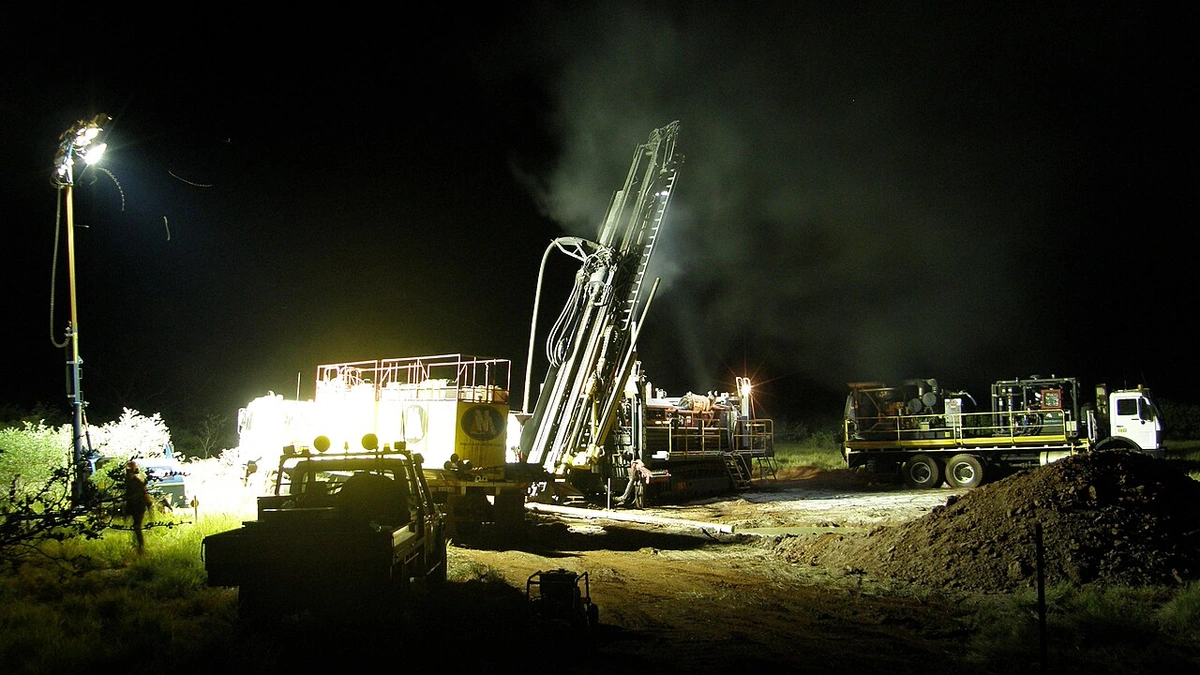
Western Australia has awarded more than A$6.16 million in support for 40 mineral exploration projects, putting copper drilling at the center of the latest round of a state program intended to encourage discoveries in less-explored areas. Mines, Petroleum and Exploration Minister Daniel Pastorelli announced the awards on Monday, saying 36 applicants would receive assistance through Round 34 of the Exploration Incentive Scheme’s Co-funded Drilling Program.
About half of the successful drilling programs will look for copper, either as their principal target or alongside other commodities. Gold remains another major focus, with more than a quarter of applicants pursuing it, while 12 projects will search for critical minerals. The government’s list of priorities includes rare earth elements, cobalt, niobium, lithium and tungsten. Some drilling programs can target more than one commodity, so those groups should not be read as separate, mutually exclusive totals.
The money supports exploration rather than construction of new mines. It helps applicants test geological prospects, often before there is enough evidence to establish whether a deposit could be mined commercially. That distinction is important for the state’s resources sector: an exploration grant can make a drilling campaign more affordable, but an award does not establish a mineral discovery, a reserve or a future production date.
Copper leads a varied group of exploration targets
The Western Australian government’s announcement places copper at the forefront of Round 34. It does not say that half the entire A$6.16 million-plus award is being spent on copper, only that approximately half the supported drilling programs include it among their targets. The difference matters because the funding total is divided among projects, while a single project can examine a geological system containing several metals.
Copper’s prominence is relevant to the kinds of deposits explorers are seeking. It has established industrial uses and is an important material for electrical infrastructure. In Western Australia, prospecting for copper can also overlap with exploration for gold and other metals in the same geological setting. The program therefore captures a wider group of mineral prospects than a simple count of copper-only drilling campaigns would suggest.
The 12 critical-mineral projects broaden that search. Rare earth elements and lithium are associated with different industrial supply chains, and cobalt, niobium and tungsten have their own specialized uses. A successful drill test could improve understanding of the state’s potential in one of those commodities, although the government has not claimed that the newly funded projects have already identified commercially viable deposits.
Geography is another defining feature of the awards. Almost two-thirds of the successful applicants are located in the Goldfields-Esperance and Pilbara regions, according to the government. Those are established parts of Western Australia’s resources economy, but the state’s program is also designed to encourage work in prospective areas where geological information is comparatively limited. The regional concentration describes the applicants reported by the state, not a verified allocation of every dollar or every drilling site between the two regions.
Funding shares the cost of testing uncertain prospects
The Exploration Incentive Scheme is not a direct payment to build operating mines. Its co-funded drilling program offers eligible explorers a refund of up to 50% of qualifying drilling costs, under a competitive process administered by the Department of Mines, Petroleum and Exploration. The program has three application categories: Deep Drill, Universal and Prospector. The amount an applicant can recover depends on the applicable program conditions, rather than the state automatically paying half of every cost incurred.
Cost sharing can change an explorer’s decision about whether to pursue a difficult target. A remote drilling campaign requires equipment, crews, access and geological work before anyone can establish whether the underlying prospect contains a potentially economic deposit. Government support reduces part of that upfront expense. The applicant still has to bear its share and the exploration risk, and unfavorable drilling results remain possible.
The latest awards follow applications that opened on August 3 and closed on August 28. Under the state’s Round 34 timetable, successful applicants were due to be notified in mid-October, with funding agreements distributed and executed during October and no later than November 30, 2026. The drilling period begins after the department acknowledges an executed funding agreement and ends on November 30, 2027. As a result, Monday’s announcement should not be mistaken for evidence that all 40 programs have already started drilling.
The scheme has become a recurring part of Western Australia’s exploration policy. It began in 2009, and the state increased its annual Exploration Incentive Scheme budget from A$9 million to A$18 million following a 2025 election commitment. That annual figure covers the broader scheme, not just the A$6.16 million-plus allocated in this drilling round. Other components support activities such as geophysical surveys and energy-related analysis.
Earlier drilling results offer context, not guarantees
Western Australia has pointed to several earlier co-funded programs to illustrate why it continues to support early-stage exploration. Black Canyon Limited, for example, has reported manganese mineralisation extending over a three-kilometre strike, work that contributed to an initial mineral resource estimate. The government’s October announcement also cites encouraging gold-drilling results associated with Ausgold Exploration, Great Boulder Resources and Cosmo Metals. These are examples of prior activity, not claims that the companies received money in Round 34.
Additional cases were highlighted when Round 34 opened in August. The state said drilling under earlier rounds helped identify an antimony-bearing lode at Black Cat Syndicate’s Mt Clement project, while previous support at Ora Banda Mining’s Little Gem prospect contributed geological evidence for later follow-up work. Such results demonstrate what the grants are designed to achieve: information that may justify further exploration. They do not remove the many technical and commercial steps between a promising drill intersection and an operating mine.
The new allocation is also distinct from the preceding funding round. In April, the government announced more than A$7 million for 46 successful Round 33 drilling applicants, part of a broader set of awards across drilling, geophysics and energy analysis. Round 34’s announced A$6.16 million-plus is for its 40 supported projects. Comparing those figures shows the scale of successive awards, but does not by itself establish a change in overall exploration spending or the amount that any individual explorer will ultimately claim.
The next scheduled opening for the Co-funded Drilling Program is February 1, 2027, alongside new rounds of the state’s geophysics and energy analysis support. For the 36 Round 34 applicants, the more immediate work is to finalize funding agreements and carry out their drilling programs within the approved period. The results of those programs, rather than the number of awards alone, will determine whether this round adds meaningful new geological evidence for Western Australia’s mineral sector.
More News
Latest News
View all news- IonQ Agrees to Buy Cybersecurity Firm Elisity for Up to $1.3 Billion
- KKR, TotalEnergies to Add $1.2 Billion Solar Portfolio to U.S. Venture
- U.S. 30-Year Mortgage Rates Hover Near 7.55% as Housing Borrowing Costs Remain Elevated
- Wall Street Volatility Gauge Rises as Traders Assess Inflation and Earnings Risks
- Denmark’s Inflation Rises to 2.2% in September as Fuel Prices Climb
