US Weekly Jobless Claims Fall to 189,000 as Continuing Claims Decline
Ongoing unemployment benefit claims fell to 1.697 million, although their four-week average edged higher and holiday-related seasonal adjustments complicated the latest figures.
Our editorial standards
MarketReview publishes clear, independently produced financial information using reliable sources and transparent editorial standards.
Read our Editorial Policy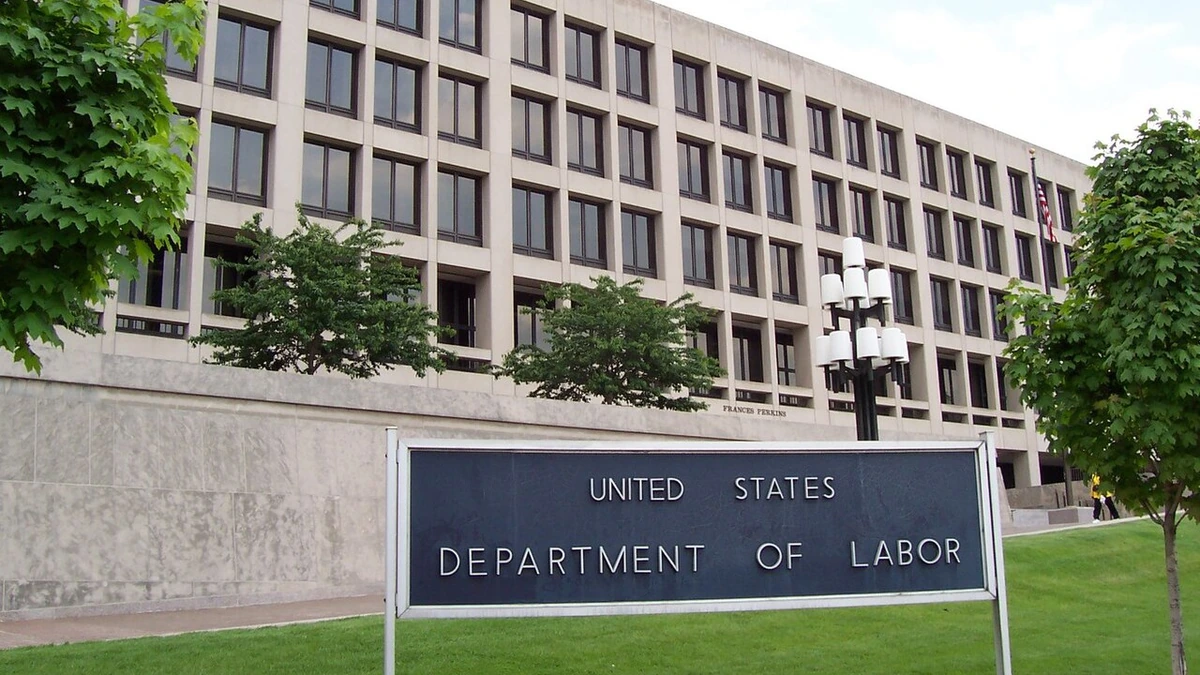
New applications for unemployment benefits in the United States fell to 189,000 in the week ended November 21, down 13,000 from the preceding week, and the number of ongoing benefit claims also fell. The figures point to subdued layoffs heading into the holiday season, although the latest reading on continuing claims was less conclusive about the underlying pace of hiring.
The Labor Department released the figures on Wednesday, a day earlier than the usual Thursday publication because of Thanksgiving. Both headline claims figures are preliminary and cover different reporting weeks: the initial claims total runs through November 21, and the continuing claims figures through November 14.
New Claims Fall Despite a Seasonal Increase in Filings
The previous week’s initial claims figure was lowered from 203,000 to 202,000 in the Labor Department’s November 25 report. Averaged over four weeks, new applications fell to 196,000 from 197,500. The latest weekly total was also below the 218,000 recorded in the comparable week last year on a seasonally adjusted basis.
What distinguishes the latest report is the gap between the headline number and the unadjusted volume of applications received by state programs. Before seasonal adjustment, filings increased by 15,894 to 212,945, an 8.1% rise. The statistical model anticipated a 15.5% increase for that week, so the smaller-than-usual rise translated into a decline in the adjusted figures.
The distinction is particularly useful as the year-end holidays approach. Employers’ staffing requirements and the timing of benefit applications change around holidays, making direct comparisons between individual weeks difficult. Seasonal adjustment attempts to account for those recurring effects, rather than suggesting that fewer applications were literally submitted during the latest week.
Comparisons with the same period a year earlier offer a separate check on the direction of claims. State programs received 244,713 new applications in the corresponding week of 2025, about 32,000 more than the latest unadjusted total. Both the annual comparison and the falling four-week average suggest that the low level of initial claims is not solely a product of one week’s seasonal adjustment.
Continuing Claims Reverse the Previous Week’s Increase
Continuing claims, which measure ongoing filings after an initial application, dropped by 95,000 to 1.697 million. Part of the unusually large weekly decline reflects a revision to the starting point: the department raised its estimate for the week ended November 7 by 29,000, to 1.792 million. Two weeks before the latest reading, continuing claims stood at 1.693 million, close to their current level.
There was no corresponding improvement in the four-week average of continuing claims, which edged up by 500 to 1,724,750. The rise was small, but it illustrates why the latest weekly drop should not be read as evidence of a sudden acceleration in reemployment. Over a longer interval, the picture is more encouraging: continuing claims were 1.943 million in the equivalent week of 2025.
The insured unemployment rate fell to 1.1% from a revised 1.2%. This measure relates to employment covered by unemployment insurance and is distinct from the national unemployment rate published monthly by the Bureau of Labor Statistics (BLS). Workers who exhaust their benefits, never apply for them or do not qualify can remain unemployed without appearing in the continuing claims count.
Initial and continuing claims therefore answer different economic questions. A persistently low number of new applications suggests employers are retaining workers, but it does not tell how many vacancies they are creating. A sustained reduction in ongoing claims would be consistent with less prolonged unemployment among benefit claimants, though the data alone cannot establish how many of those leaving the rolls found jobs.
The Labor Market Ahead of December’s Fed Meeting
The weekly numbers follow a stronger October hiring report. According to the BLS employment release of November 6, nonfarm payrolls increased by 165,000 jobs in October, compared with an average monthly increase of 48,000 over the preceding 12 months. The unemployment rate was 4.1%, and about 7.1 million people were unemployed.
Professional and business services accounted for 70,000 of October’s additional jobs, with another 42,000 in health care and 25,000 in transportation and warehousing. The same report showed that the number working part time for economic reasons had increased by 339,000 to 4.8 million. That latter measure captures a form of labor market weakness that may not result in a new unemployment insurance application.
For the Federal Reserve, the lack of an obvious rise in layoffs has implications beyond the employment outlook. Policymakers left their benchmark interest rate at 3.75% to 4% on October 28, with two voting members preferring a quarter-point increase. Inflation remained above the central bank’s 2% objective, according to the meeting minutes, and almost all participants anticipated further rate increases would likely be appropriate under their baseline economic outlooks.
In that setting, a low level of unemployment claims offers little evidence that the labor market is under the kind of stress that would compel the Fed to ease policy. It is not, by itself, an argument for raising rates either. Officials still need to assess whether demand for workers is strengthening enough to put renewed pressure on wages and whether inflation is moving toward their target.
The next comprehensive reading on the labor market will come on December 4, when the BLS publishes its November employment report at 8:30 a.m. Eastern time. It will provide a broader measure of hiring and unemployment before the Federal Open Market Committee meets on December 8 and 9.
More News



Latest News
View all news- Fed’s Preferred Inflation Gauge Rises 3.8% as Real Consumer Spending Stalls
- U.S. Economic Growth Revised Up to 4.3% in Third Quarter
- Mortgage Applications Jump 6.1% Despite 30-Year Contract Rate Reaching 7.38%
- U.S. Proposes New Tariffs on 14 Trading Partners Following Section 301 Investigations
- FirstEnergy Contributes $300 Million in Stock to Its Pension Trust