
Wildcat Challenges Hanwha With Up to $1.35 Billion Austal USA Proposal
Wildcat's non-binding Austal USA proposal carries a higher headline valuation range than Hanwha's earlier offer but remains conditional on four weeks of due diligence.
Our editorial standards
MarketReview publishes clear, independently produced financial information using reliable sources and transparent editorial standards.
Read our Editorial Policy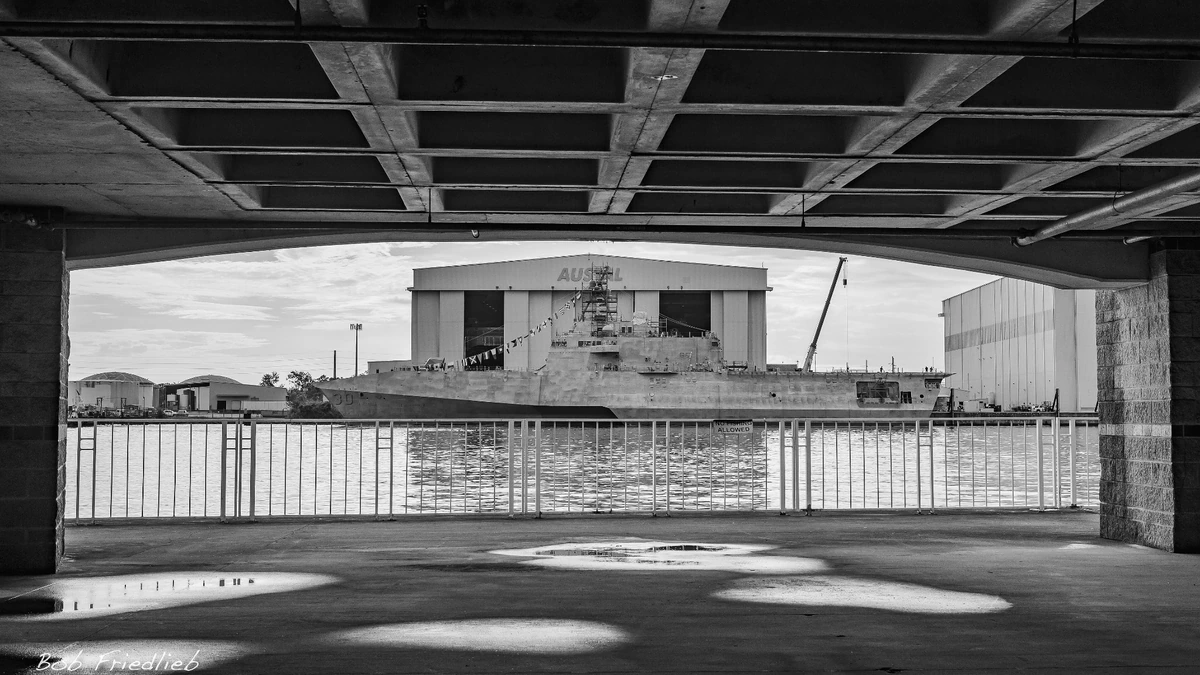
Wildcat Infrastructure has entered the contest for Austal USA with a non-binding proposal that values the U.S. shipbuilding business at US$1.25 billion to US$1.35 billion, placing its headline range above an earlier offer from Hanwha Defense USA. Austal said its board and advisers will consider the new approach, which remains conditional on four weeks of due diligence and has not produced a binding agreement.
The proposal adds a second bidder for a business that sits deep inside the U.S. naval and Coast Guard shipbuilding base. Austal USA builds surface vessels in Mobile, Alabama, produces modules for Virginia- and Columbia-class submarines, and operates repair and technology activities in several U.S. locations. The competing approaches are arriving just as Austal works through large contract provisions in its U.S. segment while continuing to expand shipbuilding and submarine-module capacity.
Wildcat’s valuation range sits above Hanwha’s
In its September 9 announcement, Austal said the Wildcat-led proposal values Austal USA at US$1.25 billion to US$1.35 billion on a cash-free, debt-free basis. The price is conditional on Wildcat being able to conduct four weeks of due diligence. Austal also said Wildcat intends to keep the Austal brand and operate the U.S. business as a standalone platform if an acquisition ultimately proceeds.
Austal later issued a clarification identifying the bidder as Wildcat Infrastructure LLC after its initial announcement referred to Wildcat Resources LLC in the body of the release. Two days earlier, Austal had said only that it had held an initial, preliminary discussion with Wildcat Infrastructure and had not received a proposal at that time.
The new range is higher than the US$1.05 billion to US$1.20 billion indicative enterprise value attached to Hanwha Defense USA’s earlier non-binding and conditional offer for the same U.S. business. At the bottom of Wildcat’s range, the implied value is US$50 million above the top of Hanwha’s range; at Wildcat’s upper end, the gap reaches US$150 million. Those headline figures do not by themselves establish which proposal would deliver more value because final economics can depend on due diligence findings, working-capital adjustments, contract liabilities, financing certainty and other terms that have not been fully disclosed.
Hanwha had already been granted due diligence access after Austal’s board determined that its proposal merited further evaluation. Austal’s latest disclosure does not say that Wildcat has been granted the same access yet, only that Wildcat’s indicated price is conditional on being able to conduct four weeks of diligence. That distinction leaves the two approaches at different stages even though Wildcat currently carries the higher published valuation range.
Austal USA is a strategic shipbuilding asset
The interest is centered on a business with an unusually broad position in U.S. defense shipbuilding. Austal USA says it employs more than 3,500 people nationwide and operates a Mobile manufacturing complex with more than one million square feet of indoor production space. Its work spans Navy and Coast Guard surface ships, submarine modules, repair and sustainment, and advanced maritime technology.
Austal’s fiscal 2026 results show why buyers can see long-term industrial value even after a difficult year financially. The U.S. segment generated A$1.38 billion of revenue, roughly flat from the prior year, while shipbuilding revenue rose 3.9% to A$1.14 billion as Offshore Patrol Cutter work and submarine-module production increased. Austal USA’s own website says its contract backlog is about US$10 billion and includes surface-ship construction and module production for submarines and aircraft carriers.
The same results also expose the operating risk a buyer would have to assess. Austal’s U.S. segment recorded an EBIT loss of A$202.8 million for fiscal 2026, compared with a A$97.7 million profit a year earlier. Austal attributed most of that reversal to a non-cash provision tied to onerous U.S. contracts after accelerated contractual relief was not agreed with the U.S. government, and it said it had begun formal processes seeking adjustments on affected programs.
At the same time, Austal is expanding the industrial footprint that supports submarine work. Its new Module Manufacturing Facility 3 in Mobile began partial operations in June 2026, with full completion targeted for December. Austal has said the facility will support about 1,000 jobs when fully operational and is intended to increase production capacity for modules used in the Virginia- and Columbia-class submarine programs.
Hanwha already has a separate relationship with Austal
Hanwha’s interest in Austal predates its current proposal for the U.S. business. In December 2025, Australia’s Treasurer approved Hanwha’s proposal to raise its shareholding in Austal from 9.9% to 19.9%, subject to strict conditions covering sensitive information, data storage and any Hanwha nominee to Austal’s board. The Australian decision explicitly limited Hanwha from increasing its shareholding above 19.9% under that approval.
That shareholding approval is separate from Hanwha Defense USA’s proposal to buy Austal USA. The current asset proposal is focused only on Austal’s U.S. entities and operations, leaving Austal’s Australasian business outside the scope. Austal has emphasized that its Australian shipbuilding mandate and Australasian operations would remain with the listed parent under Hanwha’s proposal.
Hanwha has also been building its own U.S. industrial base. It acquired Philly Shipyard in late 2024 and has since announced additional spending on U.S. maritime and defense manufacturing. That background gives Hanwha a shipbuilding operating rationale that is distinct from Wildcat’s profile. Wildcat’s own website describes the Miami-headquartered firm as an investment group with infrastructure among its areas of focus, rather than as an established naval shipbuilder.
For Austal, the immediate question is not simply which bidder has published the larger number. The board has to determine whether Wildcat should advance into diligence and whether either party can turn an indicative proposal into a binding acquisition agreement on terms that adequately account for Austal USA’s contract portfolio, liabilities, growth projects and strategic value. Wildcat’s stated four-week diligence condition now provides the clearest near-term milestone, while Hanwha’s earlier process remains in progress.
More from Investing


Latest News
View all news- FTC, USDA Launch Joint Inquiry Into Agricultural Equipment Market Practices
- VAALCO Completes Gabon Phase 3 Drilling as ETSEM-3H Starts at About 2,000 BOPD
- U.S. Crude Inventories Fall 3.2 Million Barrels in Latest EIA Report
- UK Trade Remedies Authority Proposes Five-Year Anti-Dumping Duty on Chinese Rutile Titanium Dioxide
- OCC Launches Direct Payments-Fraud Reporting Tool for Community Banks
