
Treasury Moves to Cut Banque Misr UAE Off From U.S. Correspondent Banking
Treasury, acting through FinCEN, has proposed cutting Banque Misr UAE off from U.S. correspondent banking after saying the bank’s UAE branches processed about $1.8 billion for companies tied to Iranian shadow banking networks.
Our editorial standards
MarketReview publishes clear, independently produced financial information using reliable sources and transparent editorial standards.
Read our Editorial Policy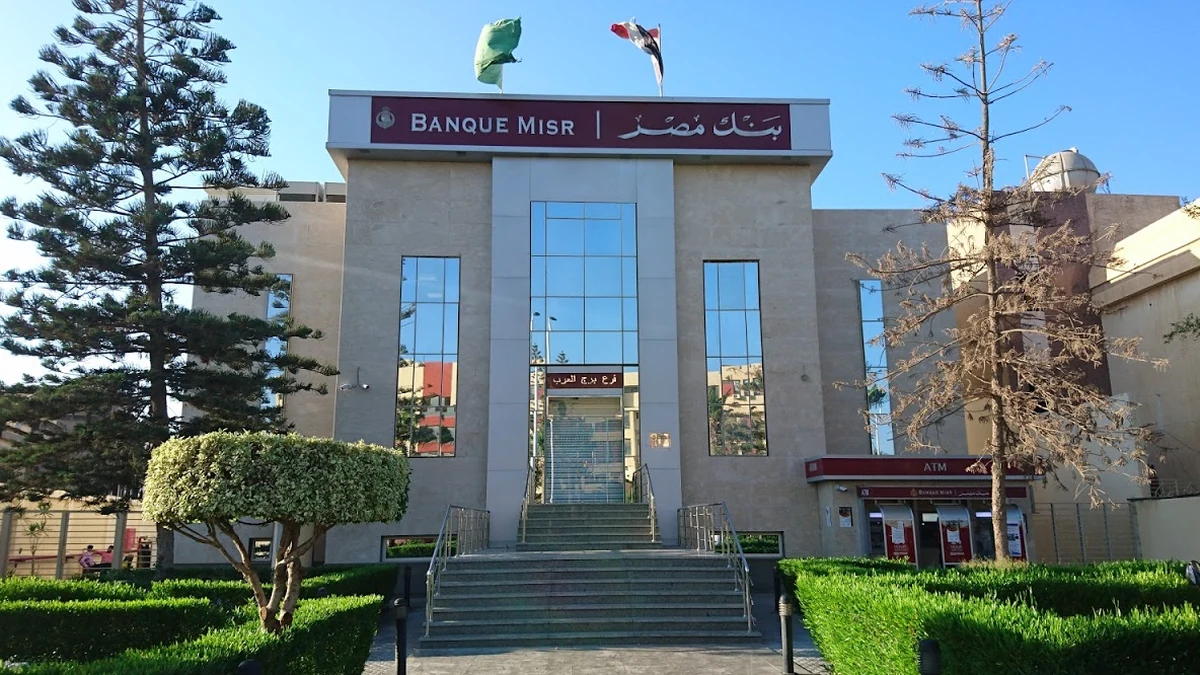
The U.S. Treasury Department moved Friday to cut Banque Misr UAE off from U.S. correspondent banking, opening a new front in Washington’s effort to squeeze the Iranian regime’s access to the dollar-based financial system.
The action came through the Treasury Department’s Financial Crimes Enforcement Network, or FinCEN, which issued a notice of proposed rulemaking that would bar U.S. financial institutions from opening or maintaining correspondent accounts for the bank’s UAE branches. Treasury framed the step as part of Operation Economic Outcast, the broader pressure campaign it unveiled earlier this week to target financial channels that support Iran.
Treasury said the proposed measure applies only to Banque Misr’s operations in the United Arab Emirates, not to the Egyptian state-owned bank’s business elsewhere. The department said the UAE branches processed about $1.8 billion for 103 companies that are potentially part of Iranian shadow banking networks between January 2024 and June 2026. In a separate but related announcement, Treasury said it was also sanctioning the manager of Bank Melli’s Dubai branch and a Hong Kong-based front company that allegedly helped launder funds for a sanctioned Iranian exchange house.
The proposed correspondent-banking cutoff is not yet final. FinCEN still has to complete the rulemaking process, and the public comment period will remain open for 30 days after the proposal is published in the Federal Register. Even so, the filing makes clear that Treasury intends to isolate the bank’s UAE unit from the U.S. financial system if the measure is adopted in its current form.
FinCEN’s proposal would block direct and indirect access
FinCEN’s proposal relies on Section 311 of the USA PATRIOT Act, a tool Treasury can use when it finds reasonable grounds to conclude that a foreign financial institution is of primary money laundering concern. In this case, the agency found that the five UAE-based Banque Misr branches meet that standard and proposed what is known as “special measure five,” the most severe of the available Section 311 steps.
Under the proposed rule, U.S. financial institutions would be prohibited from opening or maintaining a correspondent account for, or on behalf of, Banque Misr UAE. The proposal goes further than a simple ban on direct accounts. It would also require U.S. financial institutions to take reasonable steps not to process payments through the correspondent account of another foreign bank if that activity involves Banque Misr UAE. In addition, U.S. firms would have to apply special due diligence to foreign correspondent accounts to guard against indirect use by the targeted branches.
Those provisions matter because cross-border dollar flows often move through layers of correspondent relationships rather than through a single direct banking line. FinCEN said Banque Misr UAE has three direct U.S. correspondent relationships, which is why it concluded that a special measure focused on correspondent banking would most effectively mitigate the risk. The agency also specified which operations are covered: two branches in Dubai, located in Deira and Business Bay, and one branch each in Abu Dhabi, Sharjah and Ras Al Khaimah.
For now, this is a proposed rule rather than an immediate shutdown order. Banks will be expected to study the proposal, assess potential exposures and decide whether they want to comment before the rule is finalized. FinCEN’s proposed rule says the comment period will run for 30 days after Federal Register publication, underscoring that Treasury is using a formal regulatory path rather than announcing an instant prohibition.
Treasury says Banque Misr UAE became a key dollar conduit for Iran
The core of Treasury’s case is that Banque Misr UAE served as a critical access point to U.S. dollars for Iranian illicit finance. FinCEN said its assessment drew on both public and non-public information and concluded that the bank’s UAE operations facilitated potential Iranian shadow banking activity on a large scale. Treasury’s accompanying press release said the bank processed roughly $1.8 billion for 103 companies potentially linked to those networks over a two-and-a-half-year period.
The proposed rule adds detail that helps explain why Treasury singled out this institution. Banque Misr UAE, according to the filing, has about $6 billion in assets and is one of 63 registered banks in the UAE. FinCEN said it assumes part of the bank’s business is legitimate, but concluded that the identified Iranian-linked activity outweighed that fact and posed enough risk to justify a Section 311 action.
Treasury also used the filing to emphasize that the case is narrower than it may first appear. The target is not Banque Misr globally. It is the set of five branches operating in the UAE, which FinCEN treats as a defined foreign financial institution for purposes of the rulemaking. The proposal explicitly excludes Banque Misr operations in Egypt and other countries. That distinction matters for banks, counterparties and corporate customers trying to understand whether the measure would affect relationships outside the UAE.
The filing names examples of the type of activity that shaped Treasury’s conclusion. It says Banque Misr UAE processed business for entities such as Alpa Trading FZCO and Naba Alzaki Raw Materials Trading LLC, which U.S. authorities describe as part of networks used by Iranian financial facilitators. Treasury also said the bank’s customers included apparent front companies used by Iran’s Ministry of Defense and the Islamic Revolutionary Guard Corps to evade sanctions, and businesses allegedly linked to money laundering on behalf of Iranian Supreme Leader Mojtaba Khamenei.
What the move means for banks and what comes next
If Treasury finalizes the rule in substantially the same form, the practical effect would be to cut Banque Misr UAE off from a key mechanism for moving dollars. U.S. institutions would have to ensure they are not maintaining correspondent accounts for the targeted branches, while foreign banks with U.S. correspondent access would face greater pressure to screen for indirect Banque Misr UAE involvement. In other words, the measure is aimed not only at formal account relationships but also at the broader payment channels through which a bank can continue to reach the U.S. financial system.
The proposal also sends a wider signal beyond Banque Misr itself. Treasury said financial institutions worldwide face heightened sanctions risk if they continue dealing with Banque Misr UAE and other Iranian financial facilitators under Operation Economic Outcast. Friday’s action therefore serves two purposes at once: it tries to disrupt one specific banking channel, and it warns other institutions that access to the U.S. financial system can be endangered if they help sustain Iranian sanctions-evasion networks.
At the same time, the move should not be confused with a final enforcement order already in effect. The rule still has to proceed through the standard notice-and-comment process, and banks will be watching for the Federal Register publication date and any final rule that follows. That sequence matters because the exact compliance obligations become binding only if the proposal is adopted.
Treasury paired the FinCEN action with OFAC sanctions on Reza Mohammad Taeedi, the manager of Bank Melli’s Dubai branch, and on Kameng Trading Limited, a Hong Kong-based front company. Those steps broaden the day’s pressure campaign, but the central development for banks was FinCEN’s move against Banque Misr UAE. The next concrete milestone is the opening and close of the public comment window, followed by Treasury’s decision on whether to finalize the correspondent-banking restrictions.
More from Banking

Latest News
View all news- Fed’s Waller Says Higher Treasury Yields Reflect Strong Growth More Than Inflation Expectations
- U.S. Small-Business Optimism Falls to 97.9 as Uncertainty and Hiring Concerns Persist
- U.S. Existing-Home Sales Rise 1.5% in September Despite High Mortgage Rates
- JPMorgan Reports $15.3 Billion Third-Quarter Profit as Revenue Hits $50.2 Billion
- Johnson & Johnson Raises 2026 Sales Outlook After $25.4 Billion Third-Quarter Revenue
