
Trump Says Venezuelan Oil Will Be Used to Refill U.S. Strategic Petroleum Reserve
Trump said oil tied to the new U.S.-Venezuela arrangement will help refill the Strategic Petroleum Reserve, which stood below 290 million barrels in the latest weekly data.
Our editorial standards
MarketReview publishes clear, independently produced financial information using reliable sources and transparent editorial standards.
Read our Editorial Policy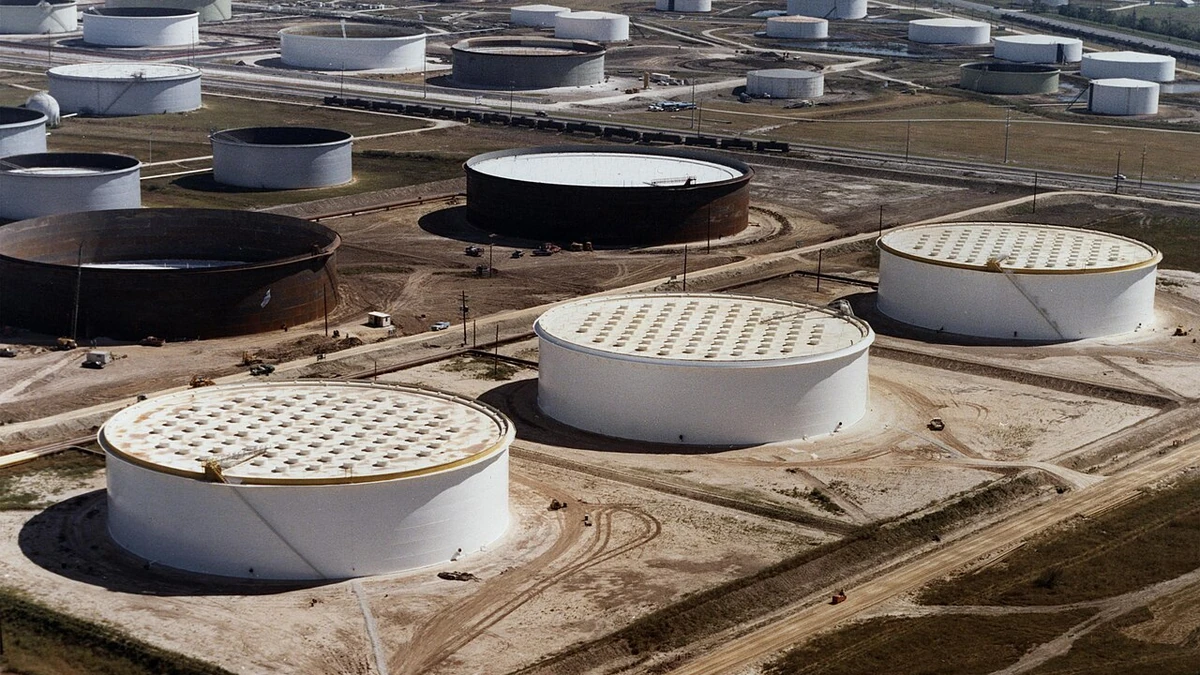
President Donald Trump said Sunday that Venezuelan oil obtained through a recently announced U.S.-Venezuela arrangement will be used to refill the Strategic Petroleum Reserve, tying the administration’s new Venezuela energy policy directly to the depleted federal emergency stockpile. In an August 30 Truth Social post, Trump said the “topping out” process would begin very shortly and described the oil as a gift from Venezuela to the American people.
The announcement adds a new objective to the oil agreement Trump disclosed on Friday. In that earlier post, he said the United States had secured majority control over more than 65 billion barrels of proven Venezuelan reserves through an arrangement involving private business. Full commercial and legal terms have not been publicly released, and Trump’s Sunday statement did not specify how many barrels would be directed to the reserve, the acquisition mechanism, the price, the crude grades involved or a delivery timetable.
As of August 21, Energy Information Administration data show 289.726 million barrels in the SPR, down from 293.426 million a week earlier. The Department of Energy lists authorized storage capacity at 714 million barrels, putting the latest EIA level at roughly 41% of current capacity. Trump’s pledge could therefore be consequential for U.S. energy-security policy, but it does not yet amount to a defined refill program.
The reserve has fallen sharply again in 2026
Inventories started 2026 with substantially more crude. Department of Energy data put the SPR at about 411 million barrels at the end of 2025. Since then, the Trump administration has used the reserve as part of an international response to supply disruptions, contributing to a decline of more than 120 million barrels by late August.
In March, the Energy Department started implementing a U.S. commitment to exchange 172 million barrels from the SPR as part of a coordinated 400 million-barrel action by International Energy Agency member countries. DOE described the program as an exchange rather than a conventional sale: companies receiving crude are required to return oil later, with additional barrels as a premium. Subsequent solicitations and contract awards moved large tranches from the Bayou Choctaw, Bryan Mound, Big Hill and West Hackberry sites.
That recent drawdown is important context for Trump’s criticism of former President Joe Biden, whom he blamed in Sunday’s post for leaving the reserve “virtually emptied.” Biden did authorize the largest sale in SPR history in 2022, releasing 180 million barrels after Russia’s invasion of Ukraine disrupted global energy markets. The current inventory, however, also reflects releases undertaken during Trump’s second term. At nearly 290 million barrels, the reserve is far below its 2009 record of 726.6 million barrels but is not close to zero.
DOE describes the SPR as an emergency crude-oil stockpile designed to reduce the impact of severe petroleum-supply disruptions. Its four storage sites are located along the Texas and Louisiana Gulf Coast, with oil held in underground salt caverns and connected to refineries, pipelines and marine terminals. The department says the system has a maximum nominal drawdown capability of 4.4 million barrels per day and can begin moving oil into the market within 13 days of a presidential decision.
Venezuela is becoming a larger part of U.S. oil policy
Trump’s refill plan follows a broader turn in U.S. policy toward Venezuela’s petroleum sector. On August 27, the Treasury Department’s Office of Foreign Assets Control amended a group of Venezuela-related general licenses covering Venezuelan-origin oil, U.S.-origin diluents, oil and gas operations, and dealings involving state oil company Petróleos de Venezuela. OFAC said the changes followed investment-related reforms in Venezuela and reiterated U.S. support for American companies reinvesting in the country.
Earlier this year, the administration had already begun facilitating Venezuelan crude sales. In January, the Energy Department said the U.S. government had started marketing Venezuelan crude in global markets under an energy arrangement announced after the political changes in Caracas. DOE said at the time that proceeds would first settle in U.S.-controlled accounts and that an initial 30 million to 50 million barrels of oil and petroleum products were expected to be sold.
Friday’s broader agreement appears to go further. Trump said it would give the United States majority control over more than 65 billion barrels of proven reserves. Venezuela’s interim president, Delcy Rodríguez, said in remarks reported over the weekend that the agreement would run for 25 years, cover 17 strategic oil fields and target production above 1.5 million barrels per day. Those production goals depend on investment and development work, so they should not be treated as immediately available barrels for the SPR.
That distinction matters because oil reserves in the ground are not the same as deliverable crude. Moving Venezuelan barrels into U.S. government storage would require production, transportation, contractual arrangements and compliance with the reserve’s acquisition procedures. Trump’s statement establishes the intended destination for at least some oil connected with the Venezuela policy, but the administration has not yet published the volume that would be committed to the SPR or how quickly it could arrive.
The next step is a procurement and delivery plan
Refilling the reserve can be done through several mechanisms. DOE has historically acquired crude through direct purchases, exchanges and other authorized arrangements. The department’s own history notes that earlier administrations also used royalty-in-kind oil from federal offshore production to build inventories. The choice of mechanism affects budget costs, timing and how quickly the physical inventory rises.
Sunday’s announcement leaves those mechanics unresolved. Neither Trump’s post nor the Energy Department’s publicly available SPR materials identify a new Venezuelan-oil solicitation, contract award or delivery schedule. There is also no published number showing how much of the oil covered by the broader Venezuela agreement would be earmarked for government storage rather than commercial sale or refinery use.
At current levels, the gap to full authorized capacity is large. Using the latest EIA weekly figure of 289.726 million barrels and DOE’s stated 714 million-barrel capacity, roughly 424 million additional barrels would be required to reach that ceiling before accounting for future withdrawals, exchange returns or operational constraints. Trump did not say Sunday that all of that gap would be filled exclusively with Venezuelan crude.
The policy change for now is the president’s decision to link Venezuelan oil directly to rebuilding the SPR. The next concrete evidence will come from DOE if it issues acquisition terms, exchange documents or delivery awards showing how the pledge will be executed. Until those details appear, the timing, cost and ultimate volume of Venezuelan crude entering the federal reserve remain open.
More News



Latest News
View all news- JPMorgan Reports $15.3 Billion Third-Quarter Profit as Revenue Hits $50.2 Billion
- Johnson & Johnson Raises 2026 Sales Outlook After $25.4 Billion Third-Quarter Revenue
- IMF Raises Global Growth Forecast to 3.1% as AI Investment Supports the U.S. Outlook
- Goldman Sachs Posts $5.29 Billion Q3 Profit and $17.01 Earnings Per Share
- FTC Seeks Contempt Sanctions Against Martin Shkreli Over Alleged Biotech Stock Trading
