


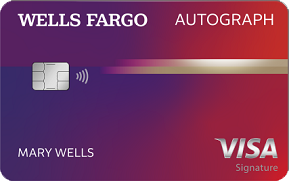
Autograph gives a $0-fee card an unusually wide bonus-category footprint
Wells Fargo Autograph is easy to underestimate because it does not charge an annual fee. Many no-fee rewards cards make you choose between a simple flat rate and a small set of bonus categories. Autograph instead earns unlimited 3 points per dollar in six broad areas: restaurants, travel, gas stations and electric-vehicle charging, transit, popular streaming services and phone plans. Other purchases earn 1 point per dollar.
That category mix reaches both everyday spending and travel. Restaurants and gas are common household expenses. Transit covers eligible rail, taxis, limousines, ferries, tolls, parking lots and garages. Travel includes a broad group of merchants such as airlines, hotels, car rentals, cruises, travel agencies, discount travel sites and campgrounds. Phone plans and streaming add recurring bills that can keep earning 3X even during months when you do not travel.
The absence of an annual fee changes how much optimization is required. A card charging $95 or $150 needs to generate enough extra value to overcome that cost every year. Autograph starts at zero. If you use only two or three of the 3X categories heavily, there is no annual-fee hurdle demanding that you squeeze value from every benefit.
That makes the card particularly appealing as part of a larger wallet. A cardholder can use Autograph wherever it earns 3X, then use another product for groceries or general purchases that would earn only 1X. Because Autograph costs nothing annually, splitting spending this way does not create another fee to justify.
Our 4.8/5 MarketReview rating comes from that breadth rather than from one spectacular feature. Autograph does not lead the market in premium travel perks or uncategorized earning. It is strong because several useful features coexist on one no-fee account without forcing the cardholder into a complicated credits-and-coupons routine.
The six 3X categories are broader than they first appear
Restaurants are one of the easiest Autograph categories to use. Wells Fargo includes eating places, restaurants, drinking places, fast-food restaurants and caterers under the current rewards terms. That covers more than formal sit-down dining and makes 3X useful for takeout, casual meals and many delivery-related restaurant charges when the merchant codes correctly.
Travel is similarly broad. Wells Fargo includes airlines, hotels and motels, timeshares, vehicle and auto rentals, cruise lines, travel agencies, discount travel sites and campgrounds. Unlike a card that requires booking through an issuer portal for its core travel rate, Autograph can earn 3X on eligible direct travel purchases as well as qualifying travel-agency transactions.
Gas includes both gas stations and electric-vehicle charging stations. That is increasingly useful for households transitioning between gasoline and electric vehicles because the rewards category does not force a driver into one fueling model. Wells Fargo still relies on Visa merchant-category coding, so a charging transaction or fuel purchase can fail to qualify when the merchant is coded differently from what the cardholder expects.
Transit fills in transportation that may not be classified as traditional travel. Eligible passenger rail, taxis, limousines, ferries, toll roads, parking lots and garages can earn 3X. This is one reason Autograph works well for city residents and commuters as well as conventional vacation travelers.
Phone plans are unusually practical. Landline and cell-phone providers classified as telecommunications services can earn 3X, and paying a monthly wireless bill with Autograph can also activate the card’s cell-phone protection. The same recurring charge can therefore serve both the rewards program and an insurance-related benefit.
Popular streaming services round out the list. Wells Fargo maintains an eligible-streaming page and describes qualifying services through categories such as cable and pay television, digital goods, books, movies, music and subscription services. As with other categories, merchant coding and how a service bills can affect eligibility.
The 1X base rate is where the card gives value back
Autograph’s biggest rewards weakness is uncomplicated: everything outside the bonus categories earns 1 point per dollar. That is low for a card someone might otherwise want to use everywhere. No-fee alternatives can earn 1.5% or 2% on broad general spending, while some travel cards offer 1.5X or 2X as a permanent floor.
Consider $15,000 of annual purchases that do not fit Autograph’s 3X categories. At 1X, those purchases generate 15,000 points. If the same spending went on a card effectively returning 2% cash back, it would produce $300 in cash value. Autograph’s current 20,000-point welcome offer is described by Wells Fargo as having a $200 cash redemption value, which provides a useful current reference of one cent per point for that cash redemption. At the same cash baseline, 15,000 points would represent $150, leaving a $150 gap in this simplified comparison.
The calculation changes when spending moves into 3X categories. Ten thousand dollars of eligible dining, travel, gas, transit, streaming and phone-plan purchases would earn 30,000 points. At a one-cent cash baseline, that would be $300. A 2% flat-rate card would produce $200 on the same spending. The 3X categories can therefore offset a meaningful amount of weaker 1X spending.
This is why Autograph should not automatically become the only card in a wallet. It is often more efficient to treat it as the card for its six bonus areas and pair it with a stronger flat-rate product for everything else. That approach keeps the no-fee advantage while addressing the weakest part of the rewards structure.
Someone determined to use only one card may prefer a 2% flat-rate product even if that card lacks transfer partners or travel-specific earning. Autograph rewards a small amount of category awareness. It is not complicated, but it is not entirely hands-off either.
Wells Fargo Rewards is more flexible than a basic cash-back program
Autograph earns Wells Fargo Rewards® points rather than a simple cash-back balance. Wells Fargo currently lets eligible cardholders redeem rewards to an account, cover eligible past purchases, use points through participating Pay with Rewards merchants, redeem for gift cards, book travel and transfer points to participating loyalty programs.
The cash option provides an important valuation anchor. Wells Fargo currently advertises the 20,000-point welcome offer as having a $200 cash redemption value. That means an applicant can evaluate the signup offer without assuming an aggressive travel valuation. If a travel redemption or transfer creates more value, that is additional upside rather than a requirement to make the card worthwhile.
Redeeming points as a credit to an eligible Wells Fargo credit product reduces principal but does not replace the required payment. Wells Fargo explicitly states that cardholders still need to make payments due on the account. This is a small operational point, but it matters for anyone using rewards to lower a statement balance.
Redeem for Purchases lets a cardholder apply enough rewards to cover an eligible past transaction of at least $1. Wells Fargo says the cardholder must have enough rewards to cover the entire eligible transaction. The statement credit generally posts after redemption rather than erasing the original purchase immediately.
Pay with Rewards can be used with participating merchants such as PayPal, subject to program settings and merchant eligibility. Wells Fargo notes that rewards are not earned on the portion of a transaction paid with points through that feature. Convenience can therefore come with an opportunity cost compared with paying for the purchase normally and redeeming rewards separately.
The overall redemption menu is a strength because Autograph does not require travel expertise. A cardholder can take straightforward cash value, while someone interested in travel can explore partner transfers. That makes the card accessible to beginners without closing off more advanced uses later.
Point transfers give Autograph a travel-rewards dimension that many no-fee cards lack
Wells Fargo currently allows eligible rewards points from Autograph to be transferred online to participating travel loyalty programs. The product page says transfers can be made in any amount, while the partner program’s own terms apply after the transfer is complete.
The ability to transfer is significant on a no-annual-fee card. Many transferable-points systems reserve airline and hotel transfers for products charging an annual fee. Autograph lets a cardholder earn 3X in several travel and everyday categories and still retain access to a loyalty-transfer path without paying an annual charge merely to keep that option open.
Transfer flexibility should not be confused with guaranteed high value. Airline and hotel programs set their own award prices, availability and expiration policies. Wells Fargo also states that completed transfer redemptions are final. Sending points to a loyalty program without a specific booking in mind can leave you with rewards that become harder to use or less valuable after a program change.
The size of the partner ecosystem matters too. Wells Fargo’s transfer program is not as expansive as the deepest programs from issuers that have spent years building large airline and hotel networks. A traveler who relies on one specific airline alliance or hotel chain should confirm that the relevant loyalty program is available before choosing Autograph primarily for transfers.
For many users, the more important point is optionality. Autograph does not force every reward into a transfer program. Cash redemption remains available, Wells Fargo travel booking remains available, and partner transfers can be reserved for the situations where the math is clearly better.
The 20,000-point welcome offer is modest but easy to reach
Wells Fargo currently offers 20,000 bonus points after $1,000 in net purchases posts within the first three months from account opening. Wells Fargo describes those 20,000 points as a $200 cash redemption value.
A $1,000 spending requirement over three months is relatively accessible. Spread evenly, it is about $333 per month. A cardholder who moves restaurant, gas, transit, streaming and phone-plan purchases to Autograph may be able to reach the target through normal spending rather than a large one-time purchase.
Wells Fargo defines qualifying net purchases as purchases minus returns and credits. Cash advances, cash equivalents, balance transfers, fees, interest, gambling transactions and several other transaction types do not qualify for the offer and do not earn rewards points. That makes the bonus a reward for ordinary purchase activity rather than for moving money through the account.
Eligibility can be more restrictive than the spending requirement. Wells Fargo currently says applicants may not qualify for another Wells Fargo-branded consumer credit card if they opened one within the previous four months. It also says introductory APRs, fees and rewards bonus offers may be unavailable if the applicant currently has the Autograph product or opened it within the last 48 months, even if that earlier account is closed with a $0 balance.
The welcome offer is not large enough to rescue a card that would otherwise be a bad fit, but it improves the first-year case with very little spending pressure. The stronger argument for keeping Autograph later is the permanent 3X structure and no annual fee.
The 12-month 0% purchase APR is useful without defining the card
Autograph currently offers 0% intro APR for 12 months from account opening on purchases. After that, the applicable variable APR is currently 18.49%, 24.49% or 28.49%, depending on the terms assigned to the account.
The promotional period can help with a planned purchase. A $3,600 expense repaid evenly over 12 months would require an illustrative $300 monthly payment to reach zero before the promotional rate ends. A repayment plan should still aim to finish ahead of the final deadline rather than relying on the last possible statement.
Unlike some rewards cards, Autograph therefore has a financing feature that can matter in the first year. The offer is especially useful for someone who already wanted the card for rewards and also has a known purchase to spread over several months.
The current public Autograph page does not prominently advertise a balance-transfer intro offer. We would not assume purchase financing terms extend to transfers. Anyone focused primarily on moving debt should compare dedicated balance-transfer products rather than opening Autograph for a benefit it does not currently promote.
Rewards become secondary when a balance survives beyond the intro period. An 18.49% to 28.49% variable APR can overwhelm the value of 3X points quickly. The card is at its best when rewards purchases are paid in full outside a deliberate, temporary 0% purchase plan.
Cell-phone protection is one of the card’s most practical extras
Autograph currently provides up to $600 per approved cell-phone protection claim, subject to a $25 deductible and a maximum of two paid claims per 12-month period. Coverage can apply to eligible damage, theft or involuntary and accidental parting.
The benefit requires the monthly wireless bill to be paid with an eligible Wells Fargo consumer credit card. Coverage begins after the required billing condition is satisfied and continues while the monthly wireless bill keeps posting to the covered card. That creates a natural fit with Autograph’s 3X phone-plan category.
There is a useful double benefit here. The phone bill can earn 3X points and can also be the payment that maintains eligibility for cell-phone protection. A recurring bill becomes one of the most sensible charges to place on Autograph even for someone using a different card for general spending.
The protection is not comprehensive device insurance. Wells Fargo says the benefit does not cover a phone that mysteriously disappears, and electronic failure or software-related issues are excluded. The reimbursement is also limited to the cost to repair or replace the original phone, less the deductible and subject to the $600 claim maximum.
A household with several expensive phones should read the current Guide to Benefits before relying on the protection. Even with those limits, up to $600 per approved claim is a meaningful benefit on a card that charges no annual fee.
The travel benefits are respectable for $0, but this is not a premium travel card
Autograph includes secondary Auto Rental Collision Damage Waiver on eligible rentals when the full rental cost is paid with the card or associated rewards and the rental company’s collision coverage is declined. Certain vehicles, locations and losses are excluded, and the benefit is secondary rather than the primary rental coverage offered by some higher-fee travel cards.
Travel and Emergency Assistance Services can provide referrals and help during travel, but Wells Fargo makes clear that the cardholder remains responsible for the actual cost of medical, legal, transportation, cash-advance or other services arranged. The benefit is an assistance network rather than prepaid emergency care.
Roadside Dispatch provides access to a pay-per-use roadside service without a separate membership. The service provider sets the current charge, and additional mileage or other service costs can apply. It is useful as a backup, not equivalent to a premium roadside plan with prepaid calls.
Visa Signature benefits add concierge access and the Visa Signature Luxury Hotel Collection. The hotel program can offer property-specific benefits, but it is not the same as receiving a broad annual hotel credit or guaranteed elite status.
Autograph also lacks complimentary airport-lounge access. For a no-annual-fee card, that is unsurprising. A frequent flyer who values lounges, premium trip insurance and recurring travel credits may be better served by a card with an annual fee. Autograph’s travel proposition is about earning and fee efficiency rather than luxury.
No foreign transaction fee makes the 3X travel categories usable abroad
Wells Fargo charges no foreign transaction fee on Autograph. That matters because a travel card can undermine its own rewards when every foreign purchase adds a 3% surcharge. Autograph avoids that issuer-level cost.
The no-fee policy also makes restaurant spending abroad more attractive. If an overseas restaurant transaction is coded in an eligible dining category, the card can earn 3X without a foreign transaction fee taking value back out of the purchase.
Travel-category merchant coding still applies, and currency conversion can introduce separate considerations. A merchant may offer dynamic currency conversion into U.S. dollars at an unattractive rate. Choosing the local currency generally lets the card network handle the conversion instead of accepting the merchant’s quoted exchange rate.
Autograph is therefore a credible international spending card even though it lacks premium travel perks. It combines no foreign transaction fee with travel, dining and transit bonus categories, which are exactly the areas many travelers use most often.
The card fits best as a category specialist or a low-maintenance travel card
Autograph has two particularly good roles. The first is as a category specialist inside a multi-card wallet. Use it for restaurants, travel, gas and EV charging, transit, streaming and phone plans, then send groceries and miscellaneous 1X spending to cards with stronger rates.
The second is as a simple travel-friendly card for someone who refuses to pay an annual fee. There are no annual credits to remember, no break-even calculation and no pressure to use an issuer travel portal for the basic 3X travel rate. The card can earn on direct airline, hotel and other eligible travel purchases while still avoiding foreign transaction fees.
Someone with recurring phone and streaming bills can also create steady bonus-category value without changing spending habits. Those monthly charges keep earning 3X between trips, while the phone bill can support the cell-phone protection benefit.
The 12-month intro purchase APR adds first-year flexibility, and the current $200-equivalent signup offer is easy enough to reach that it does not dominate the decision. Those are useful additions to a card whose permanent rewards are already competitive.
There are situations where Autograph is the wrong kind of free
A $0 annual fee does not automatically make a card the best economic choice. If most of your spending falls outside Autograph’s 3X categories, the 1X base rate can cost more in missed rewards than an annual fee would on a stronger card.
A household spending heavily on groceries but little on dining, travel, gas, transit, streaming or phone plans may get limited value from Autograph. The card has no permanent grocery bonus category, so supermarket purchases generally fall into the 1X bucket unless another promotion applies.
Frequent travelers who want lounges, premium hotel credits, stronger trip-delay insurance or primary rental-car coverage may also outgrow the card. Autograph is efficient precisely because Wells Fargo has not layered expensive premium benefits onto it.
Someone who wants maximum simplicity across every purchase may prefer a 2% cash-back card. Autograph’s six 3X categories are broad, but the card still asks you to know when you are earning 3X and when you are falling back to 1X.
Finally, loyalty-program specialists should inspect Wells Fargo’s current transfer partners before committing. Transfer capability is valuable, but the best transfer ecosystem is the one that includes the airline and hotel programs you actually use.
Autograph is unusually easy to keep for the long term
The strongest argument for Autograph is not its welcome offer or its 12-month intro APR. Those features expire. The durable case is that six useful 3X categories, transferable points, no foreign transaction fee and cell-phone protection all remain attached to a card with no annual fee.
That creates a low-friction account. There is no annual renewal moment when you need to use a hotel credit before it expires or calculate whether benefits offset a fee. If another card eventually becomes better for travel, Autograph can remain useful for dining, gas, transit, streaming or phone bills without costing anything to keep.
The weak 1X base rate is the reason not to make it do every job. Autograph is more compelling when you let it specialize. Pairing it with a better general-spending card produces a cleaner rewards setup than forcing every purchase onto one account for convenience.
For a no-fee card, that is a strong place to land. Autograph gives up some premium perks and some catch-all earning power, but it avoids the maintenance burden that often comes with higher-end rewards cards. The account can remain useful even when your travel habits change, which is a harder benefit to quantify than a statement credit but often more important over several years.