


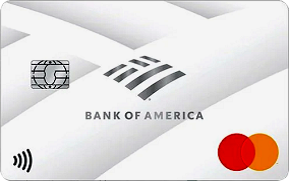
This student card has one main job
BankAmericard for Students is easier to understand than most student cards because it does not try to combine several competing goals. There is no rewards program, no signup bonus and no rotating category calendar. The card’s purpose is to provide a long introductory financing period on purchases and qualifying balance transfers while charging no annual fee.
That makes it very different from a student cash-back card. A rewards product tries to return a small percentage of everyday spending. BankAmericard for Students tries to save interest when a balance needs time to be repaid. Those two benefits can both be valuable, but they solve different problems.
For a student who plans to pay every statement in full and does not need temporary financing, the absence of rewards is a real cost. A no-annual-fee card earning even 1.5% cash back would return $75 on $5,000 of qualifying purchases. BankAmericard for Students would return nothing on the same spending. Over several years, that difference can become meaningful.
For a student who needs to spread out the cost of a necessary laptop, relocation, certification course or another planned expense, avoiding interest for 21 billing cycles can be worth much more than a modest rewards rate. The question is not whether 0% APR sounds attractive. It is whether there is a specific balance, a realistic monthly payment and a clear finish line before the promotional period expires.
That narrow role is why the card earns a strong but specialized 4.6/5 MarketReview rating. It is very good at offering time. It is not designed to be the most rewarding card after that time is no longer needed.
The 21-billing-cycle purchase offer can be genuinely useful for a planned expense
Bank of America currently advertises 0% intro APR for 21 billing cycles on purchases. After the introductory period, the variable APR is currently 14.99% to 25.99% based on creditworthiness and other factors.
The purchase side is the cleanest use of the card because no balance-transfer fee is involved. If a student needs to finance a $2,100 necessary expense and intends to clear it evenly over 21 billing cycles, a simplified target would be $100 per billing cycle. A $4,200 expense would require about $200 per cycle under the same illustration.
Those examples are useful only when the spending was already necessary. A 0% offer is not a discount on the purchase price. It simply delays interest for a limited period. Buying a more expensive laptop, phone or trip because the card allows 21 cycles of financing can turn a useful tool into extra debt.
The phrase “billing cycles” also matters. It should not be interpreted as a guaranteed 21 calendar months from the purchase date. The first statement can close sooner than a full month after account opening, and purchases made later in the introductory period receive less practical time than purchases made near the beginning. A repayment plan should aim to finish early rather than depend on the final possible statement.
The strongest way to use the offer is to decide on the monthly payment before making the purchase. If the required payment does not fit the budget, the expense is probably too large for this financing plan. Minimum payments are designed to keep the account current, not to guarantee that a promotional balance disappears before the 0% period ends.
A long 0% offer can still be risky on a first credit card
Twenty-one billing cycles is a long time in a student’s financial life. Income can change between semesters, internships can end and living expenses can rise. A repayment plan that looks easy at account opening can become harder later.
This is one reason a student should leave margin in the payoff schedule. If a $2,100 purchase theoretically requires $100 per billing cycle, paying $125 or $150 when possible creates a buffer for months when cash flow is tighter. Finishing several cycles early is better than discovering near the end that a large amount remains before the regular APR begins.
The regular APR matters because the promotional period does not forgive any remaining balance. Bank of America’s current range is 14.99% to 25.99% variable after the intro offer. At the higher end, interest on a balance that survives the promotion can accumulate quickly.
A first credit card can also make spending feel less immediate because the bank is not withdrawing cash at the point of sale. Pairing that psychological distance with a long 0% period can encourage a borrower to focus on the monthly minimum rather than the total debt. Tracking the actual balance and the planned payoff date is more important than tracking how much unused credit remains.
The card is most useful when the promotional balance is treated like a fixed short-term loan with a known payoff schedule, even though the account itself is a revolving credit card.
Student status does not replace the ability-to-pay requirement
BankAmericard for Students is marketed toward students, but enrollment in school does not guarantee approval. Credit-card issuers still evaluate applications and are required to consider a consumer’s ability to make the required minimum payments. Bank of America’s own student-card language says responsible handling can help build credit history, but it does not promise that every student applicant will qualify.
Federal rules are especially important for applicants under age 21. Regulation Z generally requires a card issuer to have financial information showing that an applicant under 21 has an independent ability to make the required minimum periodic payments, unless the account is opened with a qualifying cosigner, guarantor or joint applicant who is at least 21 and agrees to the required liability. The rule is about ability to pay, not student status.
For a younger applicant, current or reasonably expected income can include qualifying wages, salary, tips and certain other income or assets under the rule. Student-loan proceeds may be considered only to the extent they exceed amounts disbursed or owed to an educational institution for tuition and other expenses. Income to which the applicant merely expects access is treated differently for applicants under 21.
Applicants should therefore complete income information accurately using the issuer’s instructions and their actual circumstances. A parent’s income is not automatically the student’s income merely because the parent helps with expenses.
For applicants age 21 or older, Regulation Z allows issuers more flexibility to consider income or assets to which the applicant has a reasonable expectation of access, subject to the rule and issuer process. In every age group, the issuer can also consider credit reports, credit scores and other underwriting factors.
The balance-transfer offer is less student-friendly than the headline suggests
BankAmericard for Students also offers 0% intro APR for 21 billing cycles on balance transfers made within the first 60 days of account opening. The long period sounds appealing, but the current balance-transfer fee is 5% of the amount transferred.
A $2,000 transfer would create a $100 fee. A $4,000 transfer would cost $200. If the fee is added to the transferred balance, a $4,000 transfer becomes $4,200 before repayment begins. Spread evenly across 21 billing cycles, the simplified payoff target would be $200 per cycle.
That 5% fee is relatively expensive. A student with a smaller balance that can be repaid in a few months should compare the fee with the interest that would actually accrue on the old card. Paying $100 to transfer a $2,000 balance is not automatically cheaper than leaving the balance where it is and eliminating it quickly.
The long promotional period becomes more valuable when the existing APR is high and the balance genuinely needs close to 21 cycles to repay. A borrower who would otherwise pay substantial interest for more than a year may still save money despite the 5% fee.
Students should also think about why the balance exists. Moving debt can reduce interest, but it does not change the spending pattern that created the balance. If new charges continue accumulating on other cards while the transferred balance is being paid down, the transfer can postpone rather than solve the problem.
Bank of America also states that balance transfers cannot be used to pay another account provided by Bank of America. Existing Bank of America credit-card debt therefore cannot be moved to BankAmericard for Students for the introductory offer.
No rewards can be a healthy design choice, but it is still an opportunity cost
There is a reasonable argument for a first credit card without rewards. Rewards can encourage people to focus on earning while ignoring borrowing cost. A card that pays no rewards makes the economics obvious: the value comes from avoiding interest during the introductory period and from building a responsible payment record over time.
That simplicity can be useful for a student learning how statements, due dates and credit limits work. There is no incentive to increase spending in a bonus category or chase a welcome-offer threshold.
But the absence of rewards should not be romanticized. A student who already has the discipline to pay statements in full could earn cash back with another no-annual-fee card without paying interest. If $8,000 of annual purchases could earn 2% on a competing card, that is $160 a year of potential rewards. BankAmericard for Students produces $0.
The right choice therefore depends on the job the account needs to do now. If the student needs 21 cycles of financing for a specific purchase, the interest savings can dominate the missing rewards. If the student does not need financing, a rewards card is usually the more logical long-term tool.
This is one reason the card should not be chosen merely because it looks “safer” than rewards cards. Financial discipline comes from how the account is used, not from removing cash back from the product.
There is no conventional signup bonus to distract from the real decision
Bank of America’s current public listing does not advertise a cash, points or miles signup bonus for BankAmericard for Students. The online offer is the introductory APR itself.
That makes first-year comparisons simpler but less exciting. Another student card may offer $100 or $200 after a modest amount of spending, which can provide immediate value to someone who does not need financing.
A welcome bonus should not automatically win the comparison. If BankAmericard for Students saves several hundred dollars of interest on a necessary planned purchase, that can be more valuable than a $200 bonus from a rewards card. The opposite is true for someone who pays every statement in full and would never use the 0% period.
Students should avoid manufacturing spending for any signup bonus. A bonus is useful when the threshold is met with normal purchases, but debt created to chase rewards is expensive. BankAmericard’s lack of a bonus at least removes that particular temptation.
Building credit has more to do with payment behavior than with the card name
Bank of America says responsible use of a student credit card can help build credit history over time. The important words are “responsible use.” The label on the card does not build credit by itself.
Payment history matters. Paying by the due date is fundamental, and automatic payments can reduce the chance of forgetting a bill during exams, travel or a busy work schedule. A student should still review statements even when autopay is enabled so unexpected charges or rising balances are not ignored.
Borrowing amount matters too. A high balance can create repayment risk even during a 0% period. The fact that interest is temporarily zero does not make the debt smaller.
Keeping an account open for a long time can be useful, but no one should maintain an account that no longer fits merely because of a simplified credit-score rule. BankAmericard for Students has no annual fee, which makes long-term ownership easier if the card still serves a purpose after graduation.
The strongest credit-building outcome is not “I opened a student card.” It is “I used a credit account for years without missed payments or unmanageable debt.”
The foreign transaction fee makes it a poor study-abroad card
BankAmericard for Students is not designed for international spending. The card carries a 3% foreign transaction fee on qualifying foreign-currency transactions, which can quickly outweigh any financing convenience once you are abroad. A $1,500 equivalent of foreign purchases would create about $45 in fees, and there are no rewards to offset that cost.
That is an important distinction from Bank of America Travel Rewards for Students, which is specifically structured without a foreign transaction fee. A student choosing between the two should separate the use cases: BankAmericard is the stronger financing tool, while Travel Rewards is the more natural option for studying abroad or frequent international spending.
The card can outlive college, but its usefulness may shrink after the intro period
BankAmericard for Students does not charge an annual fee, so there is no automatic reason to close it after graduation or after the 0% period expires. The account can remain a backup credit line or an occasional-use card if it continues to fit the cardholder’s needs.
The problem is that there is little reason to put substantial new spending on the card once the intro financing is gone. There are no rewards, and ordinary purchases become subject to the regular variable APR if balances are carried.
A graduate who has established stronger credit and pays balances in full may eventually move daily spending to a cash-back or travel card. BankAmericard can remain open without costing an annual fee, but it may no longer be the card at the front of the wallet.
That is not a failure. A student card does not need to be the best card for the rest of someone’s life. It can do one useful job during an early stage and later become a quiet backup account.
When another student card is the better choice
Students who do not need a long financing period should compare rewards cards first. A no-fee card earning cash back on dining, groceries or general spending can provide value every month without requiring a specific financing need.
A student expecting international travel should also compare foreign-transaction costs carefully before choosing BankAmericard for Students. Bank of America’s Travel Rewards for Students is specifically positioned around travel and has no foreign transaction fee, while BankAmericard’s core selling point is financing rather than travel. Our best student credit cards guide separates these use cases rather than pretending one card is best for every student.
A student with no credit history should also remember that different student cards have different underwriting approaches and product goals. A long 0% offer is only useful if the applicant is approved and the resulting credit line is sufficient for the planned purchase.
Someone already carrying substantial debt may need a product selected primarily for balance-transfer economics rather than student branding. A 5% transfer fee can be expensive, and a specialist card with a lower fee may be better even if the promotional period is shorter.
The right student card is the one that solves the current problem without creating a new one. Rewards, financing, international use and approval profile all deserve separate consideration.
Who should consider BankAmericard for Students?
The clearest fit is a student with a necessary, predictable expense and a realistic plan to repay it over the next 21 billing cycles. The card’s purchase promotion gives that person time without adding an annual fee.
It can also fit a student who wants a simple first account and does not care about rewards. Removing bonus categories, redemption choices and signup thresholds can make the account easier to understand while learning how credit-card billing works.
A student with outside high-interest card debt may consider the balance-transfer offer if the 5% fee is still lower than the interest expected to accrue without a transfer. That decision requires actual math rather than assuming 0% is automatically cheaper.
Someone who wants to keep the account long term may appreciate the $0 annual fee. Even if daily spending later moves to a rewards card, BankAmericard for Students can remain open if it is still useful and responsibly managed.
Who should skip it?
Skip the card if you pay every statement in full and have no planned use for the 0% period. In that situation, the absence of rewards becomes the dominant feature and a cash-back student card can provide more value.
A student who wants a signup bonus should also look elsewhere. BankAmericard for Students does not currently advertise one.
Someone transferring a balance that can be repaid quickly should question the 5% fee. A lower-fee card may save more money even with fewer 0% months.
Applicants under 21 who cannot satisfy the applicable independent ability-to-pay rules should not assume student status changes federal requirements. Approval is still subject to Bank of America’s underwriting and the law.
And a student who views 0% APR as permission to spend more than the budget supports should avoid using promotional financing altogether. The best 0% offer is still a bad deal when it creates debt that survives the promotion.
The card is valuable only if the 21-cycle window has a purpose
BankAmericard for Students does not need a rewards program to be useful. A long interest-free period on a planned purchase can save more money than cash back ever would on the same transaction, especially for a student who needs time but already knows how the balance will be repaid.
The same feature becomes almost irrelevant for a student who never carries a balance. In that case, the account earns nothing and the opportunity cost grows every time a purchase could have earned rewards elsewhere.
That is the clean decision. Do not choose this card because 21 billing cycles sounds generous. Choose it when you can name the expense, the repayment amount and the month you expect the balance to reach zero.
If those answers are clear, BankAmericard for Students can be a disciplined financing tool at an early stage of credit building. If they are not, a simpler rewards card used only for purchases you can already afford may teach the better financial habit.