


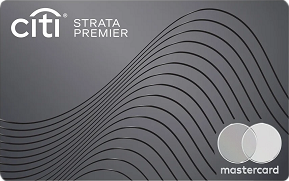
Strata Premier earns like an everyday card as much as a travel card
Citi Strata Premier is easier to justify than many travel cards because its strongest permanent earning categories are not limited to airports and hotels. The card currently earns 3 ThankYou® Points per dollar at supermarkets, restaurants, gas stations and EV charging stations, as well as on air travel and other hotel purchases. Eligible hotels, car rentals and attractions booked through Citi Travel earn 10X, while other purchases earn 1X.
That mix matters because travel is irregular for most households. A card that only earns well when a trip is being booked can sit underused for months. Strata Premier continues earning 3X on groceries, dining and fuel between vacations, which gives the $95 annual fee more chances to produce value throughout the year.
There is no published spending cap on the core 3X categories in the current public offer. A household with substantial grocery and dining spending can therefore keep earning the same category rate without monitoring a quarterly threshold. Merchant coding still matters, but the basic structure is simpler than a rotating-category card.
The problem is the 1X base rate. Large purchases that do not fit one of the listed categories earn only one point per dollar. A flat-rate 2% cash-back card or a 2X travel card can be much more efficient for general spending. Strata Premier works better as a category specialist or part of a multi-card wallet than as the one card used everywhere.
That balance explains the card’s 4.7/5 MarketReview rating. The everyday bonus categories make it unusually useful for a $95 travel card, but the weak base rate prevents it from being a universal default.
The 3X supermarket category gives the card unusually broad household value
Supermarkets currently earn 3 ThankYou Points per dollar. That is important because grocery spending is both frequent and relatively predictable, giving Strata Premier a category that can generate meaningful rewards even for someone who only takes a few trips per year.
Suppose a household spends $6,000 annually at merchants that qualify as supermarkets. At 3X, that produces 18,000 points. The value of those points depends on how they are redeemed, so we would not assign one aggressive cents-per-point figure to every cardholder. The useful comparison is that the same $6,000 would earn only 6,000 points at the card’s 1X base rate.
Merchant classification is the practical limitation. A retailer that sells groceries can still be categorized as a superstore, warehouse club or another merchant type rather than a supermarket. Citi awards category rewards based on transaction data rather than on what the cardholder thinks they bought.
A household that shops mostly at traditional supermarkets is therefore more likely to receive consistent 3X earning than one that buys food primarily at warehouse clubs or large multi-category retailers. Checking how regular stores code is more useful than assuming every grocery receipt qualifies.
The supermarket category also distinguishes Strata Premier from some travel cards that reward dining and airfare but leave groceries at 1X. For a household budget, that can matter more than another luxury travel perk used once a year.
Dining, gas and EV charging make the card useful between trips
Restaurants earn 3X, as do eligible gas stations and EV charging stations. These categories make Strata Premier suitable for a wide range of transportation and dining spending without requiring a travel booking.
A commuter who spends $2,000 a year on fuel or EV charging would earn 6,000 points at 3X rather than 2,000 at the base rate. Add restaurant spending and the card can generate a significant portion of its annual rewards before any flight or hotel is purchased.
The EV-charging category is particularly useful because it avoids making the rewards structure dependent on gasoline. Drivers moving from gas to electric vehicles do not automatically lose the transportation bonus category.
Dining works both as an everyday category and a travel category. A restaurant purchase abroad can potentially earn 3X while the card’s no-foreign-transaction-fee policy avoids an issuer-level surcharge, subject to merchant coding.
These permanent categories are one reason Strata Premier feels less like a card that has to be “used for travel” and more like a general rewards card with travel capabilities layered on top.
Air travel and direct hotel purchases still earn well outside Citi Travel
Strata Premier earns 3X on eligible air travel and other hotel purchases. That means a traveler does not have to use Citi Travel simply to earn more than the 1X base rate on every trip.
This flexibility is important for airline and hotel bookings. Direct booking can offer better change policies, loyalty-program credit, elite benefits or package pricing than a third-party portal. A card that only rewards portal travel strongly can force a trade-off between earning points and preserving those direct-booking advantages.
With Strata Premier, an eligible direct airline purchase or hotel purchase can still earn 3X. Citi Travel remains available for the much higher 10X earning on selected categories, but the cardholder is not punished all the way down to 1X when a direct booking makes more sense.
This is one of the card’s more underrated strengths. Travel portals are useful when the price and terms are competitive, but a good travel card should still work when the traveler chooses a different booking channel.
The 10X Citi Travel rate is attractive, but it should not override the booking itself
Eligible hotels, car rentals and attractions booked through Citi Travel currently earn 10 ThankYou Points per dollar. That is the card’s highest published earning rate and can generate a large number of points on an expensive trip.
A $1,000 eligible hotel booking through Citi Travel would earn 10,000 points before considering the annual hotel benefit. A direct hotel purchase earning 3X would produce 3,000 points, so the portal can create a large incremental reward.
The booking economics still come first. A hotel can offer direct-member rates, loyalty points or elite-night credit that a third-party booking does not receive. A rental-car rate might be lower through another site. An attraction may offer a refundable ticket directly while a portal booking is more restrictive.
Ten points per dollar is only valuable when the underlying purchase is still a good deal. Paying more, losing useful benefits or accepting worse cancellation terms can erase the value of the higher multiplier.
The most sensible approach is to compare Citi Travel with direct and other available options. If price and terms are equivalent, 10X is a compelling tie-breaker. If they are not, the extra points should be measured against what the traveler is giving up.
The $100 annual hotel benefit can cover the annual fee in face value
Citi Strata Premier currently provides a $100 annual hotel benefit once per calendar year. To use it, the cardholder must book a single hotel stay of at least $500, excluding taxes and fees, through Citi Travel or the designated Citi Travel phone channel.
The benefit is applied at booking rather than appearing later as a general statement credit. Citi requires the complete stay to be prepaid with the Strata Premier card, ThankYou Points or a combination under the current terms.
For someone who would naturally book a qualifying $500+ stay through Citi Travel every year, the $100 face value is slightly higher than the $95 annual fee. That can make the card’s recurring economics look very attractive before any rewards are counted.
The restrictions are important. A $300 hotel stay does not qualify. Two $300 stays cannot be combined to satisfy the $500 threshold. Taxes and fees do not count toward the required hotel amount, and the booking has to use Citi Travel.
Citi also says the portion of the booking offset by the $100 benefit does not earn ThankYou Points. A cardholder should not count both a $100 discount and 10X rewards on that same $100 when calculating the value of a stay.
The benefit is best for a traveler whose existing plans already include a qualifying Citi Travel hotel booking. Someone who rarely stays in hotels, prefers direct bookings or generally books inexpensive stays may get little practical value from it.
The annual hotel benefit is more restrictive than a general travel credit
A $100 general travel credit could potentially offset airfare, rail, hotels or other travel expenses. Strata Premier’s benefit is narrower: one $500+ hotel stay through Citi Travel.
That distinction matters when comparing cards with similar annual fees. A traveler who spends $100 on airline baggage fees but only $350 on any individual hotel stay cannot use the Strata Premier hotel benefit simply because total travel spending exceeds $500.
Cancellation timing also deserves attention. Citi’s current terms explain that if a qualifying reservation is canceled, the benefit can be returned for reuse only while it is still within the same applicable calendar-year benefit period. A canceled booking that crosses into a new calendar year can result in losing the prior year’s benefit.
That makes the credit more operationally demanding than its $100 headline suggests. A cardholder should use it on a stay that is genuinely likely to happen rather than on a speculative booking made only to preserve the benefit.
The 60,000-point welcome offer is strong, but $4,000 is a real threshold
Citi’s current public travel-card listing shows 60,000 bonus ThankYou Points after $4,000 in purchases within the first three months from account opening. The offer is meaningful, but the spending requirement is substantial enough to require planning.
Four thousand dollars over three months averages roughly $1,333 per month. A household with planned travel, insurance, groceries and other normal expenses may be able to reach that amount without changing behavior. Someone with a lower budget should not increase spending merely to earn a bonus.
Citi applies a 48-month restriction to the bonus. The current terms say bonus ThankYou Points are unavailable if you received a new-account bonus for a Citi Premier or Citi Strata Premier account in the past 48 months. Certain product conversions involving an account that earned a recent bonus can also affect eligibility.
That rule matters because the product evolved from Citi Premier into Citi Strata Premier. A former Premier cardholder should not assume the newer product name resets bonus eligibility.
The offer improves first-year value, but it is not a reason to carry a balance. Strata Premier does not currently advertise a 0% intro purchase APR, and the regular APR can erase rewards quickly when debt is revolved.
ThankYou Points are flexible because Citi supports both simple and advanced redemptions
Citi gives Strata Premier cardholders several ways to use ThankYou Points. Current options include Citi Travel bookings, participating merchant redemptions, gift cards, cash back and transfers to participating airline and hotel loyalty programs.
The cash-back option is useful as a baseline because a cardholder does not have to understand airline award charts to use the rewards. Citi currently allows cash-back redemption through methods including check, statement credit and direct deposit under the applicable ThankYou terms.
The program becomes more interesting for travelers through transfers. Citi’s current Strata Premier page lists partners including American Airlines, JetBlue, Virgin Atlantic, Cathay Pacific, EVA Air, Choice Hotels and The Leading Hotels of the World, with additional partners available through ThankYou Rewards.
Transfer ratios and partner terms can vary, and Citi says completed transfers are subject to the receiving loyalty program’s rules. A travel redemption can create more value than cash, but it can also create less value when award availability is poor or a program prices the trip aggressively.
The important advantage is choice. A beginner can use simple cash or travel redemptions, while a more experienced traveler can investigate partner transfers without needing a different card.
American Airlines access makes the transfer ecosystem more relevant to U.S. travelers
Citi currently highlights American Airlines among Strata Premier’s transfer partners. That is particularly notable for U.S.-based travelers because American has a large domestic network and historically has not been as broadly accessible through transferable bank-points programs as some competitors.
The presence of a useful domestic airline partner can make the program more approachable than one requiring international-airline knowledge for every transfer. A cardholder still has to compare the number of points required, taxes, fees and seat availability before moving rewards.
Transfers should generally be made only after a specific redemption is identified. Once points leave Citi, the loyalty program controls the balance and its rules. Speculatively moving points because a partner “sounds valuable” can create less flexibility rather than more.
The partner ecosystem is a real advantage over fixed-value travel cards, but it also increases the amount of research required to maximize rewards. Not every Strata Premier user needs to become an award-travel expert to get value from the card.
The travel protections are meaningful for a $95 card
Citi Strata Premier includes several travel protection benefits under its current Guide to Protection Benefits. Citi’s public card page lists trip cancellation and interruption coverage, trip delay coverage, lost or damaged luggage protection and MasterRental® coverage.
Trip cancellation and interruption coverage can reimburse eligible non-refundable common-carrier costs when a covered loss applies, subject to current limits and exclusions. Our current product snapshot records coverage up to $5,000 per covered trip and $10,000 per eligible account per 12 consecutive months under the guide.
Lost or damaged luggage coverage can currently provide up to $3,000 per covered trip under the benefit guide, with state-specific and item-specific limitations. The exact protection depends on how the trip was paid and whether the loss meets the covered conditions.
MasterRental coverage can help with eligible rental-car loss or damage when its terms are met. As with any insurance-style card benefit, exclusions, payment requirements and claim procedures matter more than the name of the benefit.
These protections add real utility because Strata Premier is priced below premium travel cards with annual fees of several hundred dollars. They do not eliminate the need for separate insurance in every situation, but they make the card more credible for paying for trips.
No foreign transaction fee supports the card’s 3X dining and travel categories abroad
Citi charges no foreign transaction fee on Strata Premier. That allows eligible travel and restaurant purchases abroad to earn rewards without a 3% issuer surcharge reducing the value.
A $3,000 equivalent of foreign purchases on a card charging 3% would create $90 in foreign transaction fees. Strata Premier avoids that cost.
The card’s 3X dining and travel categories can also remain useful abroad when the merchant codes correctly. That makes the account more suitable as an international spending card than a domestic cash-back card with a foreign transaction fee.
Dynamic currency conversion remains a separate risk. A foreign merchant may offer to convert the purchase into U.S. dollars at its own rate. Choosing the local currency is generally the cleaner way to let the payment network handle conversion rather than accepting the merchant’s conversion.
The 1X base rate can create a hidden opportunity cost
Purchases outside Citi Strata Premier’s bonus categories earn 1 point per dollar. That is the card’s biggest ongoing weakness.
A household spending $15,000 annually on non-bonus purchases would earn 15,000 points. A 2X travel card would earn 30,000 rewards units on the same simplified spending. A 2% cash-back card would return $300 in cash value.
The broad 3X categories reduce how much spending falls to 1X, which is why Strata Premier is stronger than a narrow travel card. Still, large expenses such as home improvements, medical bills, insurance premiums or general retail purchases can end up at the weak base rate.
A second catch-all card can solve the problem. Use Strata Premier for its 3X and 10X categories, then route uncategorized purchases to a stronger flat-rate product. The $95 annual fee makes a multi-card setup more complex, but the rewards difference can justify it for a high spender.
The 5% balance-transfer fee makes this a poor debt-consolidation card
Citi currently charges the greater of $5 or 5% of each balance transfer on Strata Premier. The balance-transfer APR is currently 20.24% to 28.24% variable, and there is no advertised 0% intro balance-transfer period on the current offer.
A $5,000 transfer would create a $250 fee before any interest savings are considered. A $10,000 transfer would cost $500. With no 0% transfer period to offset that upfront fee, Strata Premier is difficult to recommend for debt consolidation.
The card’s rewards should not distract from this. Someone moving high-interest debt should compare dedicated balance-transfer cards with promotional APR periods and lower transfer fees rather than paying 5% to move the balance onto another standard-rate rewards card.
Strata Premier is designed for earning and redeeming rewards, not for carrying or reorganizing debt.
The regular APR makes paying in full central to the rewards case
Citi currently lists a variable purchase APR of 20.24% to 28.24% for Strata Premier. There is no 0% introductory purchase APR in the current acquisition offer.
That makes interest much more important than points once a balance is carried. A cardholder can earn 3X or 10X on a purchase and still lose far more value to interest if the statement remains unpaid for months.
The $4,000 welcome-offer spending requirement is another reason to plan carefully. A 60,000-point bonus is attractive only when the purchases used to earn it are affordable.
For a rewards card with a $95 annual fee, the strongest financial pattern is straightforward: use the categories, pay the balance, redeem points intelligently and avoid turning an earning tool into high-interest debt.
Who should consider Citi Strata Premier?
The best fit is someone whose spending overlaps heavily with the permanent 3X categories. A household that spends on supermarkets, restaurants, gas or EV charging and travels several times per year can generate meaningful rewards without relying only on portal bookings.
The card is also attractive to travelers who value transfer partners but do not want a premium-card annual fee. Citi provides several airline and hotel partners while keeping the fee at $95.
A traveler who can naturally use the $100 annual hotel benefit can make the annual-fee economics particularly appealing. If a qualifying $500+ Citi Travel hotel stay was already planned, the benefit can offset the fee in face value.
Someone booking hotels, rental cars or attractions through Citi Travel can also benefit from 10X earning, provided the portal price and terms remain competitive.
Who should probably choose another card?
A traveler who dislikes issuer portals and rarely books a $500+ hotel stay may get little value from the annual hotel benefit. The $95 fee then has to be justified almost entirely through rewards and protections.
A high spender with large amounts of uncategorized purchases should compare cards with a 2X base rate. Strata Premier’s 1X floor can create a significant opportunity cost.
Someone focused on premium travel perks such as airport lounges and large statement-credit packages will find Strata Premier too modest. Its value is rewards efficiency rather than luxury access.
Borrowers seeking a balance transfer or 0% purchase financing should also look elsewhere. Strata Premier’s current APR and 5% transfer fee make it the wrong tool for that job.
Strata Premier is strongest when the hotel benefit is optional rather than necessary
There is a tempting way to justify Citi Strata Premier: $95 annual fee, $100 annual hotel benefit, therefore the card “pays for itself.” That is only true when the hotel benefit fits a stay you were going to book anyway.
The stronger case is that the card still earns useful rewards even when you do not use the hotel credit. Three points per dollar on supermarkets, restaurants, gas, EV charging, air travel and hotels gives the account a broad everyday foundation. Transfer partners and travel protections add depth around those earning rates.
The hotel benefit then becomes a way to improve an already useful card rather than a coupon that has to be redeemed to rescue the annual fee.
That is a healthier reason to pay $95. If the card’s permanent categories and rewards ecosystem already fit your spending, using the $100 hotel benefit is upside. If you need to manufacture a $500 portal stay every year just to make the arithmetic work, another travel card is probably a better fit.