Tower Transit’s Two-Year Sembawang-Yishun Bus Contract Extension Starts in Singapore
Tower Transit Singapore’s two-year extension of the 26-service Sembawang-Yishun bus package takes effect Sept. 5, keeping the Kelsian subsidiary on the contract through Sept. 4, 2028.
Our editorial standards
MarketReview publishes clear, independently produced financial information using reliable sources and transparent editorial standards.
Read our Editorial Policy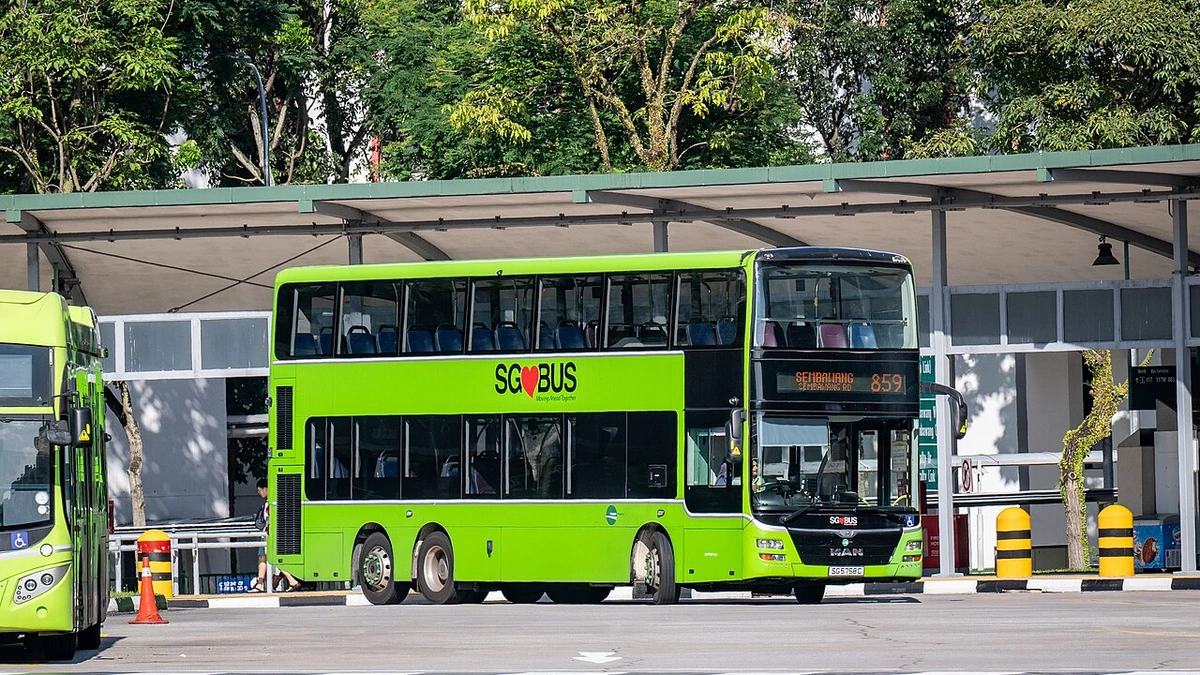
Tower Transit Singapore’s two-year extension of the Sembawang-Yishun Bus Package took effect on Sept. 5, carrying the operator’s 26-service contract into a new term that runs through Sept. 4, 2028. The change follows the end of the original five-year operating period that began when Tower Transit took over the package on Sept. 5, 2021.
The Land Transport Authority granted the extension in 2025 alongside a two-year renewal of Tower Transit’s Bulim Bus Package. Kelsian Group, Tower Transit Singapore’s parent company, said the Sembawang-Yishun extension covers 26 bus services and lasts through Sept. 4, 2028. The company did not disclose a separate value for the two-year extension.
The start date follows directly from an option built into the 2020 award. Tower Transit’s original contract materials said the Sembawang-Yishun package would run for five years from the start of service, with LTA holding discretion to extend it for another two years. Kelsian later said the renewals were awarded in recognition of strong operational performance, making the extension a continuation of an existing performance-based award rather than a newly tendered contract.
The package rolls forward after five years under Tower Transit
Sembawang-Yishun was one of two packages awarded to Tower Transit under the PT217 tender in September 2020. The operator was already running Bulim, but the Sembawang-Yishun award required a transition from SMRT Buses. Tower Transit said at the time that the package contained 27 bus services, involved a fleet of 409 buses, and included responsibilities at Mandai Bus Depot as well as the Yishun and Sembawang bus interchanges and the bus terminal at Geylang Lorong 1.
The original commercial terms show the scale of the award. LTA’s official bid-price annex listed Tower Transit’s five-year Sembawang-Yishun bid at S$582.1 million and its price for both PT217 packages at about S$1.03 billion. The annex also shows that lower bids were submitted for Sembawang-Yishun, so the historical figure should be understood as Tower Transit’s accepted bid price rather than the lowest price offered in the tender.
The service count has changed since the original award. Kelsian’s extension announcement refers to 26 Sembawang-Yishun services, compared with 27 in Tower Transit’s 2020 contract announcement. The extension release does not identify which network change accounts for that difference. Under Singapore’s contracting framework, LTA plans bus services, so the current count should not be read as evidence that the 2020 route list remained fixed for the full five-year term. One current example is service 859, which Tower Transit lists as a loop linking Sembawang Interchange and Yishun Interchange.
Singapore’s contracting model keeps network control with LTA
The extension sits inside Singapore’s broader Bus Contracting Model, which separates public-network planning from day-to-day operations. LTA owns the bus assets, infrastructure and systems, plans the services, and contracts operators to run routes to specified standards. Operators are paid service fees rather than simply keeping the fares collected from passengers.
That structure matters when considering the financial effect of a contract extension. LTA’s financial statements say fare revenue under the model is collected by the authority, while operators receive service fees for providing bus services. The operator therefore has a different risk profile from a conventional farebox concession in which revenue depends directly on ticket receipts. Service changes, cost indexation and performance provisions can still affect payments, but passenger-fare revenue itself sits with LTA.
LTA also sets operating standards that continue to apply during the extended term. Its current Bus Contracting Model page states that operators must deliver at least 96% of scheduled mileage for each bus service every month. The safety standard requires fewer than 0.50 accidents per 100,000 bus-kilometres per month, while service reliability is assessed using measures such as Excess Wait Time or On Time Adherence. Those requirements provide useful context for why the two-year option was framed from the outset as something LTA could exercise based on performance.
The initial Sembawang-Yishun bid should not be read as a fixed cash figure that automatically carries into the extension. LTA’s 2020 bid-price annex said the five-year price included pre-operation costs, service fees and lease charges for LTA-provided assets, while excluding later adjustments for inflation, wage levels, fuel costs, service variations and incentive payments. Kelsian’s 2025 announcement confirmed the new end date but did not publish the extension’s financial value.
The renewal adds continuity to Kelsian’s Singapore business
For Kelsian, the extension lengthens the life of one of its core Singapore public-bus contracts at a time when the group continues to emphasize contracted transport earnings. In its FY26 results released on Aug. 26, Kelsian said its Singapore operation performed in line with expectations during the year. The group reported A$2.40 billion of FY26 revenue and said more than 90% of revenue was contracted or non-discretionary in nature across the wider business.
Those group figures should not be treated as a measure of the Sembawang-Yishun package itself because Kelsian does not disclose the contract’s contribution separately in its FY26 results. They do, however, show why contract duration matters to the parent company. Extending an established public-transport award preserves operating continuity and revenue visibility without requiring Kelsian to win a fresh tender for the same package in 2026.
The Sembawang-Yishun start also means both PT217 packages are now in their extension periods. Kelsian said the Bulim renewal runs through May 28, 2028, while Sembawang-Yishun continues through Sept. 4, 2028. The two dates give Tower Transit a defined runway for its core LTA bus operations before the next disclosed contract endpoints.
For commuters, the immediate effect is continuity of operator rather than a handover. Tower Transit remains responsible for the Sembawang-Yishun package as the two-year option period begins, while LTA retains control over network planning, public-bus assets and service standards. The next fixed contractual date disclosed by Kelsian is Sept. 4, 2028, when the current Sembawang-Yishun extension is due to end.
More News
Latest News
View all news- Bristol Myers Squibb, BioNTech Report 36.7% Response Rate in Phase 2 Pumitamig Lung Cancer Trial
- New Zealand National Party Unveils 26-Point First-100-Days Agenda Covering Taxes, Loans and KiwiSaver
- FAA’s JFK Flight Limits Enter New Two-Year Extension Through October 2028
- Eli Lilly Releases New Olomorasib Lung Cancer Data Ahead of 2027 Phase 3 Results
- Canada Announces Abu Dhabi Crown Prince Visit Focused on Investment and Economic Ties