
W.W. Grainger’s Laurie Thomson Takes Over as Interim CFO
Laurie R. Thomson becomes Grainger's interim CFO on September 5 after Deidra Merriwether's departure, while the company begins a search for a permanent finance chief.
Our editorial standards
MarketReview publishes clear, independently produced financial information using reliable sources and transparent editorial standards.
Read our Editorial Policy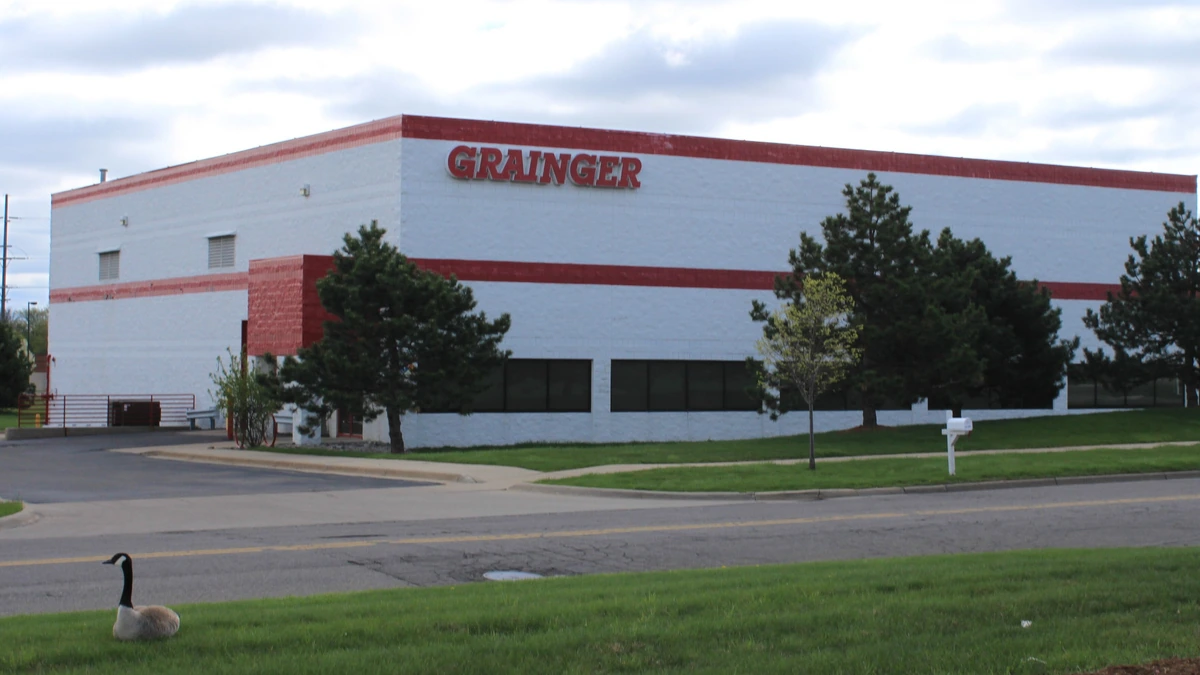
Laurie R. Thomson has taken over as interim chief financial officer of W.W. Grainger, Inc. effective September 5, succeeding Deidra C. Merriwether after her resignation became effective a day earlier. Thomson will also continue serving as Grainger’s vice president and controller while the industrial distributor searches for a permanent CFO.
The handoff puts a longtime Grainger finance executive in the top finance role at a point when the company is operating under a higher full-year outlook. Grainger raised its 2026 sales and earnings guidance in August after reporting double-digit second-quarter sales growth and a 19% increase in operating earnings.
Grainger disclosed the succession in an SEC filing after Merriwether told the board on July 31 that she would leave to pursue another opportunity. The filing said her departure was not due to any disagreement involving Grainger’s operations, financial statements, internal controls, policies or practices, or its independent auditors.
Thomson moves from controller to the interim CFO role
Thomson, 53, has served as Grainger’s vice president, controller and principal accounting officer since May 2021. Her history at the company reaches back much further: she was vice president of internal audit and finance continuous improvement from November 2019 through April 2021, vice president of internal audit from October 2016 through November 2019, senior director of finance from June 2011 through September 2016, and director of internal audit from February 2008 through June 2011.
Before joining Grainger, Thomson worked as director of internal audit at CVS Health and as an audit manager at Arthur Andersen. The SEC filing identifies her as a certified public accountant. That background gives the interim appointment a strong accounting and controls component, rather than bringing in an outside executive during the transition.
The board approved changes to Thomson’s compensation alongside the appointment. Her base salary rises from $455,271 to $500,000, and she is scheduled to receive a one-time restricted stock unit award on October 1 with an approximate grant value of $750,000. The award is set to vest in three equal installments on October 1 of 2027, 2028 and 2029.
Merriwether’s resignation took effect September 4. Grainger said it would begin a search for its next CFO immediately, so Thomson’s appointment is explicitly an interim arrangement rather than a permanent succession decision. The company has not identified a timetable for completing that search in the filing.
The finance transition follows a stronger second quarter
The leadership change comes about a month after Grainger reported second-quarter sales of $5.021 billion, up 10.3% from $4.554 billion a year earlier. Operating earnings increased 19% to $807 million, while net earnings attributable to Grainger rose 18.3% to $570 million. Diluted earnings per share increased 20.5% to $12.01 from $9.97.
Operating margin reached 16.1%, up 120 basis points from the prior-year quarter. Grainger said its second-quarter results included refunds tied to IEEPA tariffs on products it directly imported, which reduced cost of goods sold by $43 million. Gross profit margin increased to 39.5% from 38.5% a year earlier.
The company’s two reportable segments also posted higher sales. High-Touch Solutions North America sales increased 11.9%, or 11.7% on a daily, constant-currency basis. Endless Assortment sales rose 13.5%, and the company reported a 20.6% increase for that segment on a daily, organic constant-currency basis.
Cash generation remained substantial in the quarter. Grainger produced $444 million of operating cash flow, invested $111 million in capital expenditures and reported free cash flow of $333 million. It also returned $341 million to shareholders through dividends and share repurchases.
Following those results, Grainger raised its 2026 outlook. The company now expects net sales of $19.4 billion to $19.7 billion, compared with its previous range of $19.2 billion to $19.6 billion. Its adjusted diluted earnings-per-share forecast increased to $45.50 to $47.25 from $44.25 to $46.25, while its adjusted operating-margin range moved to 15.8% to 16.2%.
Controller continuity matters during the CFO search
For Grainger, the interim structure keeps the controller function under the same executive who is stepping into the CFO post. Thomson’s experience spans controllership, internal audit and broader finance roles, giving her direct familiarity with the company’s reporting processes as the board works through the permanent search.
The scope of the role is material. Grainger is a broad-line distributor of maintenance, repair and operating products and services, with operations primarily in North America and Japan. The company said it serves more than 4.6 million customers worldwide and reported $17.9 billion of revenue in 2025. Its two main reportable segments, High-Touch Solutions North America and Endless Assortment, use different distribution and e-commerce models across a large customer base.
The CFO transition does not change the financial targets Grainger issued with its second-quarter results. The filing announcing Thomson’s appointment did not revise guidance, describe any accounting issue or identify a disagreement tied to Merriwether’s exit. Instead, it establishes the leadership arrangement that takes effect after Merriwether’s departure and sets the terms under which Thomson will serve while a successor is sought.
Thomson’s one-time restricted stock unit award is scheduled for October 1, providing the next dated milestone disclosed in connection with the interim appointment. Beyond that, the board’s search for a permanent CFO remains open, and Grainger has not announced a target date for naming Merriwether’s permanent successor.
More News


Latest News
View all news- NMI Resolves Payment Settlement Delays That Could Have Affected Merchant Funding
- Bank of Korea Governor Says International Won Payment Network Is Being Tested Ahead of January Launch
- Bank of Canada Signals Sharply Higher Inflation Forecast as Oil Prices Surge
- Bank of England’s Bailey Calls for Stronger AI Testing and Built-In Fraud Protection in Payments
- Australia Reports 41 Days of Petrol Supply and 33 Days of Diesel in October 17 Update
