
Independent Fed Review Says Supervisors Knew or Should Have Known of SVB Risks by March 2022
Starling's initial review says Federal Reserve supervisors failed to act decisively despite vulnerabilities at Silicon Valley Bank that were apparent about a year before its collapse.
Our editorial standards
MarketReview publishes clear, independently produced financial information using reliable sources and transparent editorial standards.
Read our Editorial Policy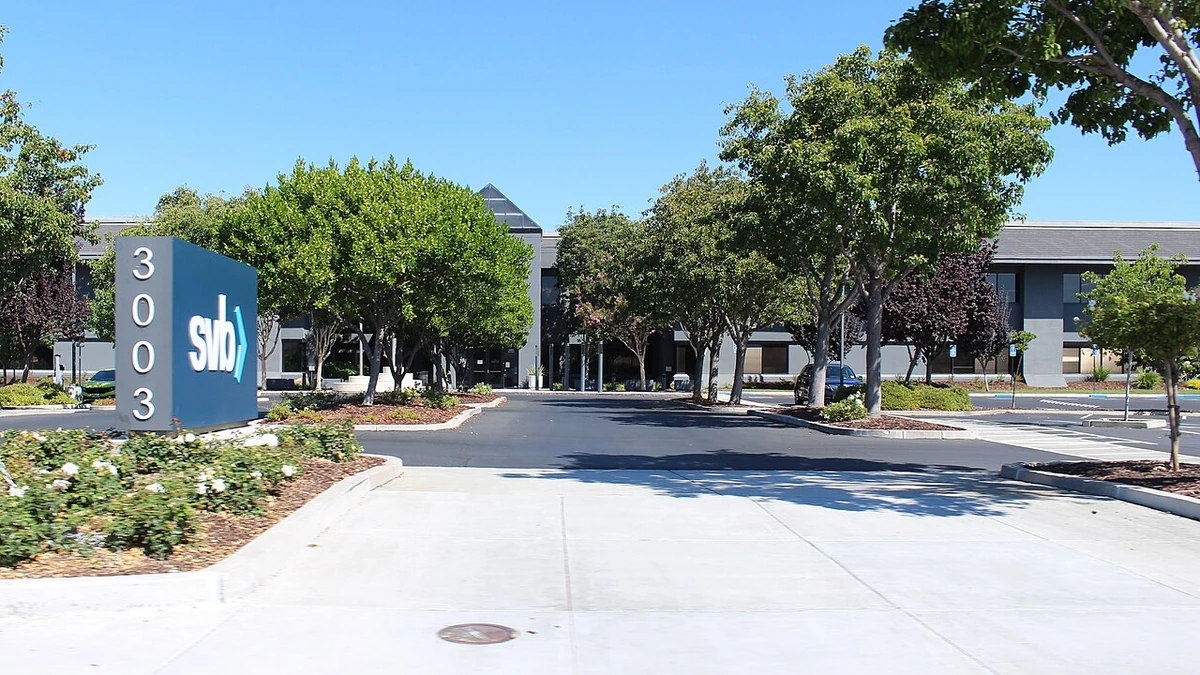
An independent review commissioned by Federal Reserve Vice Chair for Supervision Michelle Bowman found that Fed supervisory staff knew, or should have known, about major vulnerabilities at Silicon Valley Bank as early as March 2022, roughly a year before the bank failed. The review also concluded that supervisors did not take prompt and decisive action to push SVB to reduce those risks, according to initial findings Bowman announced Friday.
The work was conducted by Starling Advisory Group and was structured to be independent of Federal Reserve System staff and principals. Bowman described the initial report as the first in a series examining what went wrong before SVB’s March 2023 collapse. The underlying Starling report was not posted with Bowman’s remarks, so the findings available publicly are those she presented in her speech.
Review traces supervisory awareness back to March 2022
Bowman said the independent review identified three central vulnerabilities at SVB: unrealized accounting losses on its securities portfolio that exceeded its capital, a deposit base that was 94% uninsured and concentrated among venture capital-backed technology companies, and a lack of operational readiness to borrow from the Federal Reserve’s discount window when liquidity was urgently needed. In her September 18 remarks presenting the review’s initial findings, she said supervisory staff knew or should have known about those weaknesses by March 2022.
The report’s finding is stronger on supervisory awareness than the Federal Reserve’s 2023 internal review led by then-Vice Chair for Supervision Michael Barr. That earlier review said supervisors did not fully appreciate the extent of SVB’s vulnerabilities as the firm grew, although it also found that once vulnerabilities were identified, supervisors did not take sufficient steps to make the bank address them quickly enough.
The 2023 review documented warning signs that had accumulated before the failure. Supervisors identified interest-rate-risk deficiencies in SVB’s 2020, 2021 and 2022 CAMELS examinations without issuing supervisory findings on those deficiencies. It also said internal liquidity stress-testing weaknesses, deposit outflows and balance-sheet restructuring plans likely warranted a stronger supervisory message during 2022.
SVB’s own risk profile made delays especially consequential. The bank had grown from about $71 billion in assets at the end of 2019 to more than $211 billion by the end of 2021. Its concentrated technology-sector customer base produced large deposits that were heavily uninsured, while a large securities portfolio exposed the bank to losses as interest rates rose. The 2023 Fed review said management also removed interest-rate hedges and changed risk assumptions in ways that reduced measured exposure instead of fully addressing the underlying risk.
Risk aversion and unclear authority are cited for the delay
The Starling review, as summarized by Bowman, attributed supervisory inaction in part to a long-standing culture of risk aversion. Staff were reluctant to act unless they were certain an intervention was exactly right, she said. The review also cited unclear decision rights, with responsibility, authority and accountability not aligned clearly enough for supervisory staff to know who could settle whether a particular action should be taken.
Those findings point to a problem of execution rather than a lack of observable risk. Bowman said supervisors did not act promptly to require SVB to reduce its interest-rate exposure or the concentration of vulnerabilities even though the warning signs were available. The review also concluded that the delay was not caused by the regulatory tailoring mandate in the Economic Growth, Regulatory Relief, and Consumer Protection Act of 2018 or by a directive from the former vice chair for supervision to reduce supervisory intensity.
That conclusion differs from one element of the Fed’s 2023 internal review. The Barr-led report said the Board’s tailoring approach after the 2018 law and a shift in supervisory policy impeded effective oversight by reducing standards, increasing complexity and promoting a less assertive supervisory approach. The new independent review does not erase the earlier report’s other findings about weaknesses at SVB or supervisory delays, but it assigns different weight to why supervisors failed to act sooner.
A separate 2023 material-loss review by the Federal Reserve’s Office of Inspector General also found shortcomings in supervision. The OIG said examiner resources were insufficient, some examiners lacked the expertise needed for a large and complex institution, the transition of SVB between supervisory portfolios was not handled effectively, and supervisors did not closely scrutinize the risks that rising interest rates posed to the bank’s investments.
New findings also challenge the social-media explanation
The Starling review questioned another widely discussed explanation for the speed of SVB’s collapse. Bowman said Charles River Associates, working at Starling’s request, found no evidence that social media triggered the bank run or accelerated it. According to the analysis she cited, 96% of social-media discussion about the run occurred after SVB’s failure had become inevitable.
That does not change the extraordinary scale of the withdrawals. The Fed’s 2023 review said deposit outflows exceeded $40 billion on March 9, 2023, after SVB announced a balance-sheet restructuring and plans to raise capital. Management expected another $100 billion of withdrawals the following day. California regulators closed the bank on March 10 after it could no longer meet the run.
The FDIC’s official failed-bank record says SVB had approximately $209 billion in assets and $175.4 billion in deposits as of December 31, 2022. The California Department of Financial Protection and Innovation closed the bank on March 10, 2023, and appointed the FDIC as receiver. The FDIC transferred deposits and substantially all assets to a bridge bank before later entering an agreement for First-Citizens Bank & Trust Company to assume the bridge bank’s deposits and loans.
The distinction in the new review is therefore not whether a severe run occurred. It is whether social-media activity was a meaningful cause of that run. The initial Starling findings presented by Bowman say the evidence did not support that explanation and instead emphasize balance-sheet vulnerabilities, concentrated uninsured funding and a lack of operational preparedness for emergency liquidity.
The Fed says it is changing how supervisors escalate risks
Bowman said the Fed has already begun responding to shortcomings identified through the review. The central bank’s updated supervisory operating principles direct examiners to focus on significant threats to bank safety and soundness and to financial stability, then take timely and proportionate action to have institutions eliminate or mitigate those threats.
The framework also gives supervisors more options for communicating concerns, including observations in addition to matters requiring attention and enforcement actions. Bowman said that flexibility is intended to help examiners distinguish among vulnerabilities according to their seriousness rather than allowing uncertainty over the proper supervisory label to delay action.
She also announced a new escalation mechanism aimed directly at the culture problem described in the review. Examination teams will submit monthly reports to the heads of supervision and their respective Reserve Banks identifying issues where an examiner is uncertain whether the standard for supervisory action has been met or whether an action could conflict with leadership expectations. The purpose is to give examiners a direct path to raise uncertainty and give senior officials earlier visibility into cases where clearer guidance is needed.
The independent review is not finished. Bowman said Friday’s findings come from the first report in a series, leaving further work ahead on the 2023 bank failures and on the supervisory process that preceded them. For now, its central conclusion is that the risks at SVB were visible well before March 2023 and that the supervisory system did not convert that awareness into timely corrective action.
More from Banking

Latest News
View all news- Berkshire Names Howard Buffett Chairman as Warren Buffett Becomes Chairman Emeritus
- CoreWeave Prices Upsized $3.7 Billion Convertible Notes Offering
- MISTRAS Agrees to $866 Million H.I.G. Capital Takeover at $20.35 a Share
- August Payrolls Rise in Four States as Jobless Rates Fall in Eight States and D.C.
- Mission Critical Group Closes Preferred Investment Led by Liberty Mutual Investments
