Qatar Financial Centre, U.S. Chamber Sign Cross-Border Investment MoU
An MoU will focus on wealth and asset management, fintech, digital assets and enterprise technology as the two organizations expand business links between Qatar and the United States.
Our editorial standards
MarketReview publishes clear, independently produced financial information using reliable sources and transparent editorial standards.
Read our Editorial Policy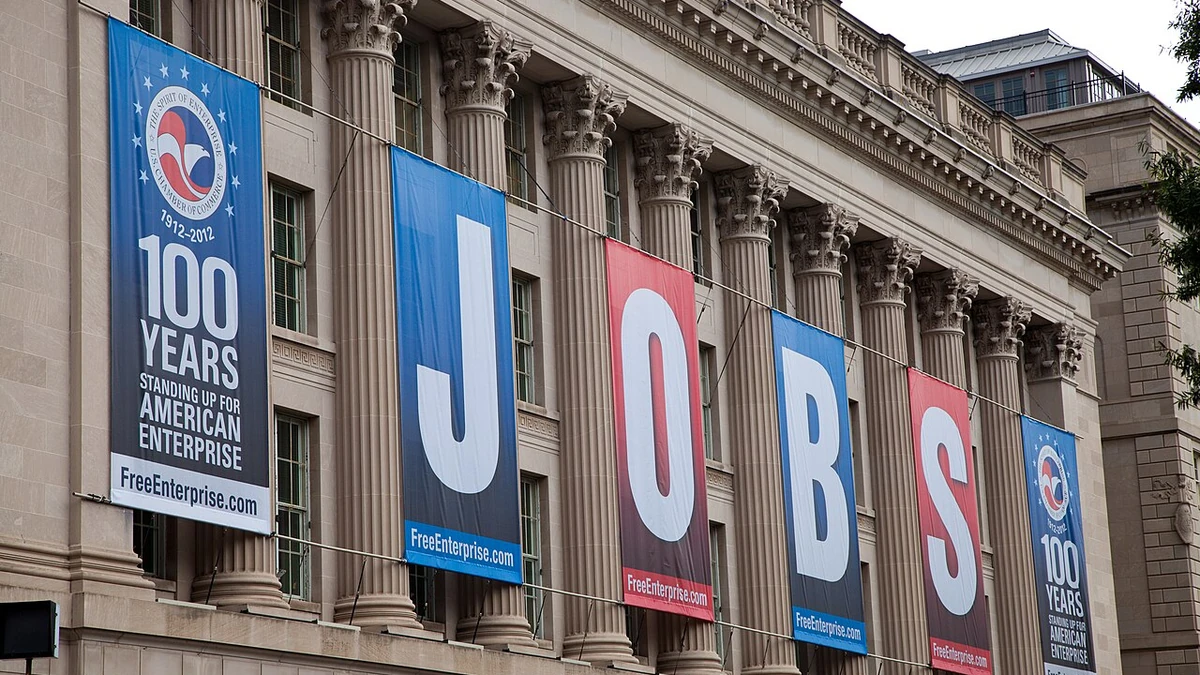
Qatar Financial Centre (QFC) and the U.S. Chamber of Commerce have signed a memorandum of understanding aimed at expanding commercial and investment engagement between Qatar and the United States, with the two organizations planning work around wealth and asset management, fintech, digital assets and enterprise technology.
More than 350 U.S. companies are already part of the QFC platform, according to the announcement. The MoU is intended to support American businesses considering a new or larger presence in Qatar and the wider region. It does not disclose a pool of committed capital, an investment target or a timetable for deployment, making the agreement a framework for business development rather than a funded investment program.
New York roundtable starts the partnership
QFC and the U.S. Chamber signed the MoU during a private executive roundtable in New York, where senior U.S. business leaders discussed regional growth, cross-border expansion and the regulatory, economic and technological factors shaping business decisions. The roundtable was also the first activity under the new agreement, according to QFC’s official news center.
Future work is expected to include joint programs, business dialogues and other initiatives. For U.S. companies, those channels can provide market information, business contacts and a forum for discussing regulatory or operating issues, but the announcement does not promise approvals, financing or other direct support for companies that participate.
QFC Chief Executive Officer Mansoor Rashid Al-Khater framed the agreement as a way to turn the existing U.S.-Qatar relationship into more opportunities for companies. Khush Choksy, the U.S. Chamber executive responsible for the region, said the Chamber’s U.S.-Qatar Business Program expects to work with QFC on joint programs and business dialogues. The structure is therefore different from a government trade agreement or a fund launch: it creates an institutional channel intended to support future commercial activity.
Previous cooperation gives the MoU some history to build on. U.S. Chamber event materials from 2021 and 2022 described QFC sessions aimed at helping American companies assess expansion into Qatar, including programs on QFC investment opportunities and Qatar’s digital economy. QFC also hosted a Washington business dinner in 2022 with the U.S. Chamber and the U.S.-Qatar Business Council, presenting Qatar’s investment environment to American executives. The new agreement formalizes a relationship that was already being used for company outreach and business programming.
QFC is using its onshore platform as the entry point
QFC’s pitch to international firms rests on its structure as an onshore financial and business centre. It operates its own legal, regulatory, tax and business environment and says firms can have up to 100% foreign ownership, repatriate 100% of profits and face a 10% corporate tax on locally sourced profits. QFC also promotes a common-law legal environment and access to more than 80 double-taxation agreements.
During the first half of 2026, QFC reported 1,135 new firm registrations, up 37% from the same period a year earlier, bringing total registered firms to more than 4,700 at the end of June. Technology and innovation accounted for 544 new firms, while wealth added 84 and fintech 65. Those categories overlap directly with several of the sectors named in the new U.S. Chamber MoU.
That gives the partnership an existing business base rather than a blank-slate recruitment effort. The more than 350 U.S. companies QFC says are already on its platform create an immediate group for future dialogues, while QFC’s broader registration growth gives the centre a reason to use the Chamber’s network to attract additional American firms looking for a regional base.
U.S.-Qatar trade provides a larger commercial backdrop
An established bilateral trade relationship gives the MoU a much larger commercial setting. The Office of the U.S. Trade Representative says U.S. goods and services trade with Qatar totaled an estimated $12.5 billion in 2025, up 10.4% from 2024.
Goods trade was estimated at $6.5 billion. U.S. goods exports to Qatar were $4.4 billion and imports were $2.1 billion, leaving a $2.4 billion U.S. goods surplus. Services trade totaled about $6.1 billion, with U.S. services exports at $3.9 billion and imports at $2.1 billion. The U.S. services surplus was $1.8 billion.
In its Qatar market guide, the U.S. Commerce Department identifies financial services and digital infrastructure as enabling parts of the country’s diversification strategy, while listing information technology, artificial intelligence and cybersecurity among areas with opportunities for U.S. companies. That context helps explain why the MoU is centered on financial and technology businesses rather than on a single infrastructure project or export category.
Taken together, the trade numbers and sector priorities show that the new MoU is being added to an already sizable commercial relationship rather than creating one from scratch. The focus on wealth and asset management, fintech, digital assets and enterprise technology also lines up with areas QFC is actively trying to grow, including technology, wealth and fintech registrations recorded in the first half of this year.
Under the framework, the next steps are joint programs, business dialogues and sector-specific initiatives. The release does not name participating companies beyond the institutions, set a target for U.S. investment or announce individual projects, so the first measurable outcomes will come from future company registrations, expansions and programs carried out under the MoU.
More from Investing


Latest News
View all news- UK Backs £43 Million Cornwall Lithium Project With Nearly £10 Million Support
- Adobe’s David Wadhwani Steps Down as Creativity & Productivity President
- DOE Order Keeping Colorado’s Craig Coal Unit Available Takes Effect
- Dutch Anti-Greenwashing Rules Take Effect for Consumer-Facing Businesses
- NineFive95 Expands Distressed Multifamily Strategy Across Midwest and Sun Belt