Cheniere Signs 22-Year LNG Supply Deal With Petrobras
Cheniere said Petrobras will buy about 0.8 million tonnes of LNG a year on a free-on-board basis, giving the U.S. exporter another long-term contract as Petrobras expands its supply portfolio.
Our editorial standards
MarketReview publishes clear, independently produced financial information using reliable sources and transparent editorial standards.
Read our Editorial Policy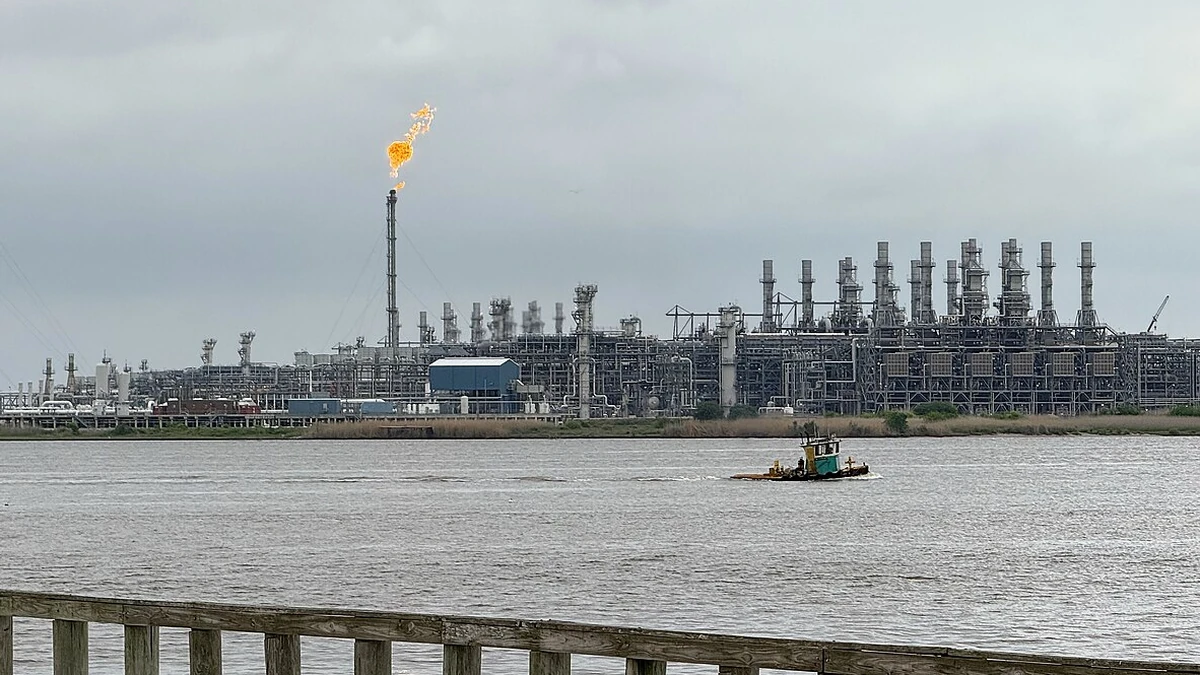
Cheniere Energy said Tuesday that its marketing arm signed a 22-year liquefied natural gas sale and purchase agreement with Petrobras, adding another multi-decade contract to the U.S. exporter’s book as Brazil’s state-controlled energy company broadens its long-term supply portfolio.
Under the agreement, Cheniere said in a company release, Petrobras will purchase approximately 0.8 million tonnes per annum of LNG from Cheniere Marketing on a free-on-board basis for 22 years. In LNG trade, a free-on-board structure generally means the buyer takes delivery at the export terminal and is responsible for shipping after loading.
Cheniere Chairman, President and Chief Executive Officer Jack Fusco said the agreement reinforces the company’s standing in global LNG while adding commercial support and fixed-fee cash-flow visibility that can help underpin further brownfield liquefaction capacity growth. The company did not frame the deal as a merger, acquisition or joint venture. It is a long-term supply contract.
The announcement adds to a model that has become central to U.S. LNG expansion. Developers typically seek long-duration contracts with creditworthy buyers because those commitments can support financing decisions and expansion planning for capital-intensive export capacity. For Cheniere, another 0.8 mtpa contract does not transform the company on its own, but it does add to the demand base backing its broader Gulf Coast platform.
What the agreement says and what it does not say
Cheniere’s release establishes the headline terms clearly: the buyer is Petrobras, the volume is about 0.8 million tonnes a year, the delivery structure is FOB and the contract runs for 22 years. The release also makes clear why Cheniere sees the agreement as strategically useful, tying it to long-term fixed-fee visibility and future brownfield liquefaction growth at existing sites.
At the same time, the announcement leaves some details unstated in the summary release. Cheniere did not publicly specify a start date in the material reviewed here, nor did it identify in that summary whether the contracted volume will be sourced from a particular future train or expansion project. That matters because Cheniere has multiple existing and expansion opportunities across its LNG network.
The company’s Sabine Pass facility in Louisiana is one of the clearest examples of those expansion opportunities. According to Cheniere’s Sabine Pass project page, the site currently has six operating liquefaction trains and about 30 mtpa of LNG production capacity. Cheniere is also developing a Sabine Pass Stage 5 expansion project that would add further capacity in phases. Brownfield projects like that can be especially attractive because they can make use of existing infrastructure, storage and marine facilities rather than requiring a completely new export complex from scratch.
That does not mean Tuesday’s Petrobras deal is definitively linked to Sabine Pass specifically. Cheniere’s release did not say that. But Fusco’s comment about brownfield capacity growth shows how management is thinking about these contracts: long-term sales commitments help support future expansion at existing LNG sites.
Petrobras is building out longer-term LNG supply
The Cheniere agreement also fits a broader pattern on the Petrobras side. Earlier this month, Petrobras said in an official statement that it had signed a separate 20-year LNG purchase and sale contract with Sempra Infrastructure for 0.8 mtpa from the Port Arthur LNG terminal in Texas.
In that Sept. 14 statement, Petrobras said long-term contracted volumes help reduce its exposure to spot-market volatility, strengthen natural-gas portfolio risk management and expand its ability to serve customers with more flexibility and security. Those comments provide a useful window into why Petrobras is adding long-dated U.S. LNG supply even before it commented publicly in detail on the Cheniere agreement.
Seen together, the Sempra contract and the new Cheniere agreement suggest Petrobras is deliberately building a more structured imported LNG portfolio rather than relying as heavily on short-term market purchases. That can matter for both Brazil’s gas market and its power system, especially when weather, hydrology or demand swings increase the need for imported gas flexibility.
For the broader LNG market, the deal is another sign that large buyers still want long-term supply even after several years of volatile spot prices and shifting global trade flows. U.S. exporters benefit from those contracts because they can pair abundant domestic gas supply with long-duration offtake agreements that are attractive to utilities, state-backed importers and large industrial buyers.
Why the deal matters for Cheniere
For Cheniere, the immediate value is commercial rather than transformational. A contract for 0.8 mtpa is meaningful, but the bigger point is what it signals about market demand for long-term LNG. When companies continue signing contracts that run for two decades or longer, that supports the investment case for incremental liquefaction capacity at a time when global buyers remain focused on supply security.
The Petrobras agreement also broadens Cheniere’s customer base further into Latin America through a large, well-known counterparty. Petrobras is one of the world’s biggest energy companies, and securing a long-term commitment from that type of buyer can be strategically useful beyond the volume itself. It can deepen commercial relationships in a region where LNG demand can rise and fall sharply depending on domestic production, power demand and hydrological conditions.
What comes next is less clear from the public disclosures so far. Cheniere has disclosed the core commercial terms of the agreement and the strategic rationale it sees in the deal. Petrobras has already shown through its Sempra contract that it wants more long-term LNG supply. But the companies have not yet publicly detailed when deliveries under the Cheniere contract begin or tied the volumes to a specific expansion train in the materials reviewed here.
More from Investing
Latest News
View all news- U.S. Job Openings Hold at 7.1 Million in August as Hiring Remains Muted
- U.S. Consumer Confidence Drops to 81.9, Lowest Since 2014
- RBA Raises Cash Rate to 4.60% as Inflation Risks Build
- FINMA Closes Julius Baer Case and Orders CHF250 Million Capital Buffer
- GM and LG Energy to Retool Tennessee Battery Plant for Lower-Cost LMR Cells