
Exus Buys 715 MW Portfolio of Solar Projects in Louisiana and Wisconsin
Exus has acquired four advanced solar projects from ibV Energy Partners as it targets rising electricity demand from data centers and other large power users.
Our editorial standards
MarketReview publishes clear, independently produced financial information using reliable sources and transparent editorial standards.
Read our Editorial Policy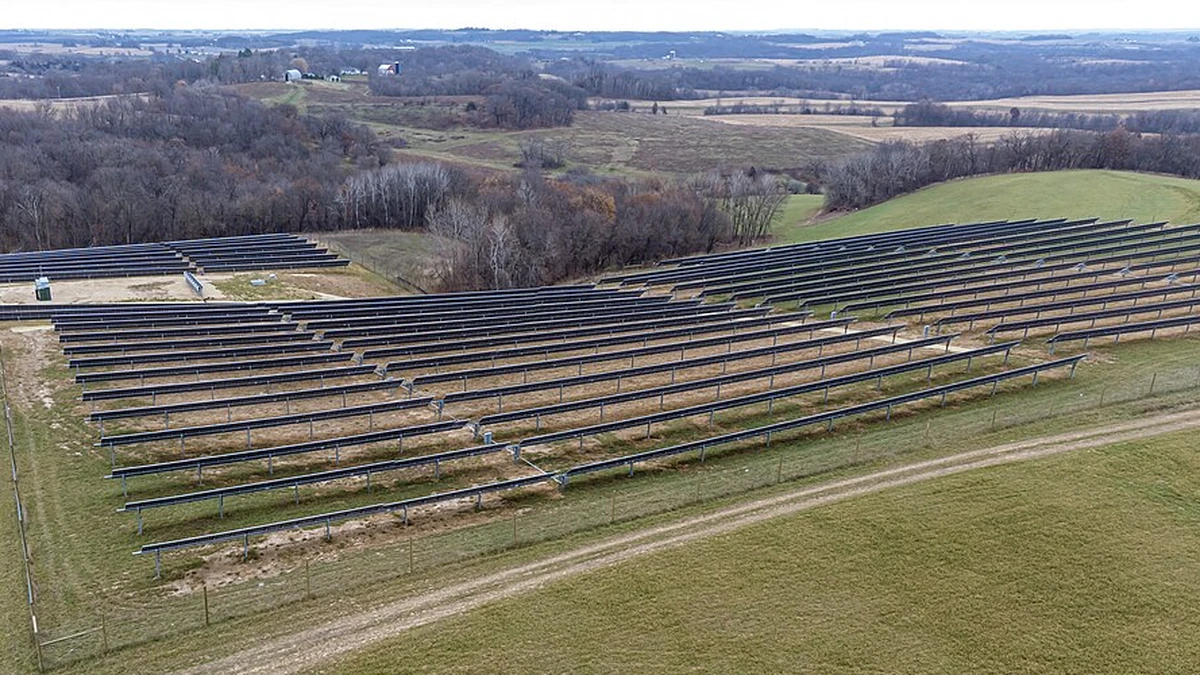
Exus Renewables North America has acquired four utility-scale solar projects in Louisiana and Wisconsin from ibV Energy Partners, expanding its development pipeline in two markets where electricity demand is rising alongside new data-center activity. Exus Chief Executive Jim Spencer told Reuters on Tuesday that the projects total about 715 megawatts and that Exus plans to build and operate the facilities. Financial terms of the acquisition were not disclosed.
The portfolio includes Maple Grove Solar I and II in Barron County, Wisconsin, along with Bayou Teche Solar in St. Mary Parish and Bayou Chicot Solar in Evangeline Parish, Louisiana. Spencer said Exus is already discussing long-term electricity sales with hyperscale technology companies and utilities that serve data-center demand. He told Reuters that the company expects to line up offtake agreements within four to six weeks.
The acquisition gives Exus control of projects that are already well into permitting and grid-development work rather than sites that still have to start those processes from scratch. That distinction matters as large power users compete for generation that can reach the grid on a practical timetable. ibV Chief Executive Chris McKissack told Reuters that his company began working on interconnection positions with the Midcontinent Independent System Operator roughly five years ago.
Four projects span Wisconsin and Louisiana
Maple Grove is the largest single development in the package. Reuters described the two-phase Wisconsin project as 310 MW. The Public Service Commission of Wisconsin gives a more detailed regulatory breakdown: 260 MWAC of solar generation plus a 50 MW battery energy storage system. The project is planned for the towns of Barron and Maple Grove in Barron County and includes a new 161-kilovolt generation tie line connecting to the existing Dairyland Barron Substation.
Wisconsin regulators issued a final decision for Maple Grove in March 2025. The PSC’s public project page says the approved development covers about 1,559 acres of proposed arrays and is split into two phases, with the battery units located in the second phase. Public records therefore make clear that the 310 MW figure associated with Maple Grove includes storage capacity as well as solar generation, an important distinction when comparing the overall portfolio figure with solar-only nameplate capacity.
In Louisiana, Reuters reported that Bayou Teche accounts for 125 MW and Bayou Chicot for 280 MW. Both projects appear in the Louisiana Department of Conservation and Energy’s renewable-energy permitting registry. Bayou Teche is in St. Mary Parish, while Bayou Chicot is in Evangeline Parish. Earlier public materials from ibV and Louisiana proceedings have cited different project or contracted-capacity figures at various stages, so the current sizes reported by Exus should be read as the buyer’s present description of the assets rather than a simple continuation of every earlier filing.
Public records show why the headline capacity needs context
The 715 MW total reported by Reuters is the figure Exus is using for the four-project package, but the underlying public records do not all use the same measurement convention. Maple Grove is the clearest example because the Wisconsin PSC separates 260 MWAC of solar from 50 MW of battery storage. Adding those figures produces 310 MW of combined project capacity, the same number Reuters cited for Maple Grove, but not 310 MW of solar generation alone.
The Louisiana projects also have development histories that include earlier power-purchase and permitting documents with lower capacity figures than those now attributed to Exus. That does not necessarily indicate a contradiction. Utility-scale projects can be resized during development, and public documents may refer to AC export capacity, DC panel capacity, battery capacity, contracted offtake or a specific phase rather than one uniform nameplate measure. For that reason, MarketReview is treating 715 MW as the acquisition portfolio figure reported by Exus through Reuters, not as an independently recalculated solar-only total from older filings.
What is more firmly established across the official records is that the projects are not early concepts. Maple Grove has already gone through a state certificate process in Wisconsin, and Louisiana’s state registry identifies both Bayou Teche and Bayou Chicot within its solar-permitting system. That development work can shorten the distance between an acquisition and construction compared with a greenfield site that still needs land, permits and interconnection studies assembled from the beginning.
Data-center demand increases the value of grid-ready projects
The timing also fits a broader change in the U.S. power market. The U.S. Energy Information Administration said in September that it expects electricity sales to reach 4,135 billion kilowatthours in 2026, up almost 2% from 2025, and rise again in 2027. EIA said data-center development and increased manufacturing activity are driving much of the growth in commercial and industrial electricity demand.
That demand backdrop helps explain why Exus is emphasizing projects with established interconnection work. Large data centers can require hundreds of megawatts, while new generation and transmission often take years to permit and connect. Spencer told Reuters that the acquired projects were attractive partly because they could interconnect comparatively quickly in regions where demand is growing faster than available generation. He also said Exus is talking both with hyperscale technology companies and utilities serving data-center load, rather than relying on a single buyer category.
Exus already describes its North American business as an independent power producer that develops, owns and operates utility-scale renewable-energy and storage assets. Buying advanced projects from another developer fits that model because Exus can take over construction, contracting and eventual operations without having originated each site itself. The company has also been expanding its in-house development capabilities, including through its acquisition of Ozone Renewables earlier this year.
The next concrete milestone is commercial rather than regulatory: Spencer said Exus expects to secure offtake agreements for the newly acquired projects within four to six weeks. Those contracts would provide a clearer view of which buyers will take the electricity, how much of the portfolio is committed and whether data-center demand becomes the dominant route to market for the Louisiana and Wisconsin projects.
More from Investing



Latest News
View all news- U.S. Job Openings Hold at 7.1 Million in August as Hiring Remains Muted
- U.S. Consumer Confidence Drops to 81.9, Lowest Since 2014
- RBA Raises Cash Rate to 4.60% as Inflation Risks Build
- FINMA Closes Julius Baer Case and Orders CHF250 Million Capital Buffer
- GM and LG Energy to Retool Tennessee Battery Plant for Lower-Cost LMR Cells
