
Australian Treasurer Heads to Japan to Push Investment and Fuel-Security Ties
Jim Chalmers will open a new annual finance dialogue with Japan, pursue an investment-cooperation agreement and meet major investors as Canberra seeks tighter economic and energy-security links with Tokyo.
Our editorial standards
MarketReview publishes clear, independently produced financial information using reliable sources and transparent editorial standards.
Read our Editorial Policy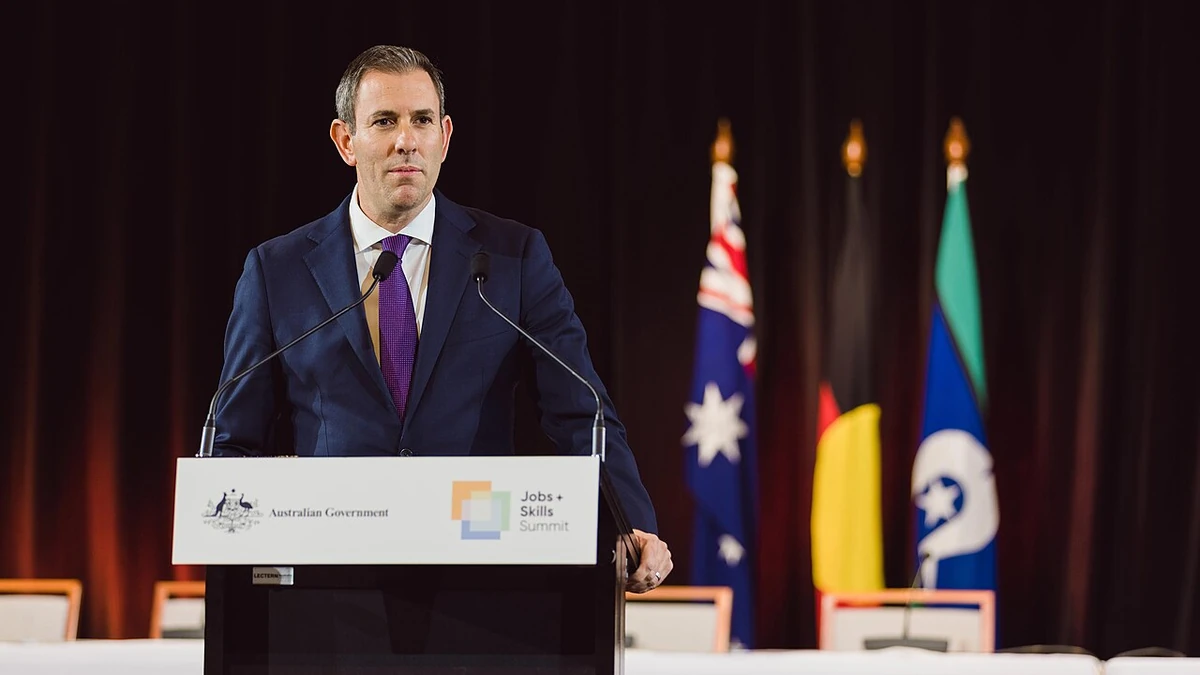
Australian Treasurer Jim Chalmers is heading to Japan for talks aimed at drawing more Japanese capital into Australia and tightening cooperation on fuel security, with a new annual finance dialogue set to anchor the visit.
Chalmers is due to meet Japan’s Minister of Finance, Satsuki Katayama, as well as senior bankers, asset managers and corporate executives during a program of around 20 meetings and engagements over 48 hours. He said the trip is focused on boosting investment, strengthening fuel security and resilience, and bringing the two countries closer as they face higher energy costs, elevated bond yields and wider global uncertainty.
In the official trip announcement, Chalmers said the inaugural Australia-Japan Finance Ministerial Dialogue will become an annual forum covering investment opportunities, strategic financing and wider international economic engagement. The two ministers are also expected to progress an agreement intended to increase investment cooperation in national-priority areas. The release did not give a value, timetable or detailed terms for that agreement, so it remains an item to be advanced during the talks rather than a completed investment commitment.
A new finance dialogue puts capital at the center
The finance ministerial meeting adds a dedicated Treasury-level channel to an economic relationship that already spans trade, energy, critical minerals and security policy. Chalmers has highlighted critical minerals, energy, artificial intelligence and industrial decarbonisation as areas where Australia sees scope for deeper commercial ties with Japan. Those sectors are also closely connected to Canberra’s broader effort to attract private capital into projects considered important for economic resilience and future industrial capacity.
The program shows that the investment pitch is broader than a single government-to-government meeting. Chalmers plans to meet Tadashi Maeda, chairman of the Japan Bank for International Cooperation, as well as executives from Mitsubishi Corporation, Mitsubishi Heavy Industries, Sumitomo Mitsui Banking Corporation, MUFG Bank, Mizuho Financial Group, Mitsui & Co. and Nippon Life Insurance. He is also scheduled to meet Japanese institutional investors and asset managers including Nissay Asset Management, Mitsubishi UFJ Asset Management, Asset Management One and Sumitomo Mitsui DS Asset Management.
According to the Treasurer’s office, the business leaders and investors involved in the visit represent nearly A$4 trillion in assets under management. That figure describes the scale of institutions participating in the engagement, not capital that has been committed to Australia. The distinction matters because the trip is designed to create or deepen financing relationships, while any project-level investment would still depend on separate commercial decisions and, where relevant, regulatory approvals.
The timing also carries diplomatic significance. The visit comes in the 50th anniversary year of the Basic Treaty of Friendship and Cooperation between Australia and Japan. Chalmers’ office described the new finance dialogue as part of a wider effort to strengthen economic ties between two countries that increasingly frame trade, investment and supply-chain policy through the lens of economic security.
Fuel security is already a formal bilateral priority
Fuel security is not a new theme added solely for this visit. In May, Australia and Japan agreed to strengthen energy-security cooperation and support the continued flow of essential energy goods, including fuel and gas, between the two countries. The Australian government said at the time that Australia supplies roughly one-third of Japan’s energy and that Japan is Australia’s largest market for liquefied natural gas. Japan, in turn, is a reliable supplier of refined petroleum and diesel to Australia.
That two-way dependence gives the investment talks a practical energy-security dimension. Australia has large energy and resources exports, while Japan brings capital, technology and demand. The May agreement committed the countries to support open trade in liquid fuels and other energy products, strengthen supply-chain resilience and maintain more predictable investment conditions. It also linked bilateral cooperation to wider regional energy resilience.
A separate economic-security declaration signed by the two prime ministers in May reinforced the same direction. It called for stronger investment and trade in strategically significant sectors and for more resilient supply chains covering energy, critical minerals, food and other important industrial goods. The declaration also identified Japanese participation in Australian critical-minerals projects as strategically valuable.
Chalmers’ October trip therefore builds on commitments already made at leader level. The new finance dialogue can give those priorities a financing channel, particularly where large projects need long-term capital or support from institutions such as the Japan Bank for International Cooperation. The Treasurer’s announcement does not identify a new fuel-supply accord to be signed in Japan, so the immediate development is the effort to deepen investment and financing cooperation around an existing energy-security relationship.
Japan is already one of Australia’s biggest capital partners
The investment base is substantial before any new commitments emerge from the visit. The latest Australian Department of Foreign Affairs and Trade statistics put total Japanese investment in Australia at A$286.4 billion at the end of 2025, making Japan the country’s fourth-largest foreign investor. Australian investment in Japan reached A$179.1 billion in the same year.
Trade ties are also heavily exposed to energy and resources. Two-way goods and services trade was valued at A$97.5 billion in 2025. Australia’s major merchandise exports to Japan included A$19.6 billion of coal and A$19.4 billion of natural gas, while refined petroleum was among the significant goods Australia imported from Japan. Those flows help explain why investment policy and fuel security sit together in the current agenda rather than operating as separate diplomatic tracks.
For Canberra, the immediate objective is to turn an already deep economic relationship into more financing for sectors the government considers strategically important. For Tokyo, Australia offers a long-standing source of energy and minerals at a time when Japan is placing greater weight on supply-chain security and dependable access to resources. The overlap is strongest where Australian projects need patient capital and Japanese firms or financial institutions want secure long-term exposure to energy, resources and industrial supply chains.
Chalmers is also scheduled to deliver a keynote address to the 63rd Annual Australia-Japan Joint Business Conference and meet leaders from Keidanren, Japan’s major business federation. The visit’s concrete next step is the first finance ministerial dialogue with Katayama, where the proposed investment-cooperation agreement and strategic financing agenda are due to be advanced.
More News



Latest News
View all news- JPMorgan Reports $15.3 Billion Third-Quarter Profit as Revenue Hits $50.2 Billion
- Johnson & Johnson Raises 2026 Sales Outlook After $25.4 Billion Third-Quarter Revenue
- IMF Raises Global Growth Forecast to 3.1% as AI Investment Supports the U.S. Outlook
- Goldman Sachs Posts $5.29 Billion Q3 Profit and $17.01 Earnings Per Share
- FTC Seeks Contempt Sanctions Against Martin Shkreli Over Alleged Biotech Stock Trading
