
Trump Says Russia and Ukraine Agreed to Halt Energy Strikes, but Kyiv Cannot Confirm
Ukraine says it supports a reciprocal halt to energy attacks but has not confirmed a deal, as Washington gives no terms for the ceasefire Trump announced.
Our editorial standards
MarketReview publishes clear, independently produced financial information using reliable sources and transparent editorial standards.
Read our Editorial Policy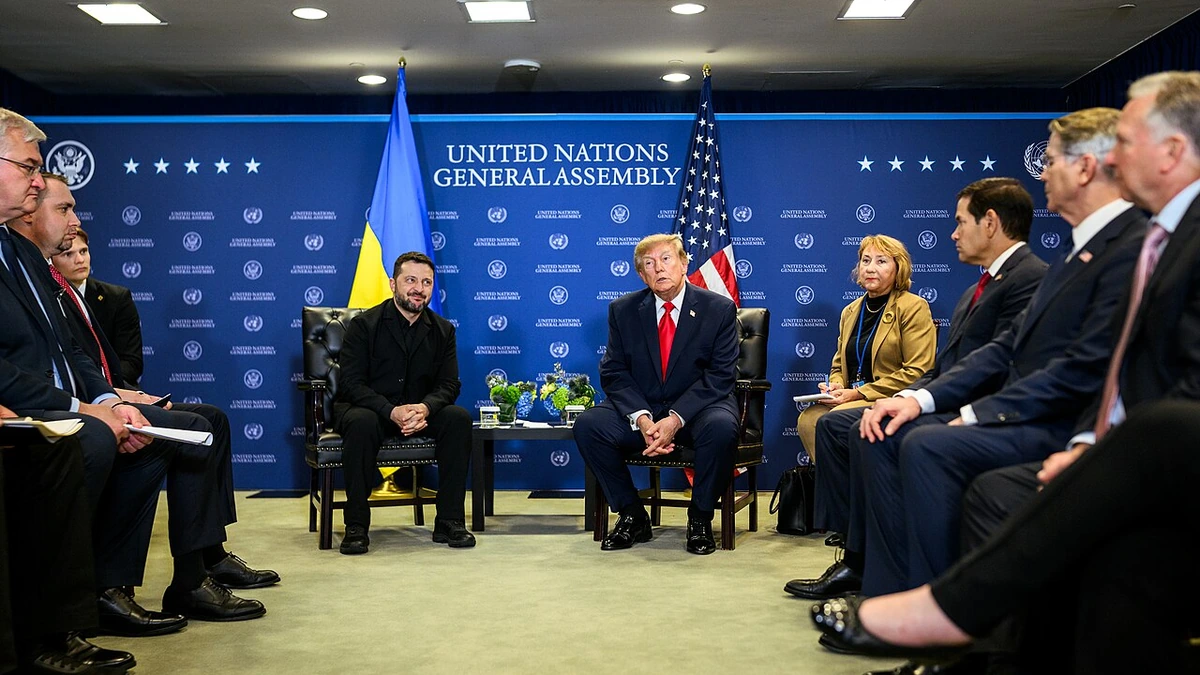
President Donald Trump said Sunday that Russia and Ukraine had agreed to an immediate halt in attacks on energy infrastructure, but Kyiv said it had not been informed of a completed agreement. Ukrainian President Volodymyr Zelenskyy subsequently expressed support for a reciprocal pause while asking Washington to explain what had been arranged. Moscow had not publicly confirmed the announcement.
Trump described the arrangement as an “ENERGY CEASEFIRE” in a Truth Social post on October 11, saying both parties had agreed and that it would take effect immediately. He supplied no start-time clarification, list of protected facilities or procedure for verifying whether either side was complying. The absence of those details matters because an announced pause in attacks is not the same thing as an acknowledged agreement between the forces carrying them out.
Zelenskyy told Axios that Trump’s statement was news to him, according to the outlet’s account of their conversation. Later Sunday, the Ukrainian president said Ukraine supported the proposed ceasefire and was awaiting details from the American side. His response left open the prospect of a deal but did not confirm that one had already taken effect.
Kyiv wants Russia to stop striking Ukrainian power facilities
Before Trump’s announcement, Zelenskyy had reiterated that Ukraine was prepared to halt attacks on Russian oil refineries if Moscow stopped targeting Ukrainian energy infrastructure. He said de-escalation had to be reciprocal and supported by real guarantees, rather than a unilateral restraint on Ukrainian strikes. Those conditions are central to Kyiv’s position: Ukraine is willing to discuss a halt, but not on terms that allow Russian strikes on its electricity and heating systems to continue.
A day earlier, Britain’s prime minister and Zelenskyy had already called for Russia to accept an energy ceasefire. A statement published by the UK government on October 10 said the leaders wanted an immediate end to Russian attacks on Ukrainian infrastructure and continued pressure on Moscow. That statement is evidence of support for a possible pause, not evidence that the Russian government subsequently accepted one.
The UK account also mentioned attacks on shipping in the Black Sea, a concern extending beyond power plants and refineries. Trump’s brief post did not say whether any shipping facilities, fuel depots, pipelines, electricity substations or heating networks would be covered. It would be premature to treat all of those targets as protected by the announcement.
Nor was there an accompanying Russian confirmation spelling out reciprocal commitments. The lack of an immediate Kremlin response does not establish that Moscow rejected a proposal, but it leaves the most consequential part of Trump’s statement unverified: that both belligerents had accepted the same restrictions. Any operational arrangement would have to be communicated to military authorities and interpreted consistently on both sides.
Trump made a similar energy-ceasefire claim in mid-September. According to contemporaneous reporting, neither Kyiv nor Moscow confirmed an agreement then, and attacks on energy-related targets continued. The earlier episode makes independent confirmation especially important before describing Sunday’s announcement as a functioning ceasefire.
The energy targets are different, but the costs are real
Russia’s attacks on Ukraine’s electricity and heating systems carry direct consequences for households and businesses. The UN Human Rights Monitoring Mission in Ukraine reported in June that Russian forces had conducted at least 423 attacks on electricity generation, transmission and distribution facilities between October 2025 and March 2026, alongside at least 74 strikes on heating infrastructure. The UN documented prolonged disruptions to electricity, water and heat during the previous winter.
Damaged generating stations reduce available supply, while attacks on transmission equipment can prevent power from reaching homes and factories even where generation is available. Repair crews must restore equipment amid further air-raid threats. Hospitals, schools and water utilities can also be affected when outages spread across local networks, making protection of the grid an economic and humanitarian issue rather than only a military one.
Ukraine’s long-range attacks on Russian oil refineries involve a different part of the energy system. Refineries turn crude oil into diesel and other petroleum products; damage can disrupt processing and create costs for operators and supply chains. Kyiv presents those strikes as pressure on the Russian war economy and a response to Russian attacks. Moscow’s power-sector strikes and Ukraine’s refinery campaign therefore would not be identical concessions even if both were suspended.
That asymmetry makes the details important. A pause limited to Russian refineries would not necessarily protect Ukrainian electricity infrastructure, and a halt to strikes on power plants would not automatically cover oil-export terminals or fuel storage sites. Effective monitoring would require the parties to agree on which types of facilities are off limits, when restrictions begin and how alleged violations are handled. Trump’s announcement provided none of that framework.
Ukrainian officials also reported renewed attacks over the weekend, underscoring the difficulty of distinguishing events before an agreed start time from breaches after it. There is no independently established record yet of a mutual cessation beginning on October 11. Claims about compliance would need to be checked against later military statements and independently documented incidents.
Russian diesel sanctions put energy policy at the center of the dispute
The ceasefire announcement followed a separate US move involving Russian diesel. On October 9, the Treasury Department’s Office of Foreign Assets Control issued Russia-related General License 135, permitting specified activity connected with the sale, delivery, offloading and importation of diesel fuel of Russian origin. The license concerns sanctions permissions; it does not itself establish that any particular shipment has occurred or show how much retail fuel prices will change.
Trump also described a diesel-supply arrangement with Russian President Vladimir Putin as part of his effort to address fuel costs. Zelenskyy objected to easing restrictions on Russian petroleum products, arguing that additional export revenue could help Moscow finance the war. Ukraine’s presidential office raised that concern in its account of Zelenskyy’s October 10 call with Finnish President Alexander Stubb, making clear the objection was about potential Russian revenue as well as immediate battlefield developments.
A trade authorization, a commercial fuel supply and a halt to attacks are distinct decisions. Russian diesel becoming eligible for certain sales would not prove that Moscow agreed to stop striking Ukrainian infrastructure. Equally, Ukrainian support for an energy truce does not amount to consent to suspend refinery attacks without reciprocal action. Treating those developments as a single completed diplomatic bargain would overstate what has been made public.
Energy infrastructure also has different economic roles on the two sides of the border. For Ukraine, grid reliability determines whether businesses can operate and whether homes can be heated as colder weather approaches. For Russia, refineries and petroleum exports affect fuel supply and government and business income, although a particular strike’s effect on world prices cannot be inferred without market and production data. These consequences help explain why both governments attach conditions to any halt.
European governments are expected to keep discussing how to support Ukraine and apply pressure on Russia. The European Union has scheduled a Foreign Affairs Council meeting for October 12, with Ukraine and sanctions-related pressure on the agenda. A more immediate test of Trump’s announcement, however, will be whether Kyiv and Moscow separately acknowledge common terms and whether verified attacks on energy facilities actually stop.
More News


Latest News
View all news- New Zealand’s ACT Party Proposes NZ$12.4 Billion Cut to 2031 Debt Forecast
- French Finance Minister Seeks to Avoid Budget Ordinances Amid Deficit Pressure
- Florida Renters Insurance Rate Cut Takes Effect for American Modern Policies
- Canada’s New Employment Insurance Eligibility Rules Take Effect October 11
- Australia Announces A$4.7 Million in Emergency Relief and Debt Counselling Funding
