
RBA Minutes Reveal Unanimous Rate Vote and Continued Concern Over Inflation Risks
Policymakers weighed holding rates steady but favored another increase as global energy costs, AI demand and domestic inflation pressures intensified.
Our editorial standards
MarketReview publishes clear, independently produced financial information using reliable sources and transparent editorial standards.
Read our Editorial Policy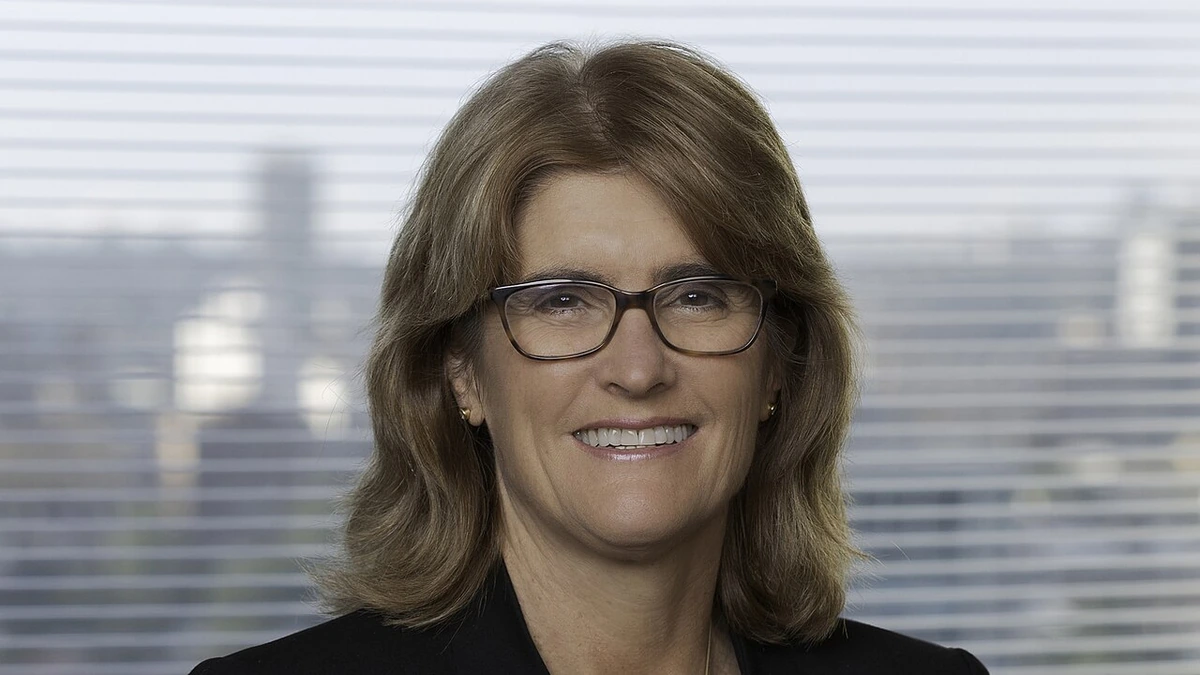
The Reserve Bank of Australia’s Monetary Policy Board voted unanimously to lift its cash rate target by 25 basis points to 4.60% in September, according to minutes released on October 13. Members concluded that the risk of inflation remaining too high had increased enough to justify another rise, even as household spending weakened and property prices fell.
The decision was announced on September 29, so the newly published record does not represent a fresh rate increase. Its importance lies in explaining why all nine members backed tighter policy after leaving the rate at 4.35% in August. The Board discussed the case for holding again, but judged that several inflation risks it had identified at the previous meeting were becoming more immediate.
Energy prices, AI demand and weak productivity shaped the decision
The September meeting minutes point first to the renewed escalation of the Middle East conflict. Damage to refineries, interruptions to shipping and low inventories had contributed to energy prices rising well above the assumptions used in the RBA’s August forecasts. Board members were concerned that prolonged increases in energy costs would eventually feed more widely into consumer prices, rather than remaining confined to petrol and other directly affected goods.
Members also considered the global surge in spending linked to artificial intelligence. Strong demand for technology equipment was supporting growth in several of Australia’s Asian trading partners, but it was also putting pressure on the prices of products in constrained supply. The minutes noted reports of higher software and other information-technology costs from Australian businesses. The Board treated that pressure as a developing inflation risk, not as proof that every AI-related price rise had already reached Australian consumers.
Domestic conditions gave policymakers another reason to act. Output had slowed, yet June-quarter growth was slightly stronger than the RBA had expected, largely because of business investment. Australian Bureau of Statistics figures showed the economy expanded 0.4% during that quarter and private business investment was 10.4% higher than a year earlier. Data-centre and renewable-energy construction were among the areas contributing to investment strength, according to the Board’s discussion.
That strength contrasted with softer household consumption. The minutes described spending growth in the first half of the year as below trend, reflecting slower growth in household income. The question for members was whether reduced consumer demand would create enough spare capacity to offset investment demand and continuing cost pressures across the economy.
Weak productivity featured prominently in the discussion. The RBA’s staff were increasingly questioning whether the unemployment rate consistent with stable inflation might be higher than previously assumed. Unit labour costs were rising faster than judged compatible with the inflation target, with weak productivity rather than unusually rapid wage growth identified as the main driver. Reports from businesses of persistent cost increases and a drift higher in their inflation expectations added to the concern.
An inflation report published after the meeting underlined the difficulty facing the central bank, although it was not available to members when they voted. The ABS reported on September 30 that annual consumer price inflation had climbed to 4.0% in August from 3.5% in July. Annual trimmed-mean inflation, a measure that reduces the influence of unusually large price changes, remained at 3.6%. Both readings were above the RBA’s 2% to 3% inflation target range.
The case for waiting was considered
A unanimous decision did not mean the Board ignored evidence of a slowing economy. Members explicitly weighed a second consecutive hold against raising the rate by a quarter percentage point. The main argument for leaving policy unchanged was that the risks to growth and employment could prove more severe than the central bank expected.
The unemployment rate had reached 4.6% in August, and housing prices had been declining faster than anticipated. Policymakers considered whether falling property values could curb consumer spending more sharply, particularly for households already facing higher borrowing costs. They also acknowledged that uncertainty surrounding the Middle East conflict could weaken demand, and that the effects of earlier increases in interest rates might be larger than assumed in the forecasts.
The minutes nevertheless indicate that the Board saw those concerns as insufficient to outweigh the inflation threat. Scenario analysis suggested even relatively large housing-price declines would have only modest direct effects on economic activity and spending. Household and business balance sheets, taken as a whole, also appeared to offer some capacity to absorb higher interest costs, although that assessment did not mean individual borrowers would be unaffected.
For members, waiting for clearer evidence carried its own cost. Inflation had been above target for an extended period, and higher inflation expectations could become harder to reverse if businesses began building persistent cost increases into their pricing. The Board also noted that rate increases overseas could affect the Australian dollar. If Australian policy stood still as other central banks tightened, a weaker exchange rate could add to the cost of imports.
Those considerations help explain why members favored moving before seeing every inflation risk fully reflected in the data. The minutes framed the decision as an attempt to protect the inflation objective without unnecessarily damaging employment, rather than as a judgement that the labour market or household finances were free of strain.
Further rate increases remain an option, not a commitment
The Board did not set out a predetermined path for interest rates. It said subsequent decisions would depend on incoming data, developments in the Middle East, the pace of external demand and the degree of spare capacity in Australia. Members agreed that they would raise the cash rate further if needed to achieve price stability and sustained full employment. That is a statement of willingness to act, not a decision to increase rates again at the next meeting.
The RBA’s August forecasts had envisaged inflation returning to the midpoint of its target range around late 2027. The minutes stressed that this outcome depended on demand growing more slowly than the economy’s productive capacity, productivity improving and inflation expectations remaining stable. New shocks to energy prices or more persistent domestic cost growth could complicate that forecast.
Governor Michele Bullock, who chaired the September meeting, reinforced the inflation focus at her September 29 media conference. “Higher interest rates are needed to ensure inflation returns to target,” she said, while acknowledging the pressure on mortgage holders. She also cautioned that it can take many months for the full effects of rate increases to pass through spending, borrowing decisions and the broader economy. Her comments accompanied the original September decision; the October 13 minutes contain no new individual statement from the Governor.
For borrowers, the cash rate target is not the rate paid directly on a home loan. It influences banks’ funding costs and the interest rates offered to households and businesses, with changes often passing through unevenly. That means the full impact of the four increases implemented in 2026 may not yet be visible in consumption or employment data.
The next major inflation reading is scheduled for October 28, when the ABS is due to release September consumer price figures. The RBA’s Monetary Policy Board meets on November 2–3, with a rate decision and updated Statement on Monetary Policy scheduled for November 3. Those releases will provide the next official tests of the risks described in the September minutes.
More from Banking

Latest News
View all news- Fed’s Waller Says Higher Treasury Yields Reflect Strong Growth More Than Inflation Expectations
- U.S. Small-Business Optimism Falls to 97.9 as Uncertainty and Hiring Concerns Persist
- U.S. Existing-Home Sales Rise 1.5% in September Despite High Mortgage Rates
- JPMorgan Reports $15.3 Billion Third-Quarter Profit as Revenue Hits $50.2 Billion
- Johnson & Johnson Raises 2026 Sales Outlook After $25.4 Billion Third-Quarter Revenue
