China Warns of Countermeasures Over Proposed U.S. Investment Restrictions
Beijing opposes Washington’s proposed expansion of outbound investment controls as U.S. officials seek to cover additional sensitive technologies.
Our editorial standards
MarketReview publishes clear, independently produced financial information using reliable sources and transparent editorial standards.
Read our Editorial Policy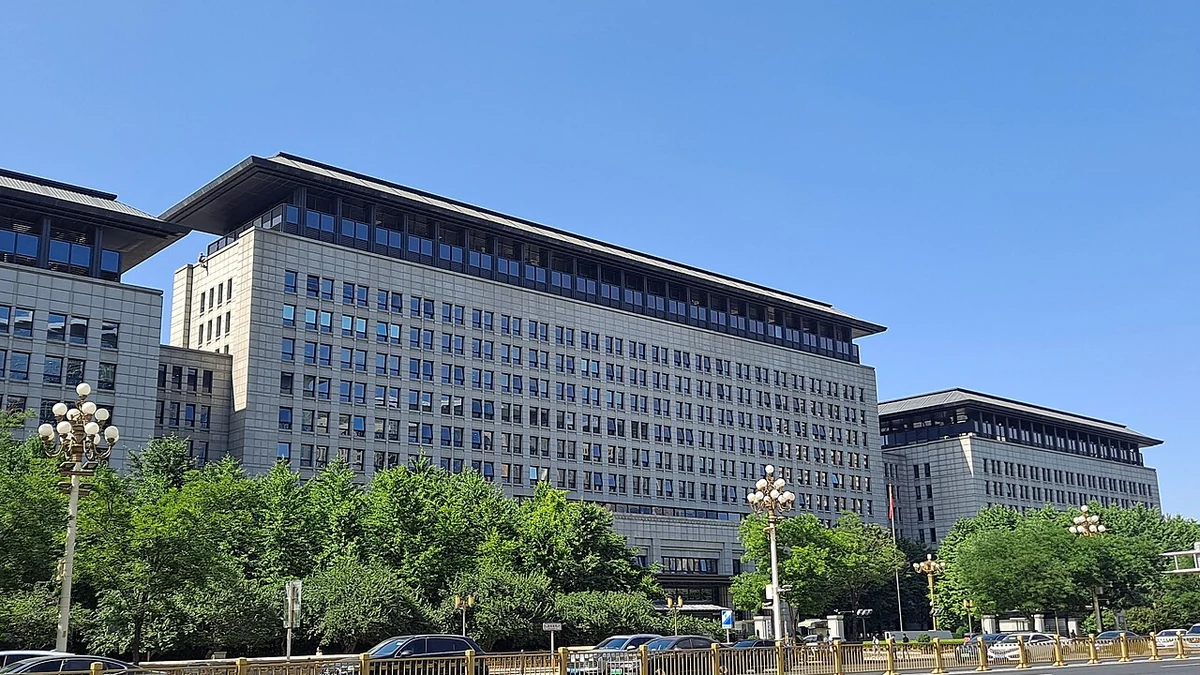
China has warned that it could take countermeasures against a proposed expansion of U.S. restrictions on investment in sensitive technologies, challenging Washington’s plan to put more cross-border funding under national-security controls. The Chinese Ministry of Commerce said Saturday, October 24, that it strongly opposed the proposal and would reserve the right to respond as the rulemaking proceeds.
The warning does not amount to an announcement of retaliation. Beijing has not identified any specific measures it intends to introduce, and the latest U.S. restrictions are proposals rather than a new set of rules already in effect. For companies and investors, the immediate issue is how broadly Washington may ultimately define investments in sensitive sectors and which activities it will exclude.
In its official response, China’s commerce ministry accused the United States of extending investment curbs in a discriminatory way and applying the concept of national security too broadly. The ministry argued that the proposed changes would interfere with ordinary business cooperation and undermine understandings reached between the two countries’ leaders. It also said restrictions on investment in China could damage the interests of American businesses.
The dispute follows an October 22 announcement by the U.S. Treasury Department of proposed regulations to implement the Comprehensive Outbound Investment National Security (COINS) Act. Treasury says the program is intended to stop American investment from helping countries of concern develop technologies with military, intelligence or surveillance applications. The department has invited public comments before writing a final rule.
The U.S. proposal would reach beyond the existing restrictions
Washington already operates an outbound-investment program focused on certain U.S. investments involving Chinese businesses engaged in semiconductors and microelectronics, quantum information technologies, and artificial intelligence. Those regulations took effect on January 2, 2025, after rules were finalized in October 2024. They generally prohibit some investments outright and require notice to Treasury for others that meet specified criteria.
Congress passed the COINS Act in December 2025 as part of the fiscal 2026 defense authorization law, creating a statutory framework for a broader program. Treasury’s new proposal would implement that legislation and add technical definitions for the investments subject to prohibition or notification. The existing framework remains relevant until the updated rules are finalized and take effect.
The draft extends coverage to high-performance computing and supercomputing, hypersonic systems, and biotechnology. It also proposes changes within sectors already regulated. In semiconductor technology, Treasury would add restrictions involving certain advanced chips, high-bandwidth memory and photonic integrated circuits. Quantum-related prohibitions would reach the development of algorithms or applications for quantum computing.
For artificial intelligence, the proposal uses the term “super intelligence systems,” reflecting terminology adopted in federal documents, and would broaden the existing prohibition on investments in covered developers of those systems. This change is distinct from the additions involving computing hardware or biotechnology. A sector’s inclusion in the rule does not mean every business working in that sector would automatically be covered.
The hypersonics provisions would address investments tied to systems capable of hypersonic flight and certain associated propulsion, testing facilities, sensors and materials. Biotechnology would be a newly covered area, with proposed prohibitions targeting specified activities such as brain-computer interfaces, some biomanufacturing capabilities, bioinformatics tools and automated scientific-discovery equipment. The proposed definitions, rather than a company’s broad industry label, would determine how a particular investment is treated.
Equity funding and joint ventures are central to the rules
The proposal is aimed principally at particular forms of investment, not every commercial relationship with a Chinese company. Covered activities could include purchases of equity or interests that may become equity, the establishment of joint ventures, certain debt financing that gives lenders equity-like rights, and investments used to establish or expand business operations. Some investments through foreign pooled funds could also fall within its scope.
Treasury draws an important distinction between prohibited investments and those that are allowed but must be reported. The first category would bar U.S. investors from proceeding with specified activities; the second would impose a notification requirement. Under the proposal, an investor required to notify Treasury would generally have 30 days after completing the investment to file, with a separate 30-day period in certain cases where relevant knowledge is obtained later.
The proposed rules would not ban U.S. investors from owning ordinary publicly traded securities solely because the issuer is based in a country of concern. The Treasury fact sheet describes exceptions for exchange-traded shares, mutual funds and exchange-traded funds, along with certain other passive or routine financial activities. Those exceptions are subject to the rule’s terms, and other U.S. restrictions could still apply.
There would also be a limited-partner exception for certain investments of no more than $2 million in a non-U.S. pooled fund, or investments backed by specified contractual assurances. A separate $50,000 de minimis exception would apply to the notification requirement, measured across the preceding 12 months. That dollar threshold is not a blanket permission to make an investment that otherwise falls within a prohibited category.
The geographic reach is wider than China. Treasury identifies the People’s Republic of China, including Hong Kong and Macau, and also names Cuba, Iran, North Korea and Russia among the countries of concern under the proposed framework. The policy would apply to covered U.S. citizens, permanent residents and businesses, with obligations also extending in defined circumstances to foreign entities they control.
Compliance would depend on investors investigating the businesses and technologies involved. Treasury does not plan to maintain a definitive public list of every covered foreign company. Instead, the proposal calls for reasonable and diligent inquiry, while offering a process for non-binding Treasury feedback on certain actual investments and possible national-interest exemptions from a prohibition.
China’s warning comes before a final U.S. decision
Beijing’s response presents the issue as a dispute over legitimate economic cooperation, not simply a disagreement over individual technologies. The commerce ministry urged Washington to stop using national security as a broad justification for economic restrictions and to create conditions more favorable to bilateral business ties. Its reservation of a right to take measures leaves open what China might do, against whom and on what timetable.
The U.S. government offers a different rationale. Treasury argues that certain outbound investments can provide capital and other benefits to companies developing capabilities that could threaten American security. Its stated approach is to target defined investments in strategic technology rather than prohibit investment in an entire country, although the proposal would require more businesses and funds to assess whether their activities fall within the covered categories.
The next formal step is the U.S. rulemaking process. Treasury is accepting written comments through December 7, 2026, including feedback on technology definitions, exceptions, reporting duties and enforcement. It has not announced the effective date for the updated restrictions; that will be set in a subsequent final rule. China has said it will follow those developments while keeping open the possibility of a response.
More News



Latest News
View all news- Egypt Details Startup Action Plan Targeting $5 Billion in Venture Capital and 5,000 Firms
- Italy’s New Fuel-Cost Relief Measures Take Effect for Transport, Farming and Fishing
- Amgen Cancer Drug Combination Cuts Death Risk 58% in Phase 3 Trial
- U.S. Consumer Sentiment Holds Near Record Lows as Inflation Expectations Rise
- U.S. Business Growth Moderates in October as Selling-Price Inflation Accelerates